Figure 1. Low birth weight is the cause of innumerable preventable diseases in sub-Saharan Africa.

Can Fighting Malaria Combat Low Birth Weight?

By Eshani Goradia ‘19 A problem in many parts of the world, particularly sub-Saharan Africa, is low birth weight (LBW). LBW could result in neonatal mortality/morbidity, childhood stunting, a lack of cognitive development, and more. Often times, diseases like malaria can be the cause of LBW. Dr. James G. Beeson and Dr. Julie A. Simpson conducted a mathematical study that suggests incidences of LBW can … Continue reading Can Fighting Malaria Combat Low Birth Weight?

Figure 1. The odd association between anxiety and bowel movements in irritable bowel syndrome is a result of altered gut bacteria.

Exploring the Anxiety Associated with Irritable Bowel Syndrome

By Patrick Yang ‘20 While symptoms of abdominal pain, gas, and diarrhea are implied in its name, irritable bowel syndrome (IBS), a common gastrointestinal disorder, is also often accompanied by anxiety. The odd association with gut and brain behavior has led scientists to believe that there is a disorder of unknown cause between gut-brain communication that results in the concurrent symptoms. Recent research on IBS … Continue reading Exploring the Anxiety Associated with Irritable Bowel Syndrome

Figure 1. It is important to integrate the three basic domains of nutrition into academic training and education.

Scientists Show the Importance of Nutrition Education

By Eshani Goradia ’19 How many times have you heard a parent or guardian say, “You are what you eat”? The statement, however annoying it may seem, holds a great deal of substance. Researchers for the Federation of the Italian Nutrition Societies (FeSIN) led by Dr. Lorenzo M. Donini studied the domains of human nutrition and the importance of nutrition in education. The FeSIN attributed … Continue reading Scientists Show the Importance of Nutrition Education

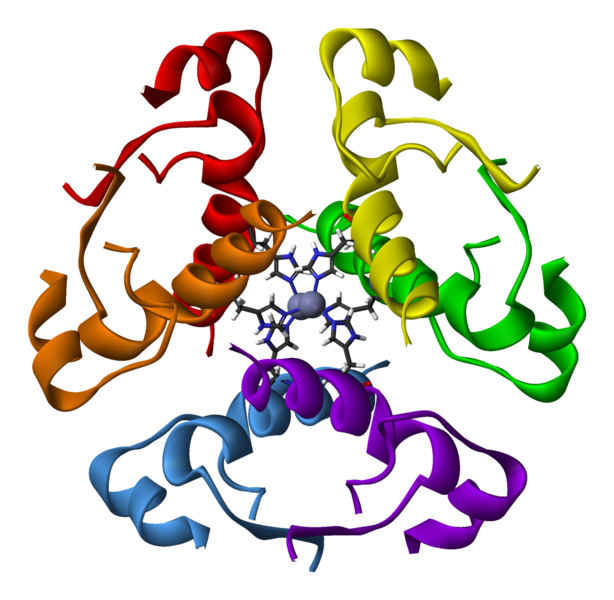
Glucose Transportation

      By: Richard Liang 18’  Insulin is an important signaling factor in glucose uptake, acting in concert with glucose transporter GLUT4 to transport glucose into skeletal muscle and adipose tissue. In the presence of insulin, GLUT4 is translocated to the plasma membrane where an exocyst complex tethers the GLUT4 to the membrane, a process that requires G protein RalA to bind to the … Continue reading Glucose Transportation

Improving Influenza Vaccine Efficacy Sans Adjuvants

    By: Richard Liang 18’ Vaccination is one of the best methods to guard against influenza, as it allows human dendritic cells (DCs) to promote long-term adaptive immunity. Due to the rapid pace of influenza mutation, the composition of influenza vaccines varies annually, with a focus on immunogenicity as opposed to vaccine efficacy. To improve efficacy, immunological agents known as adjuvants can be added … Continue reading Improving Influenza Vaccine Efficacy Sans Adjuvants

Using SIRT1 Activators to Treat Tuberculosis

    By: Richard Liang 18’ Tuberculosis (TB) is a highly infectious disease that can remain dormant for many years. Currently, treatment options are limited by Mycobacterium tuberculosis’s ability evade the immune system and mutate into drug-resistant strains. Outbreaks are a more pressing concern in developing countries, where health care is less accessible. In a recent study led by Catherine Y. Cheng from the Singapore … Continue reading Using SIRT1 Activators to Treat Tuberculosis

Photocurable Bioinks and 3D-Printed Hydrophilic Drugs

  By Caleb Sooknanan ’20 Pharmaceutical dosages are often defined as the amount of active pharmaceutical ingredient (API) that has a therapeutic effect in the most patients. Using such a generalized method does not account for variations in patient genomic and pathophysiological status, leading to potential negative side-effects. Personalized medicine intends to provide patients with more individualized API concentrations in their prescriptions. However, changes in … Continue reading Photocurable Bioinks and 3D-Printed Hydrophilic Drugs

Figure 1. Mammalian brains can be influenced by non-genetic and Allele-Specific expression

Sending Your Grandparents to University Increases Cognitive Reserve: The Tasmanian Healthy Brain Project

By Ericka Berman   One way to decrease the likelihood of Alzheimer’s disease is by increasing cognitive reserves (CR). Research supports the idea that education, intelligence, and cognitively stimulating activities modify the risk for dementia. CR is a theoretical construct, so it is measured indirectly. Dr. Megan Lenehan and her team of researchers used data from 459 participants ages 50-79 from the Tasmanian Healthy Brain Project … Continue reading Sending Your Grandparents to University Increases Cognitive Reserve: The Tasmanian Healthy Brain Project

Figure 1. Liraglutide 3·0 mg may reduce the risks of type 2 Diabetes.

Reduction of Type 2 Diabetes Via Weight Loss Drug

By Rideeta Raquib ’19 Prediabetes, also known as “borderline diabetes,” is a condition common among people with obesity who have increased blood sugar levels. Although it can eventually lead to type 2 diabetes, prediabetes can be cured through exercise and diet changes. In 2012, 86 million Americans of age 20 years or older had prediabetes. A drug, named Liraglutide 3·0 mg, can reduce body weight … Continue reading Reduction of Type 2 Diabetes Via Weight Loss Drug

Using Positive Image Training to Regain Happiness

By Rideeta Raquib ’19 Emotion-related imagery training is a powerful tool for psychotherapy. Mental imagery can stimulate behavioral and physiological systems more effectively than verbal or informative stimulations. Imagery is less effective on patients diagnosed with generalized anxiety (GAD) because of the tendency to associate bright images with negative occurrences rather than generating positive images. Dr. Svetla Velikova and her team of researchers conducted a … Continue reading Using Positive Image Training to Regain Happiness

Efficacy of Quetiapine Monotherapy in Posttraumatic Stress Disorder: A Randomized, Placebo-Controlled Trial

          Ericka Berman Posttraumatic Stress Disorder (PTSD) is a debilitating illness affecting approximately 7.8% of people in the U.S. over the course of their lifetime. As of now, two medications are approved in the U.S. to treat PTSD, but both treatments have limited success. Characteristics of the antipsychotic medication quetiapine suggest it may be helpful in treating PTSD symptoms of re-experiencing … Continue reading Efficacy of Quetiapine Monotherapy in Posttraumatic Stress Disorder: A Randomized, Placebo-Controlled Trial

Chicoric Acid Supplementation May Prevent Memory Loss

Patrick Yang ’20 Chicoric acid, a common component in chicory and edible plants, such as lettuce and basil, is a known antioxidant that has anti-HIV and anti-obesity qualities. It can also reduce inflammation caused by high-fat diets and is rapidly distributed to tissues, including the brain, after ingestion. Because of its anti-inflammatory trait and ability to cross the blood-brain barrier, it may be able to … Continue reading Chicoric Acid Supplementation May Prevent Memory Loss