A New Transistor Supercapacitor Hybrid: The Transcap

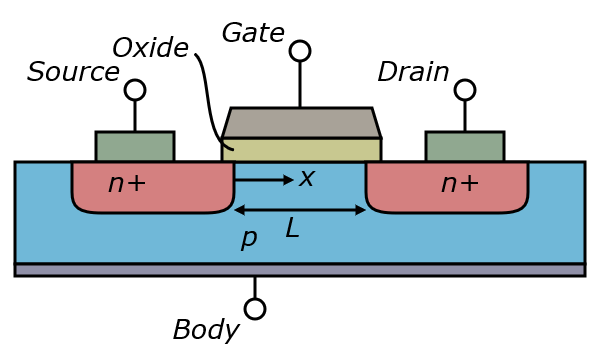
By Michael D’Agati   Finding new materials and geometries for the creation of transistors has become a focal point in the field of electronics within the past decade. This transition from silicon-based materials is important towards keeping up with a prediction made by Intel co-founder Gordon Moore, which states that the number of transistors in a dense integrated circuit doubles every two years. In other … Continue reading A New Transistor Supercapacitor Hybrid: The Transcap

Black Phosphorus Aids Development of Nanoscale Transistors

by Michael D’Agati   The development of classic silicon-based transistors at the nanoscale level has become more challenging, especially within the past decade. Scientists have thus turned towards producing transistors with new materials and geometries. Black phosphorus (BP), a material discovered a few years ago, could potentially provide a breakthrough towards making smaller transistors. It has grown in popularity in electronic device production because of its … Continue reading Black Phosphorus Aids Development of Nanoscale Transistors

A New Generation of Transistors

by Michael D’Agati   The number of transistors in an integrated circuit doubles every other year, according to Moore’s Law. This means that transistors must either continue to shrink beyond the nanoscopic scale or utilize different materials and geometries. However, limitations of atomic interactions at such a small scale make it difficult for transistors to be shrunk past the nanoscopic scale. In order to combat this … Continue reading A New Generation of Transistors

Sodium Ion Batteries in Cold Climates

by Michael D’Agati Most aspects of electrical design and electrical engineering, such as circuits, wouldn’t be possible without batteries. Good batteries have a large capacity, high power density (quick charge/discharge cycles), and low cost energy storage. A few different types of rechargeable batteries have been developed, but at low temperatures, like -15°C, they charge slowly. This results in a severe voltage drop that can trigger problems … Continue reading Sodium Ion Batteries in Cold Climates

Storing More Energy with Carbon

by Michael D’Agati   The improvements in energy storage have been slow and costly, despite all the advancements in technology over the past decades. For this reason, there has been a lot of focus from research groups worldwide on different sources and methods of energy storage. One type of energy storage device that may be promising for the future is the supercapacitor. Supercapacitors have the ability … Continue reading Storing More Energy with Carbon

Hippo Biology: The Next Step in Tissue Regeneration

by Aaron Gochman (’18) Traditional studies of tissue regeneration and repair have focused on delivering cells and biomaterials, compounds that will presumably grow when placed in a biologically friendly environment. A new avenue for research, however, has been revealed by a Chinese group that has chosen to focus on drug-based therapeutics instead. The study detailed a discovery in which the team found a drug, XMU-MP-1, … Continue reading Hippo Biology: The Next Step in Tissue Regeneration

Bio-Diesel Enhances the Flow of Emulsions in Pipelines

by Jenna Mallon (’18) Emulsions, mixtures containing two immiscible liquids, are used in a variety of industries including food, paint, pharmaceutical, cosmetic, and oil/gas. Emulsions play a large role in petroleum production since they exist at every stage of production, from crude oil to the refined petroleum. Issues arise when it comes to the transport of petroleum: the emulsions in the petroleum may contain solids … Continue reading Bio-Diesel Enhances the Flow of Emulsions in Pipelines

A Step Toward Synthetic Cognition and Artificial Organs

by Aaron Gochman (’18) A team of researchers from Harvard, Stanford, and Sogang University in South Korea made headlines this week with a discovery that captures the future of bioengineering. Living cardiac muscle cells were taken from rats and printed onto a robot shaped like a sting ray. The cells were engineered to express proteins that activate in response to light; when activated, the cells … Continue reading A Step Toward Synthetic Cognition and Artificial Organs