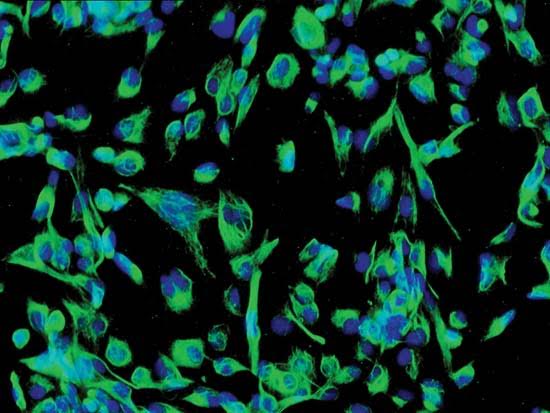
Figure 1. Human skin cells can be converted into homing neural stem cells that deliver treatment directly to brain tumors.

Homing Neural Stem Cells Deliver Direct Cancer Treatment

By Patrick Yang ’20 With average survival for glioblastoma patients at approximately 12-15 months, speed is of essence for glioblastoma cancer treatment. Currently, promising stem cell research has found that neural stem cells naturally migrate towards the chemical signals released by glioblastoma cells. If these neural stem cells are engineered to contain cytotoxic agents, they can deliver cancer treatment directly to cancer cells. However, the … Continue reading Homing Neural Stem Cells Deliver Direct Cancer Treatment

Brain Connectivity Can Predict Occurrence of Placebo Effect

by Patrick Yang ’20   The placebo effect has consistently stumped the scientific community because it provides an effective treatment based on a patient’s belief, rather than a scientific reason. Instead of disregarding the placebo effect, Dr. Pascal Tétreault of Northwestern University and his team aimed to discover the biological context and the predictability of placebo response in chronic pain patients. Since some patients exhibit the … Continue reading Brain Connectivity Can Predict Occurrence of Placebo Effect

Genetic Vulnerability in Alzheimer’s Disease

by Richard Liang ’18   Alzheimer’s disease is a major neurodegenerative condition, with individuals usually developing symptoms at ages above 65. Symptoms include impaired memory, speech, and other mental functions. Alzheimer’s has shown a correlation with increasing aggregates of Amyloid-β plaques and neurofibrillary tangles (NFTs). However, it is difficult to predict whether and at what time these plaques and tangles will be expressed in an individual. … Continue reading Genetic Vulnerability in Alzheimer’s Disease

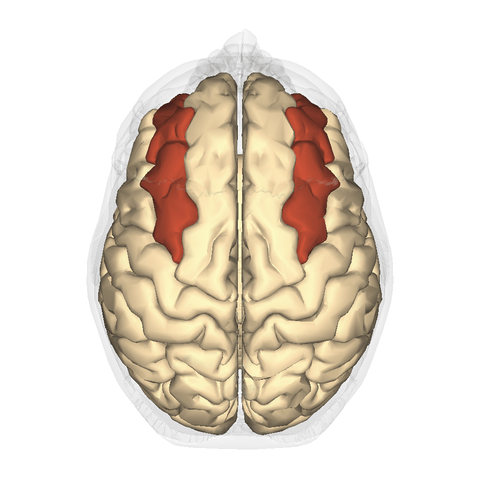
Self-Control Beyond the Prefrontal Cortex

by Richard Liang ’18   The human brain affects almost everything aspect of existence, from locomotion and speech to feeling. Decision making and self-control are also affected by parts of the brain, specifically the prefrontal cortex. However, a recent study led by Alexander Soutscheck in the Laboratory for Social and Neural Systems Research of the University of Zurich has shown that there could also be another … Continue reading Self-Control Beyond the Prefrontal Cortex

Scientists Discover Postnatal Migratory Neurons

by Patrick Yang   The cerebral cortex is the outermost layer of the brain and is responsible for advanced processes, such as complex emotion, that distinguish humans from other animals. A key component in cortex development is prenatal neural migration, the movement of neurons before birth, which begins early on in the embryo. These migratory neurons, or Arc neurons, originate near areas of initial development … Continue reading Scientists Discover Postnatal Migratory Neurons

A New Method For Diagnosing Parkinson’s Disease

by Sahil Rawal (’19) Parkinson’s disease is a condition that causes lower levels of dopamine in the brain, leading to neurodegeneration. Parkinson’s is commonly seen in older patients, and causes a loss of muscle control. Till now, there was no test for Parkinson’s that would guarantee its diagnosis; rather, physicians analyzed medical histories and conducted neurological tests to look for signs of Parkinson’s. However, Dr. … Continue reading A New Method For Diagnosing Parkinson’s Disease

The Effect of Radiation Exposure on the Brain

by Jenna Mallon (’18) The effects of radiation exposure, whether from cell phones, power lines, or medical imaging systems such as x-rays, have been a focus of study for many researchers. There are concerns over the numerous health risks that can results from EM energy radiation exposure, since it affects the central nervous system. However, not all the side effects from radiation exposure are harmful. … Continue reading The Effect of Radiation Exposure on the Brain

A Step Forward in Parkinson’s Disease

by Sahil Rawal (’19) Parkinson’s Disease is a very deadly condition with unknown origins, as scientists have been unable to pinpoint an exact explanation for its occurrence. Previous studies have shown that patients with Parkinson’s lack dopamine-producing cells, which causes attenuation of motor skills. Furthermore, it has been shown that mitochondrial toxicity causes mutations in PINK1 and PARKIN genes in patients with Parkinson’s. However, these … Continue reading A Step Forward in Parkinson’s Disease

The Role of Social Stress in Cocaine Addiction

by Aaron Gochman (’18) This week, scientists from the University of Texas at Austin contributed a novel idea to addiction research. Focusing on glutamatergic synaptic transmission, the primary mode of excitatory signaling in the central nervous system, the group hypothesized that social stress would lead to increased vulnerability to cocaine addiction. Specifically, the ventral tegmental area (VTA) of the brain, a prime location for dopamine … Continue reading The Role of Social Stress in Cocaine Addiction

Restoring Function after Traumatic Brain Injuries

by Julia Newman (’19) Although there is currently no successful treatment for traumatic brain injuries, researchers at the University of California recently tested a new and promising method using human neural stem cells (hNSC), which have been found to be multipotent. Experiments in the past were performed solely on rats using immunosuppressant drugs in order to prevent transplant rejection, but this study found it more … Continue reading Restoring Function after Traumatic Brain Injuries

Complexin induces a conformational change of the SNARE complex

by Aaron Gochman (’18) Intercellular communication in the central nervous system occurs at a synapse, the gap between two neurons. The presynaptic neuron releases a chemical messenger known as a neurotransmitter, which diffuses across the synapse and relays the signal to the postsynaptic cell. The process of releasing the neurotransmitter from the presynaptic cell is quite complicated. The mechanism includes packing the neurotransmitter inside a … Continue reading Complexin induces a conformational change of the SNARE complex

Dual Threat: DLK as a Novel Role Player in Axonal Regeneration

by Aaron Gochman (’18) Axonal regeneration is a branch of neuroscience on the cutting edge; re-growing injured neurons is a technique that, once refined, will fundamentally change the landscape of nervous system therapies. A team of researchers from University of Michigan, Washington University in St. Louis, and University of Pennsylvania have discovered a key intracellular pathway in axonal regeneration that is conserved in both Drosophila, … Continue reading Dual Threat: DLK as a Novel Role Player in Axonal Regeneration