Virtual Reality: An Effective Tool for Safety Training

Author: Amal Bilal, Class of 2028 Figure 1: A man using a virtual reality headset. Safety training is an important tool that helps prevent accidents by enhancing one’s ability to identify and analyze risks while performing dangerous tasks. Typically delivered through safety manuals, videos, lectures, slideshows, and drills, safety training methods have several limitations: they do not provide feedback to participants, have difficulties illustrating realistic … Continue reading Virtual Reality: An Effective Tool for Safety Training


Telemedicine Visits: Alternative Approach to Healthcare?

Author: Amal Bilal, Class of 2028 Figure 1: Doctor and patient using telemedicine. Telemedicine has become increasingly popular because of its ability to increase savings for patients and providers, reduce hospital readmissions, and enhance patient quality of care. The COVID-19 pandemic saw an 80% decline in in-person health visits and a 683% increase in telemedicine visits between March 2 and April 14, 2020 (1). Teleophthalmology, … Continue reading Telemedicine Visits: Alternative Approach to Healthcare?

In the 21st century, you can become a Christian through AI

By Shahzadi Adeena, Class of 2025 Figure 1: Human Hand Reaching Out to AI With artificial intelligence (AI) on the rise, chatbots have become a valuable resource for many sectors of society. Economic, education, and health industries all benefit from the efficiency and extent of artificial intelligence assistance; other sectors, such as religion, are also susceptible to influence by up-and-coming AI. Researchers Khoa Tran and … Continue reading In the 21st century, you can become a Christian through AI

Literacy Training of Kindergarten Children With Pencil, Keyboard or Tablet Stylus: The Influence of the Writing Tool on Reading and Writing Performance at the Letter and Word Level

Thumyat Noe ’23 Handwriting has always been an important mode of writing, but recently type-writing on digital devices is becoming more common than handwriting.  Nowadays, children are able to write for the first time by typing on a digital device before they learn how to handwrite. Some elementary schools have implemented initial literacy training using digital devices to facilitate literacy skills in students. As literacy … Continue reading Literacy Training of Kindergarten Children With Pencil, Keyboard or Tablet Stylus: The Influence of the Writing Tool on Reading and Writing Performance at the Letter and Word Level

The association between digital screen time and myopia: A systematic review

Sabah Bari ‘24 With the advancement of technology and the creation of new digital platforms, many individuals have experienced an increase in screen time, which may heighten the risk for many health-related issues, especially in the eyes. Myopia, also known as nearsightedness and shortsightedness, is a condition in which parallel rays are focused in front of the retina. Light rays converge to a focal point … Continue reading The association between digital screen time and myopia: A systematic review

How Artificial Intelligence Can Help Prevent School Violence

By Marcia-Ruth Ndege ‘21 In recent years, school violence has increased at an alarming rate. In a recent study, Dr. Drew Barzman, a child forensic psychiatrist at Cincinnati Children’s Hospital Medical Center (CCHMC), proposes the utilization of artificial intelligence (AI) as a predictor of how likely students are to perform violent acts while at school. To perform this study, Barzman and his team recruited 103 … Continue reading How Artificial Intelligence Can Help Prevent School Violence

Diagnosing Necrotizing Soft Tissue Infections via CT Scans

By Fatin Chowdhury ‘19 Imaging technology has become more useful for preventing surgery and aiding in its success. Technologies such as CT (computed tomography) scans have expanded the breadth of diagnostic methodologies available to physicians. Dr. Myriam Martinez in Boston, Massachusetts, sought to pinpoint the usefulness of CT technology in allowing for necrotizing soft infections (NSTI) diagnoses. The researchers found that NSTIs could be examined … Continue reading Diagnosing Necrotizing Soft Tissue Infections via CT Scans

How This Tiny Robot Plans to Change the Future of Medicine

By Marcia-Ruth Ndege ‘21 Some of the greatest discoveries in medicine have been driven by the advancement of technology. A group of scientists at the Max Planck Institute of Intelligent Systems, lead by Professor Metin Sitti, is hoping to contribute to such progress with their newly designed mili-robot. The robot is four millimeters in length, as flat as a piece of paper, and made of … Continue reading How This Tiny Robot Plans to Change the Future of Medicine

Figure 1. Researchers from Brown University developed a 3-D printable biomaterial that can form reversible crosslinks.

Controlled Degradation of 3-D Printed Biomaterials

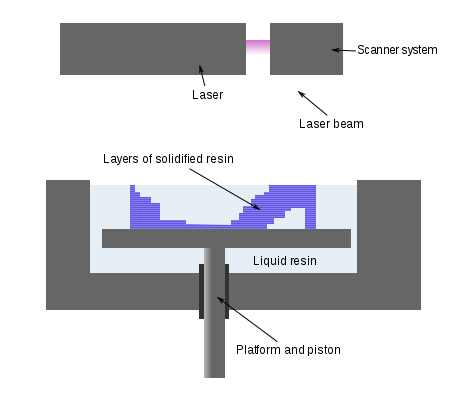
By Meghan Bialt-DeCelie ’19 The explosion of 3-D printing technologies allows custom and precise structures to be made quickly and inexpensively. Researchers led by Thomas Valentin from Brown University utilize stereolithographic 3-D printing to create biocompatible structures that could degrade in response to chemical cues. The technique of stereolithography involves shooting photons at unpolymerized materials causing them to form crosslinks with themselves to build a … Continue reading Controlled Degradation of 3-D Printed Biomaterials

Improved Batteries in the Human Body

by Michael D’Agati   The field of bioelectronics, which produces implantable devices for sensing and therapeutics, has recently become a popular field. There is high promise in the collaboration between biology and electronics, but in order for these new innovations to work, a power source, such as implantable batteries, must be present to supply the energy needed. Currently, implantable batteries require bulky metal cases to keep … Continue reading Improved Batteries in the Human Body

The Exploration of Stone Tools

by Lillian Pao (’18) Stone tools have been around for millions of years. It is a technology that has evolved with the hominin phenotype. About three million years ago, flake-making was mastered by the African hominins, followed by handaxes 1.75 million years ago, and custom complex stone reductions by 1.6 million years ago.  Professor Mark W. Moore from the University of New England and a … Continue reading The Exploration of Stone Tools

The Many Advantages of Almonds

by Julia Newman (’19) Oilseeds are incredibly valuable in our society because they are applicable to a wide array of industries. Currently, soybeans, sunflowers, and rapeseeds are the most commonly used plants for their oils due to their high nutritional value, ability to reduce the risk of cardiovascular disease, and large quantity of oil extracted per plant. However, it was recently discovered by Dr. Sorkheh … Continue reading The Many Advantages of Almonds