The Relationship between Asplenia and Invasive Pneumococcal Disease

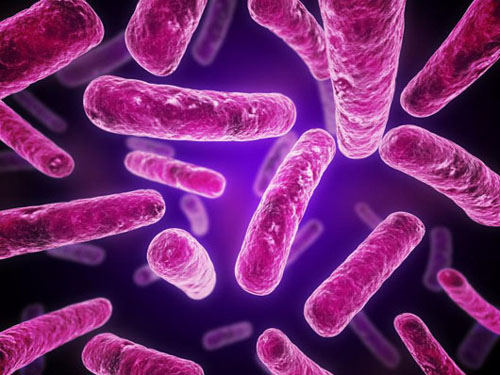
by Caleb Sooknanan   Pneumococcal disease is a bacterial infection caused by Streptococcus pneumoniae that occurs mainly among infants and young children. Invasive pneumococcal disease (IPD) is a more serious form of the infection that can cause meningitis, or bacterial infection in the blood, inflammation of the lungs, and other conditions. Bacterial infection, also known as sepsis, is especially common among patients who have undergone spleen … Continue reading The Relationship between Asplenia and Invasive Pneumococcal Disease

New Study on UTI Antibiotic Resistance

by Caleb Sooknanan   Urinary tract infections, also known as UTIs, are a prevalent series of pediatric infections that damage the urinary system. Febrile, or fever-inducing, urinary tract infections are occurring more frequently among patients. Antibiotics have become widespread assets for treating the disease, but they are not effective in all cases. Dong Sup Lee and his team of researchers at the Catholic University of Korea … Continue reading New Study on UTI Antibiotic Resistance

Infectious Disease Information and Emotional Responses

by Megan Tan   Infectious disease outbreaks cause individuals to react differently in response to this kind of emotional news. Professor Scott Clifford and Professor Jennifer Jerit, from the Department of Political Science at the University of Houston and Loyola University respectively, research two of these reactions to infectious disease outbreaks: disgust and anxiety. In the first study, a questionnaire was distributed to three sample … Continue reading Infectious Disease Information and Emotional Responses

Improved Batteries in the Human Body

by Michael D’Agati   The field of bioelectronics, which produces implantable devices for sensing and therapeutics, has recently become a popular field. There is high promise in the collaboration between biology and electronics, but in order for these new innovations to work, a power source, such as implantable batteries, must be present to supply the energy needed. Currently, implantable batteries require bulky metal cases to keep … Continue reading Improved Batteries in the Human Body

Saline Spray Treats HHT-Induced Nose Bleeds

by Patrick Yang   Epistaxis, or bleeding from the nose, is only an intermittent nuisance for the majority of the population. However, for those with hereditary hemorrhagic telangiectasia (HHT), a disorder that results in the improper development of blood vessels, epistaxis can plague them up to two times a day. HHT affects roughly 1 in 5,000 people in the U.S., and the frequency of epistaxis is … Continue reading Saline Spray Treats HHT-Induced Nose Bleeds

T-cell Based Therapy of Lung Cancer Metastases

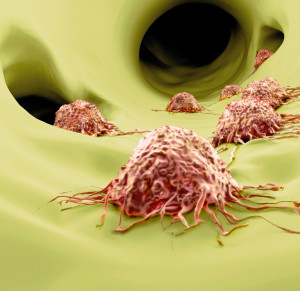
by Jalwa Afroz Metastasis is the spreading of cancer cells beyond their site of origin and evading immune responses. Specifically, metastasis is the leading cause of cancer deaths (over 90%). It is easier for circulating tumor cells to localize to the lung because of the vast capillary networks that provide constant blood flow to the lungs. In addition, metastasis formation of the primary traveling tumor … Continue reading T-cell Based Therapy of Lung Cancer Metastases

Exploring A Safer Steroid Therapy

by Aaron Gochman (’18) Most pharmacological approaches in the study of congenital adrenal hyperplasia involve the administration of corticosteroids, potent drugs that quickly affect the body. Extended use of corticosteroids, however, typically yields unpleasant metabolic side effects. Despite this weakness, corticosteroids have been the mainstream treatment in attempting to suppress adrenal androgen. However, scientists from the United Kingdom have discovered a novel approach: corticosterone, a … Continue reading Exploring A Safer Steroid Therapy

Hippo Biology: The Next Step in Tissue Regeneration

by Aaron Gochman (’18) Traditional studies of tissue regeneration and repair have focused on delivering cells and biomaterials, compounds that will presumably grow when placed in a biologically friendly environment. A new avenue for research, however, has been revealed by a Chinese group that has chosen to focus on drug-based therapeutics instead. The study detailed a discovery in which the team found a drug, XMU-MP-1, … Continue reading Hippo Biology: The Next Step in Tissue Regeneration

Predicting Your Child’s Likelihood to Succeed

by Julia Newman (’19) The Journal of Molecular Psychiatry recently published research that suggests a factor of predictability in children’s educational achievement. Previous studies have assumed that variances among children’s school performances may be explained by one large difference in their genetic makeup, but Dr. Selzam and his team of researchers from the Institute of Psychiatry, Psychology, and Neuroscience in London found that it is … Continue reading Predicting Your Child’s Likelihood to Succeed

New Structure in Brain Maturation Discovered

by Aaron Gochman (’18) Structural biology is a division within biological research that aims to discover the atomic structures of molecules and understand their functions. In a recent paper, an international team of scientists discovered the crystal structure of doublecortin-C, a protein important for neurogenesis. Doublecortin-C plays a role in maintaining the structure of neurons in the brain; mutations in this protein have been known … Continue reading New Structure in Brain Maturation Discovered

Mustard Oil and Menthol: More Than Just Food Products

by Aaron Gochman (’18) Ligand-gated ion channels are typically associated with receptors that are activated or deactivated upon the binding of a chemical messenger known as either an agonist or antagonist, depending on whether they activate (agonists) or deactivate (antagonists). One class of ion channels, the TRP family, has been known to be activated by thermal stimuli. Thermal stimulation of TRP ion channels certainly represents … Continue reading Mustard Oil and Menthol: More Than Just Food Products

New Vaccines Are Stronger Than Ever

by Julia Newman (’19) A vaccine developed by a new technique at the University of Buffalo in New York has capabilities beyond any previously created vaccine. These new vaccines, unlike their predecessors, have both natural bacterial and man-made polymer components, which allow them to have multiple mechanisms for the delivery of antigens within the vaccine. They can now be delivered not only actively, as they … Continue reading New Vaccines Are Stronger Than Ever