Harnessing Artificial Intelligence for Wildlife Conservation

Author: Amal Bilal, Class of 2028 Artificial Intelligence (AI) is emerging as a tool that can be leveraged to identify effective solutions for the current biodiversity crisis. As ecosystems are increasingly harmed by humanity, researchers are looking for ways in which AI can be used to create multimodal models that analyze ecological data to improve biodiversity loss predictions, track patterns in wildlife trade, and develop … Continue reading Harnessing Artificial Intelligence for Wildlife Conservation

Pixels to Prognosis: Using AI for Neuroradiologic Analysis

Kaylie Huang, Class of 2027 The role of artificial intelligence (AI) in healthcare is one of curiosity and contention, as studies have shown its potential in early detection and prevention through near-perfect analysis of medical images. Researchers from the Department of Radiology at Stony Brook University Hospital (SBUH) investigated the accuracy of AI interpretations of CT head angiograms, or imaging of the brain’s blood vessels, … Continue reading Pixels to Prognosis: Using AI for Neuroradiologic Analysis

Virtual Reality: An Effective Tool for Safety Training

Author: Amal Bilal, Class of 2028 Figure 1: A man using a virtual reality headset. Safety training is an important tool that helps prevent accidents by enhancing one’s ability to identify and analyze risks while performing dangerous tasks. Typically delivered through safety manuals, videos, lectures, slideshows, and drills, safety training methods have several limitations: they do not provide feedback to participants, have difficulties illustrating realistic … Continue reading Virtual Reality: An Effective Tool for Safety Training

Virtual Reality as a Means of Neuroplasticity

Tiffany Ang, Class of 2025 Neuroplasticity is defined as the brain’s ability to create and reorganize neural connections in response to learning and or following injury. This reorganization can be structural or functional, resulting from learning or brain damage respectively. Virtual reality (VR) offers an integrative approach to enhance neuroplasticity by producing controlled yet engaging environments that imitate real-life experiences and promote realistic patterns of … Continue reading Virtual Reality as a Means of Neuroplasticity

The Neural Network Memory Update

By Farzad Hoque, Class of 2028 Understanding how the brain balances learning and memory is one of neuroscience’s biggest challenges. New research uncovers how synaptic plasticity and metastable dynamics in cortical circuits work together in neural networks, shedding light on the brain’s remarkable ability to adapt and reorganize. Dr.Yang and Dr.La Camera at Stony Brook University discovered synaptic weights stabilize near a critical threshold, enabling … Continue reading The Neural Network Memory Update

Harnessing the Attention-Grabbing Power of Video Games for Scientific Progress

Author: Sean Krivitsky, Class of 2026 Figure 1. Oil painting visualization of a video game player. Citizen science is a common strategy employed by researchers across many specializations to harness the input of the public to further scientific research. The billions of video game players worldwide posed an opportunity for scientists using citizen science and, from there, emerged Citizen Science Games (CSGs). However, converting scientific … Continue reading Harnessing the Attention-Grabbing Power of Video Games for Scientific Progress

What do Machines Know of Depression? Explaining Past Failures of Clinical Algorithms About MDD

Author: Ishmam Khan, Class of 2025 Figure 1: MDD is a devastating, extremely common, and fast-growing disease in terms of suffering, mortality, and cost to society. Since COVID-19, the rates of mental health disorders have increased significantly. One such disorder is Major Depressive Disorder (MDD), a serious disorder affecting more than 8% of the US population. As of 2024, the remission rates, or rate of … Continue reading What do Machines Know of Depression? Explaining Past Failures of Clinical Algorithms About MDD

Differentiating Between Speech and Song Across Cultures

Julia Chivu ’23 Given that speech and song are produced by the same vocal tract, there is an ongoing debate as to whether or not speech and song can be distinguished by their acoustical features across different societies. It can be difficult to determine where speech ends and songs begin within a culture. This concept is especially challenging to research since there is no reliable … Continue reading Differentiating Between Speech and Song Across Cultures

In the 21st century, you can become a Christian through AI

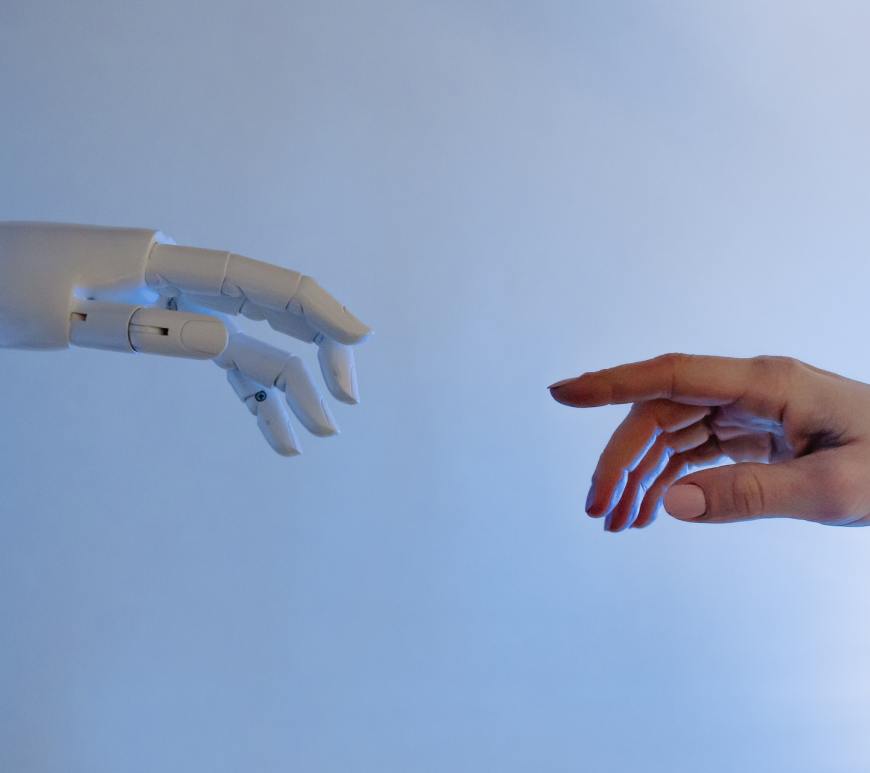
By Shahzadi Adeena, Class of 2025 Figure 1: Human Hand Reaching Out to AI With artificial intelligence (AI) on the rise, chatbots have become a valuable resource for many sectors of society. Economic, education, and health industries all benefit from the efficiency and extent of artificial intelligence assistance; other sectors, such as religion, are also susceptible to influence by up-and-coming AI. Researchers Khoa Tran and … Continue reading In the 21st century, you can become a Christian through AI

AI-Assisted Readings May Greatly Improve Fracture Diagnosis

Sooraj Shah ’24 The detection of fractures via radiography is one of the most highly used practices in clinical settings such as the emergency room, urgent care, orthopedic and rheumatology offices. The missed fracture diagnosis rate is between 1-3%, accounting for almost 1,200 of every 100,000 patients. A major cause of missed fractures is erroneous initial readings by residents or non-radiologists, which are only corrected … Continue reading AI-Assisted Readings May Greatly Improve Fracture Diagnosis

The Role of Robots in Mental Health Detection For Children

Figure 1: Young female holding the hand of a humanoid robot. Julia Chivu ’24 Children may be more open to robots than humans when it comes to their mental health. The growing rate of anxiety and depression among children in the United Kingdom motivated researchers to utilize this unique technology as they sought out better mental health resources in the wake of the COVID-19 pandemic. … Continue reading The Role of Robots in Mental Health Detection For Children

Are Doppelgängers Really Just a Coincidence?

Lydia Wang ’26 Human faces and the ability to recognize different facial identities have played a key role in evolution. It has been observed that human faces have evolved to uniquely distinguish themselves from others. However, many people know someone they resemble; some comparisons are so similar that they are labeled as a doppelgänger, or a living double. Doppelgängers have been an ongoing phenomenon that … Continue reading Are Doppelgängers Really Just a Coincidence?