Utilizing the Principle of Pro-Cancer Properties of Antioxidants to Treat Prostate Cancer

Author: Sean Krivitsky, Class of 2026 Figure 1. Depiction of various foods that are commonly associated with having antioxidant properties.Prostate cancer (PC) has become a growing concern for men as its rate of incidence has been steadily increasing by more than 3% per year for the past decade. As a result, many have been searching for various treatments and interventions during PC progression to help … Continue reading Utilizing the Principle of Pro-Cancer Properties of Antioxidants to Treat Prostate Cancer

Do violent video games desensitize us to real-world violence?

By Asher Agarwal, Class of 2027 Recently, many media sources have been spreading concern that violent video games desensitize players to violence and damage their sense of empathy. Researchers at the University of Vienna and Karolinska Institute in Sweden attempted to test this hypothesis by utilizing fMRI technology. fMRI is a machine that allows one to indirectly measure the activity of the brain as it … Continue reading Do violent video games desensitize us to real-world violence?

Inhibition of Hydrolytic Enzyme May Protect Against Manifestation of AD-Linked Phenotypes

Author: Vignesh Subramanian, Class of 2024 Figure 1: Barnes maze tests were performed to assess the spatial reference memory of the knock-in AD mouse models. Alzheimer’s disease (AD) is a progressive, neurodegenerative disease characterized by significant memory loss and cognitive decline that worsen with age. While the disease’s long-established hallmarks include the aggregation of two misfolded proteins known as beta-amyloid and phosphorylated tau, recent research … Continue reading Inhibition of Hydrolytic Enzyme May Protect Against Manifestation of AD-Linked Phenotypes

Exploring the Biodiversity Inhabiting Sponges of the Great Barrier Reef

Author: Marie Collison, Class of ‘25 Sponges are a diverse group of multicellular organisms that inhabit aquatic ecosystems all over the globe. Scientists estimate that there are over 9000 unique species of sponges. The vast diversity of sponges enables them to provide a diverse range of habitats for a variety of aquatic taxa. They provide structure to environments that otherwise have minimal variation in elevation. … Continue reading Exploring the Biodiversity Inhabiting Sponges of the Great Barrier Reef

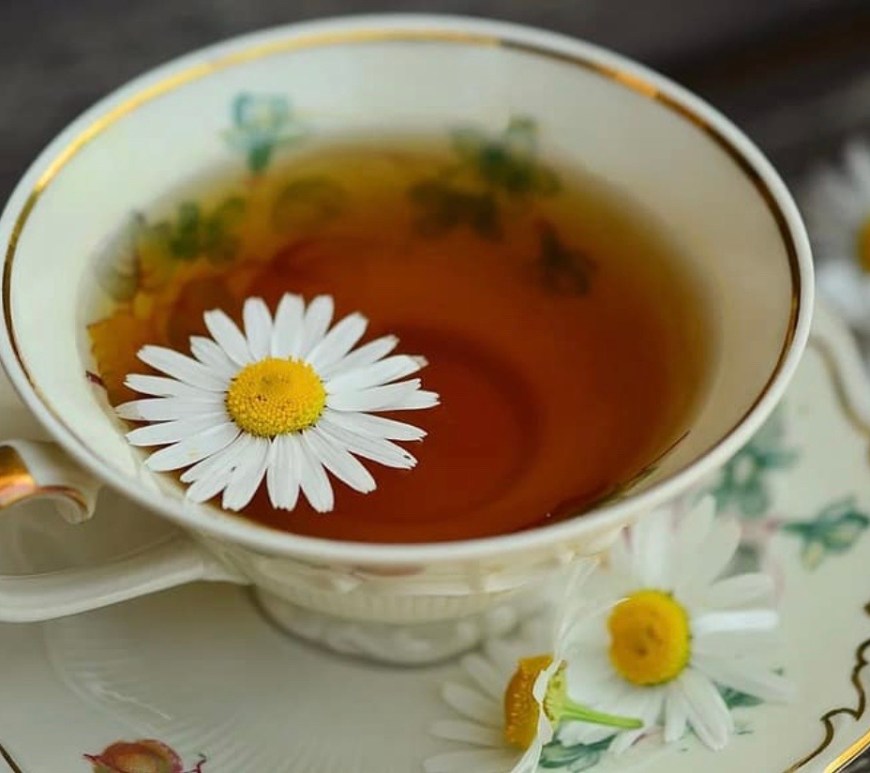
Is Chamomile Actually a Risk for Surgery?

Author: Marie Collison, Class of ‘25 Chamomile is a plant that is widely used in herbal medicine for a wide variety of reasons. It has been reported to have anti-inflammatory, antioxidant, anticarcinogenic, antidepressive, and sedative properties. Despite these benefits, current medical recommendations list chamomile as a substance that should not be ingested prior to surgery due to fears that it may increase the risk of … Continue reading Is Chamomile Actually a Risk for Surgery?

Reprogramming Cells May Reverse the Aging Process

Sooraj Shah ’24 Aging is a natural process by which cells are progressively unable to divide as efficiently as before, causing cell death and lysis as the functions of the cell slowly begin to decline. The main contributor to this are the telomeres at the end of our chromosomes. Telomeres get shorter as cells divide because replication cannot copy the “lagging end” of the chromosome. … Continue reading Reprogramming Cells May Reverse the Aging Process

Newly Discovered Functions of MAIT Cells Suggests a Possible Target for Immunotherapy and Vaccine Treatments

Sooraj Shah ’24 While much focus has been given to the COVID-19 pandemic, autoimmune diseases, such as lupus, also affect seven percent of the American population. Recent research suggests a potential link between mucosal-associated invariant T (MAIT) cells and the two diseases, as both COVID-19 and autoimmune diseases trigger increased MAIT cell response. A study led by Dr. Charles Vorkas, a professor in the Department … Continue reading Newly Discovered Functions of MAIT Cells Suggests a Possible Target for Immunotherapy and Vaccine Treatments

Water on Mars May Have Had a Shorter Lifespan than Previously Thought

Sooraj Shah ’24 The discussion of water on Earth’s twin planet Mars has become an intriguing topic in the past few years, largely due to its striking resemblance in size and location to Earth. It has been hypothesized that Mars was once a lively Earth-like planet that housed oceans and life, although present-day Mars tells a different story—until recently. Ari Koeppel, a Northern Arizona University … Continue reading Water on Mars May Have Had a Shorter Lifespan than Previously Thought

New Approach to the Detection of Social Bot Activity

Sooraj Shah ’24 Oftentimes, people find themselves scrolling through social media, responding and interacting with accounts and commenting on their favorite posts. What some users do not know is that many of these accounts utilize social bots, agents created to autonomously communicate with social media users. These bots respond in a way that is indistinguishable from human mannerisms, which give bots the power to influence … Continue reading New Approach to the Detection of Social Bot Activity

Formation of Night Clouds on Venus May Have Prevented Earth-like Conditions

Sooraj Shah ’24  Venus shares many similarities with Earth, including approximate size and mass. Venus’ surface temperature, however, is much hotter and contains a much thicker atmosphere consisting of carbon dioxide. For years, scientists have made estimates that Venus once was a thriving planet containing the resources for life like Earth. A research study led by astrophysicist Martin Turbet, in collaboration with the University of … Continue reading Formation of Night Clouds on Venus May Have Prevented Earth-like Conditions

Predicting Externalizing Behavior in Infants

Yukta Kulkarni ’22 The minds of children are malleable and easily influenced by the circumstances they are placed into. Their experiences in early life can elicit certain actions according to the emotions they may not be able to process and control. This can be defined as externalizing behavior. More often than not, children who face trauma or stress such as abuse or poverty have higher … Continue reading Predicting Externalizing Behavior in Infants

A Journey into Space: What it Means For Your Bones

Aditi Kaveti ’23 Since the first instance of space exploration in 1961, many long-term space missions have been accomplished that give us insight into the effect of the microgravity environment in space on the musculoskeletal system. Current research, however, does not provide enough solid evidence that allows scientists to predict the qualitative risk of deterioration and bone loss in a prolonged space mission. A lack … Continue reading A Journey into Space: What it Means For Your Bones