Inhibition of Hydrolytic Enzyme May Protect Against Manifestation of AD-Linked Phenotypes

Author: Vignesh Subramanian, Class of 2024 Figure 1: Barnes maze tests were performed to assess the spatial reference memory of the knock-in AD mouse models. Alzheimer’s disease (AD) is a progressive, neurodegenerative disease characterized by significant memory loss and cognitive decline that worsen with age. While the disease’s long-established hallmarks include the aggregation of two misfolded proteins known as beta-amyloid and phosphorylated tau, recent research … Continue reading Inhibition of Hydrolytic Enzyme May Protect Against Manifestation of AD-Linked Phenotypes

Uncovering a Key Mechanism of Rett Syndrome Pathology

Author: Sean Krivitsky, Class of 2026 Rett syndrome (RTT) is a severe neurological disorder found primarily in females that causes impairment in essential functions including breathing, eating, and walking abilities. The disorder is characterized by slowed brain growth, which can lead to various mental and physical disabilities. Key markers and causes of RTT are mutations on a gene called MECP2. MECP2 is an X-linked gene … Continue reading Uncovering a Key Mechanism of Rett Syndrome Pathology

Diminished Glymphatic Transport and Lymphatic Drainage Tied to Cerebral Amyloid Angiopathy

Author: Vignesh Subramanian, Class of 2024 Cerebral amyloid angiopathy (CAA) is a cerebrovascular disorder characterized by the accumulation of amyloid protein deposits along cortical capillaries, cerebral vessel walls, and the brain’s leptomeninges. These plaques weaken fragile blood vessels, often resulting in intracerebral hemorrhaging. CAA is linked to vascular cognitive impairment and dysfunction and is a major contributor to the pathogenesis of Alzheimer’s disease (AD) and … Continue reading Diminished Glymphatic Transport and Lymphatic Drainage Tied to Cerebral Amyloid Angiopathy

Humans Remain Behaviorally Responsive to External Auditory Stimuli During Deep Sleep

Author: Vignesh Subramanian, Class of 2024 It has long been assumed that sleep is a stable state of unconsciousness in which an individual cannot perceive and respond to most external stimuli. However, recent studies have indicated that humans can process information, discriminate between basic sensations, and carry out limited executive functions, such as answering yes–no questions, while still asleep. Some oneirological studies have focused on … Continue reading Humans Remain Behaviorally Responsive to External Auditory Stimuli During Deep Sleep

Epigenetic Age Acceleration More Accurately Predicts Memory Decline Than Chronological Age

Author: Vignesh Subramanian, Class of 2024 Figure 1: Increasing evidence suggests biological aging, measured by examining the extent of methylation of cells’ DNA, is a stronger predictor of diminishing cognitive abilities than chronological age.  Title: Epigenetic Age Acceleration More Accurately Predicts Memory Decline Than Chronological Age Age acceleration is the term used to describe the difference between an individual’s chronological age, the length of time … Continue reading Epigenetic Age Acceleration More Accurately Predicts Memory Decline Than Chronological Age

AD-Linked Proteins Linked to Cognitive Impairment Following 9/11 WTC Exposure

Vignesh Subramanian ’24 Figure 1: The South Pool of the 9/11 Memorial in New York, New York Alzheimer’s disease (AD) is a neurodegenerative disorder characterized by a progressive loss of memory and cognitive thinking skills that typically worsens with age, and is the leading cause of dementia. Key hallmarks of the disease include buildups of two particular proteins – beta-amyloid peptide and phosphorylated tau – … Continue reading AD-Linked Proteins Linked to Cognitive Impairment Following 9/11 WTC Exposure

Where Do We Feel Love?

Julia Chivu ‘ 23 Figure 1  A person looking off to the side while clutching a neon red heart in a dimly lit environment.  Love has compelled psychologists, philosophers, neuroscientists, and other scholars to try and understand its complexities and implications. Researchers from Aalto University sought to understand how 27 different types of love, including parental, romantic, sexual, and religious love, are perceived and experienced … Continue reading Where Do We Feel Love?

PD-Modeling Midbrain Dopamine Loss Diminishes Thalamocortical Signaling

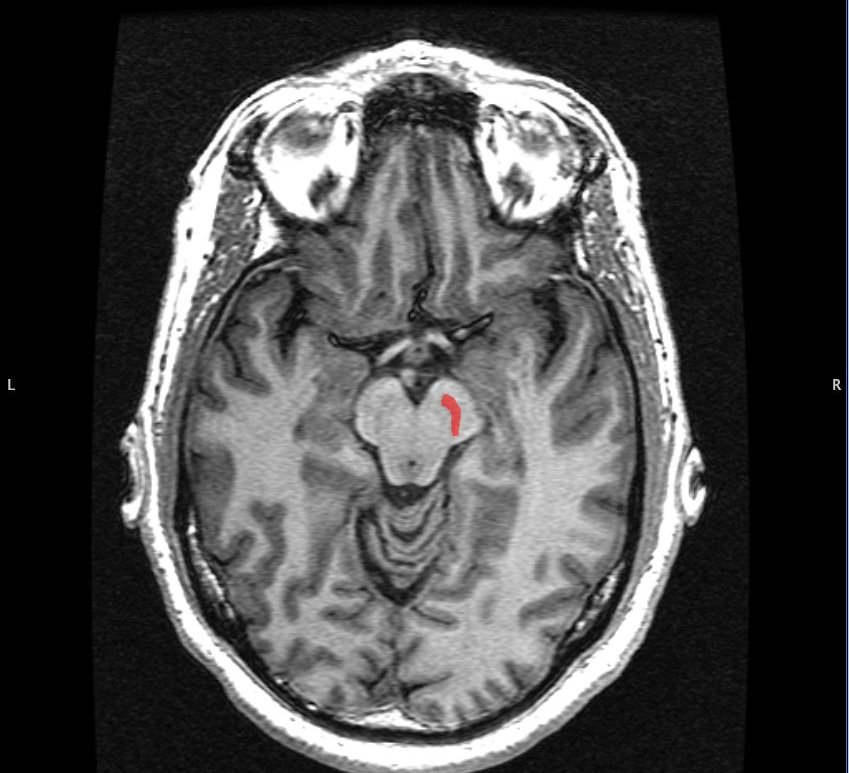
Vignesh Subramanian ’24 Figure 1: The substantia nigra (SN) nucleus in the midbrain. Parkinson’s disease (PD) is an age-related, neurodegenerative movement disorder that causes a progressive loss of motor control. The disease is characterized by a loss of dopaminergic (DA) neurons in the substantia nigra (SN), a midbrain nucleus that modulates movement and reward functions. The SN is one of five subcortical nuclei that make … Continue reading PD-Modeling Midbrain Dopamine Loss Diminishes Thalamocortical Signaling

Prairie Vole Monogamy: key in understanding neural underpinnings of love

Jessica George ’24 Figure 1 Prairie voles are small rodents known for their unusual monogamous behavior Love and attachment hold a very important place in human lives but the neuroscience behind them is poorly understood. Recent groundbreaking research involving prairie voles helped to unravel the biological mechanisms behind love and bonding. Prairie voles are small rodents known for their unusual monogamous behavior, forming long-term pair … Continue reading Prairie Vole Monogamy: key in understanding neural underpinnings of love

Nicotine exposure discovered to block aromatase activity in healthy women

Jessica George ’24 Figure 1 Nicotine use disorder has a profound impact on hormones, yet sex differences are poorly understood. Maintaining a harmonious sex-hormone balance is essential for the optimal functioning of the body, as it regulates a wide range of physiological processes. Aromatase serves as the critical enzyme responsible for the conversion of androgens into estrogens, a process fundamental to functions associated with emotional … Continue reading Nicotine exposure discovered to block aromatase activity in healthy women

Radiation-Induced Cognitive Decline Impairs Hippocampal Neurogenesis

Vignesh Subramanian ’24 Figure 1: A radiograph captured by X-ray, which produces ionizing radiation, a form of radiation that poses risks of damage to internal tissue. Ionizing radiation is any radiation traveling in the form of electromagnetic waves or particles with enough energy to knock electrons out of the orbit of atoms. While therapies such as radiotherapy for cancer are intended to emit ionizing radiation … Continue reading Radiation-Induced Cognitive Decline Impairs Hippocampal Neurogenesis

Microdosing Psychedelics

Shahzadi Adeena ’25 In recent years, there has been a growing interest in microdosing psychedelic drugs as a potential tool for enhancing cognitive abilities and improving overall wellbeing. Vince Polito and Richard J. Stevenson of Macquarie University investigated the effects of microdosing psychedelics on psychological variables such as mood, attention, wellbeing, mindfulness, mystical experiences, personality, absorption, creativity, and sense of agency. The researchers hypothesized that … Continue reading Microdosing Psychedelics