The Influence of Epigenetic Age on Cognitive Decline

 Julia Chivu ’23 As people age, their cognitive abilities tend to decline. While chronological age is commonly cited as a reason for this decline, it often fails to explain why some individuals have higher cognitive performance than others of the same age. To address this, epigenetic clocks, which analyze DNA methylation at specific genomic sites correlated with aging, are emerging as useful tools for predicting … Continue reading The Influence of Epigenetic Age on Cognitive Decline

Quantifying Affectionate Touch in Romantic Relationships

Julia Chivu ’23 Across cultures and continents, affection serves as a universal bond that unites romantic partners. Researchers from various institutions worldwide collaborated on two studies to better understand and quantify the dynamic between love and touch. The first study sought to investigate the global association between love and touch-related behaviors. The second study examined the correlation between frequencies of affectionate touch and love amongst … Continue reading Quantifying Affectionate Touch in Romantic Relationships

AD-Linked Proteins Linked to Cognitive Impairment Following 9/11 WTC Exposure

Vignesh Subramanian ’24 Figure 1: The South Pool of the 9/11 Memorial in New York, New York Alzheimer’s disease (AD) is a neurodegenerative disorder characterized by a progressive loss of memory and cognitive thinking skills that typically worsens with age, and is the leading cause of dementia. Key hallmarks of the disease include buildups of two particular proteins – beta-amyloid peptide and phosphorylated tau – … Continue reading AD-Linked Proteins Linked to Cognitive Impairment Following 9/11 WTC Exposure

Chronic Pain Signaling Predicted by Orbitofrontal Cortex Signatures

Vignesh Subramanian ’24 Figure 1: A sagittal MRI view of the human orbitofrontal cortex. Chronic pain syndromes typically entail persistent pain lasting at least three months, marked by the long-term rewiring of neural circuitry that triggers unprompted pain signals. Measuring chronic pain has long proven challenging due to its entanglement with a wide array of overlapping neural circuits and the subjectivity with which it is … Continue reading Chronic Pain Signaling Predicted by Orbitofrontal Cortex Signatures

Playing traditional cultural games results in greater love for your country?!

Maria Sazonova ‘ 26 Figure 1: Small children joyfully playing Petak Umpet  Petak Umpet is an Indonesian variation on the widespread game of hide and seek, one that provides cultural insight and preservation. Education of the young is extremely important for the wellbeing and future advancement of the State, and traditional games are important cultural based learning resources. A research team from The University of … Continue reading Playing traditional cultural games results in greater love for your country?!

Sea spray contributes to ice formation in clouds.

 Maria Sazonova ‘ 26 Figure 1: Ocean sea spray containing SSA particles at sunset Evaluating ice nucleation kinetics in cloud formation is essential for enhancing our understanding of aerosol-cloud interactions, as well as speculating on the larger effects of SSAs, sea spray aerosol particles, on climate change. SSA ambient particles are a constant natural source of atmospheric aerosol and a recognized source of ice-nucleating particles … Continue reading Sea spray contributes to ice formation in clouds.

Careful, It’s Hot! How Particle Collisions Help us Understand Quark-Gluon Soup

Sidney Padmanaban ‘ 26 Figure 1 Quarks are building blocks of matter, and by studying them, we can understand larger concepts of physics. Large aspects of life cannot be studied without understanding the small building blocks that contribute to every part of the universe. Entire fields of physics and chemistry are dedicated towards the study of particles. Recently, two professors at Stony Brook University, Roy … Continue reading Careful, It’s Hot! How Particle Collisions Help us Understand Quark-Gluon Soup

A Mother’s Love: How Maternal Instinct Might be Triggered by Texture

Sidney Padmanaban ’26 Figure 1 Ducklings will often follow the first animal to imprint on them, even if it isn’t a duck. Imprinting, when a young animal comes to recognize another being as an object of habitual trust, is instinctual and a very important part of relationships. As soon as babies are born, they begin to become imprinted by the people in their lives. Previously, … Continue reading A Mother’s Love: How Maternal Instinct Might be Triggered by Texture

Investigating the Unexpected Results of Ape1 Inhibitors

Julia Chivu ’23 Figure 1  DNA strand unwinding causing the formation of the replication fork followed by DNA replication. Genomic DNA is constantly at risk of molecular decay. To address this issue, base excision DNA repair (BER) plays a critical role in fixing the minor DNA damage. In particular, Ape1 (or apurinic/apyrimidinic endonuclease) is a multifunctional protein that is a key component in BER. Ape1 … Continue reading Investigating the Unexpected Results of Ape1 Inhibitors

Where Do We Feel Love?

Julia Chivu ‘ 23 Figure 1  A person looking off to the side while clutching a neon red heart in a dimly lit environment.  Love has compelled psychologists, philosophers, neuroscientists, and other scholars to try and understand its complexities and implications. Researchers from Aalto University sought to understand how 27 different types of love, including parental, romantic, sexual, and religious love, are perceived and experienced … Continue reading Where Do We Feel Love?

PD-Modeling Midbrain Dopamine Loss Diminishes Thalamocortical Signaling

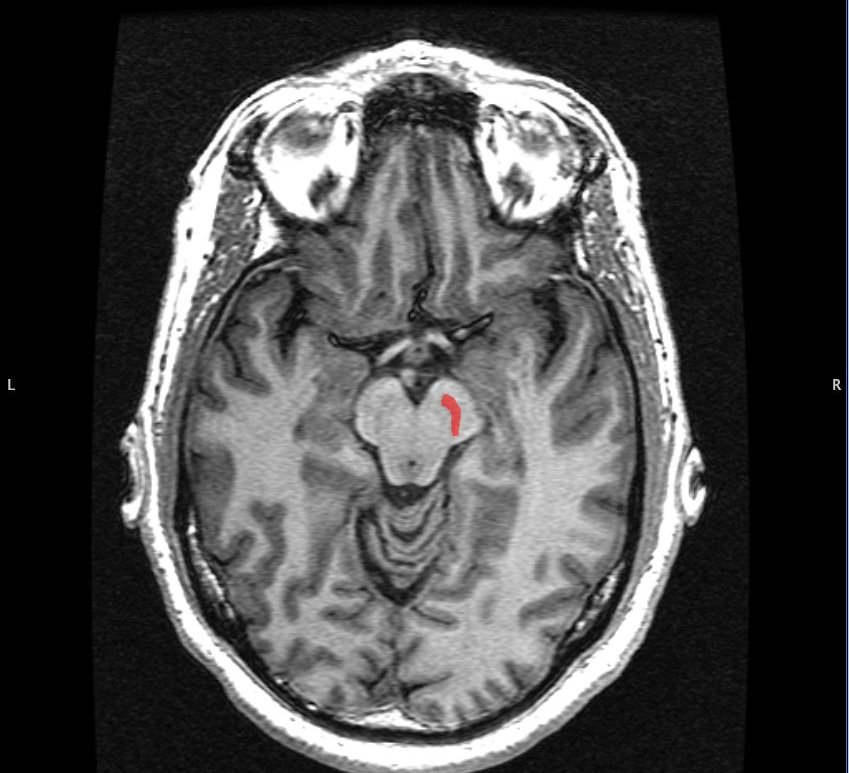
Vignesh Subramanian ’24 Figure 1: The substantia nigra (SN) nucleus in the midbrain. Parkinson’s disease (PD) is an age-related, neurodegenerative movement disorder that causes a progressive loss of motor control. The disease is characterized by a loss of dopaminergic (DA) neurons in the substantia nigra (SN), a midbrain nucleus that modulates movement and reward functions. The SN is one of five subcortical nuclei that make … Continue reading PD-Modeling Midbrain Dopamine Loss Diminishes Thalamocortical Signaling

Maternal Empathetic Cortical Responses Synchronize with Neonatal Pain Perception

Vignesh Subramanian ‘ 24 Figure 1: The heel prick of an infant’s foot, which often induces momentary pain for the infant. The early psychophysical development of newborns relies heavily on having strong emotional bonds with caregivers. Compared to other animals, human infants are born highly dependent on their parents, undergoing a prolonged period of extensive neural organization and brain development that requires greater parental sensitivity … Continue reading Maternal Empathetic Cortical Responses Synchronize with Neonatal Pain Perception