Pick a Card, Any Card

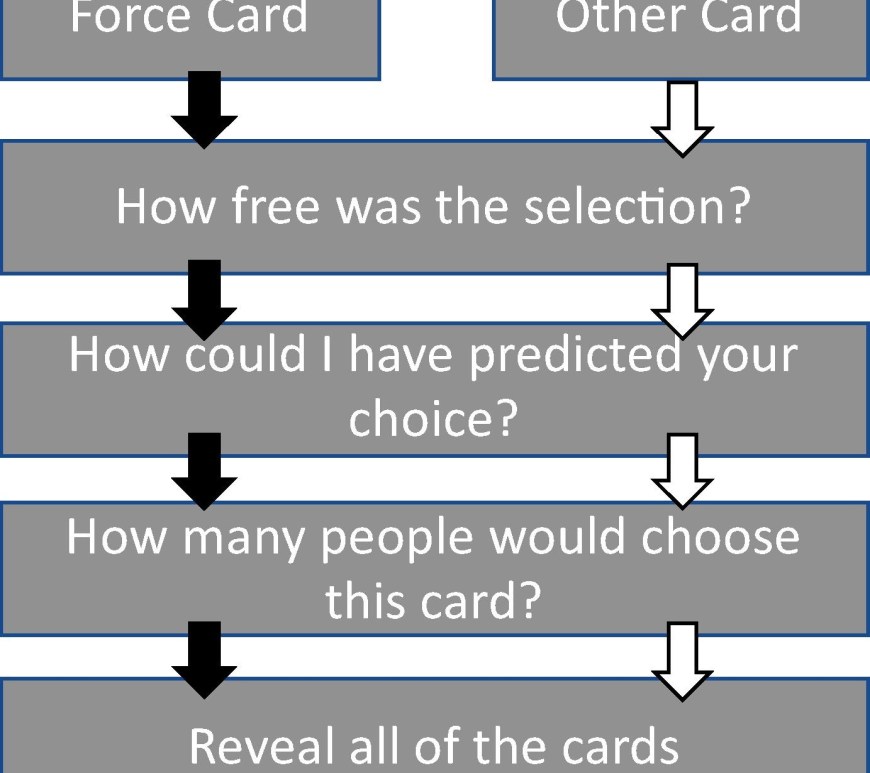
Wendy Wu ’22 Magicians around the world have fascinated their audiences by performing the impossible. One of their signature acts is being able to predict a card randomly chosen. Rather than magical intuition, the magician’s predictive prowess is more likely due to an understanding of human nature. Gustav Kuhn, a Reader in Psychology at Goldsmiths, University of London, sought to apply this understanding to the … Continue reading Pick a Card, Any Card

Antibody Conditioning Enables Tolerance of Glial Grafting

Vignesh Subramanian ’24 In the central nervous system (CNS) and peripheral nervous system (PNS), glia are supportive cells that form myelin sheaths, or coatings, that insulate and protect neurons. Activated glial cells are also capable of producing growth factors such as BDNF and bFGF that trigger neuroinflammation, inducing a prolonged state of pain which alerts an organism to potential nerve injury. As such, various subtypes … Continue reading Antibody Conditioning Enables Tolerance of Glial Grafting

Majority Rule and Minority Rights

Wendy Wu ’22 Humans are social animals; it is in our nature to communicate and to cooperate. We live with the understanding that we not only act in our individual interests, but also in the interests of the community. The problem is that not all members of the group will benefit from community decisions all the time. How, then, should we make collective decisions? Many … Continue reading Majority Rule and Minority Rights

How the Mental Health of College Students in China has been Affected by COVID-19

Yukta Kulkarni ’22 The COVID-19 pandemic has taken over the world in a way that disrupts almost everyone’s previous way of life. People can no longer leave their house without wearing a mask, socialize within 6 feet of friends and family, or go to work/school. These inconveniences are minor, though, compared to those that people diagnosed with, or know someone with, COVID-19 experience. This can … Continue reading How the Mental Health of College Students in China has been Affected by COVID-19

World Trade Center first responders with PTSD and cognitive impairment at high-risk for developing dementia

Priyanshi Patel ’22 According to two studies presented by Stony Brook University at the Alzheimer’s Association International Conference, World Trade Center (WTC) first responders with signs of cognitive impairment (CI) exhibited neurological abnormalities and anomalies in their blood, which are normally attributed to Alzheimer’s disease patients. The first study investigated MRI results of WTC responders that showed significant gray matter atrophy compared to individuals of … Continue reading World Trade Center first responders with PTSD and cognitive impairment at high-risk for developing dementia

Can video games enhance auditory processing? New research dives deeper into the effects of video gaming on visual and auditory cognitive functions.

Joyce Chen ’23 Within the past few decades, video games have become one of the most universally treasured forms of entertainment among players of all ages. Amongst various genres, action games are widely popularized across the United States. Despite the notable effects that video games have on visual processing, there is a lack of evidence regarding the effect of video games on auditory function. Researcher … Continue reading Can video games enhance auditory processing? New research dives deeper into the effects of video gaming on visual and auditory cognitive functions.

Expectation-induced modulation of metastable activity underlies faster coding of sensory stimuli

Sabah Bari ’24 Expectation is what drives the human brain to perceive our senses. Perception is connected to sensory processing, and the recognition of the stimuli is what determines how accurately and how fast individuals are able to understand it. In the gustatory cortex, the pre-stimulus activity is the anticipation of a specific taste before even consuming a food. The anticipation is a trigger to … Continue reading Expectation-induced modulation of metastable activity underlies faster coding of sensory stimuli

Melittin: A Natural Peptide from Bee Venom Which Induces Apoptosis in Human Leukemia Cells

Thumyat Noe ’23 Past research has shown that honeybee’s venom has the potential to treat various diseases such as arthritis, chronic pain, cancer, and atopic dermatitis. The venom mostly consists of peptides and low molecular weight compounds such as sugars and amino acids. Melittin is one of the peptides found within honeybee’s venom and possesses the most bioactive properties among all the compounds in the … Continue reading Melittin: A Natural Peptide from Bee Venom Which Induces Apoptosis in Human Leukemia Cells

The Impact of Pubertal Development on Anxiety Risk and Startle Habituation

Aditi Kaveti ‘23 As children begin pubertal development, they experience a host of changes that may contribute to feelings of anxiety, including increases in weight and height, changes in body shape, and hormonal fluctuations. In a study done in part by Felicia Jackson of the Department of Psychology at Stony Brook University, researchers examined the relationship between mean startle, startle habituation, pubertal development, behavioral inhibition … Continue reading The Impact of Pubertal Development on Anxiety Risk and Startle Habituation

Loss of Sense of Smell Caused by COVID-19

Aditi Kaveti ‘23 The coronavirus pandemic has changed our lifestyles as we knew it. As we find ways to stay safe during the pandemic, research continues to bring us new information about COVID-19. One of the earliest and most commonly reported indicators of COVID-19 is the temporary loss of smell, or anosmia. Olfactory cells are the body’s smell nerve cells that are stimulated by the … Continue reading Loss of Sense of Smell Caused by COVID-19

The Impact of Patient Intellectual Disability on Organ Transplantation Candidacy

Gwenyth Mercep ’22 Disqualifying patients with intellectual disabilities (ID) from receiving organ transplantation is an unfortunate reality in healthcare. Compared with the evidence-based criteria used to determine transplant eligibility, the ID model has the potential to be discriminatory and subjective [1]. The use of ID in transplant candidacy may stem from perceived worse adherence and outcomes for patients with ID, concern of penalties to transplant … Continue reading The Impact of Patient Intellectual Disability on Organ Transplantation Candidacy

2020 Young Investigators Writing Competition Winners

<p value="<amp-fit-text layout="fixed-height" min-font-size="6" max-font-size="72" height="80">The Stony Brook Young Investigators Review (SBYIR) is pleased to announce the results of the <strong>2020 Young Investigators Writing Competition</strong>! Our competition invited high school students from Long Island to write brief articles in newspaper or literature review format to describe and engage the public in scientific societal controversies. Specifically, students entering grades 10-12 explored dilemmas regarding experimental therapy, neutral … Continue reading 2020 Young Investigators Writing Competition Winners