Inactivated Gene Linked to Kidney Cancer and Tumor Development in Mice

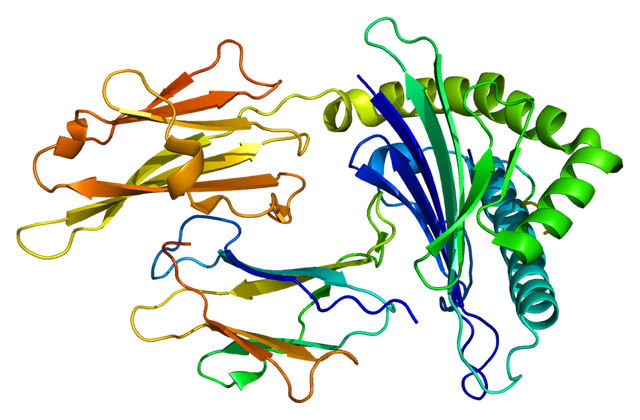
Gaurav Sharma ’22 The epigenetic components pertaining to the onset of cancer have been of interest for many years due to the hope of developing approaches to delay the onset of cancer in the future for an individual. Recently, a tumor suppressor family has been discovered, called Ras-Association Domain Family (RASSF) which epigenetically inactivated breast, lung, skin, and thyroid cancers. Neither RASSF10’s in-vivo function nor … Continue reading Inactivated Gene Linked to Kidney Cancer and Tumor Development in Mice

After the Fall: Link Between PTSD and Prostate Cancer

Wendy Wu ’22 On the morning of September 11, 2001, the Twin Towers of the World Trade Center (WTC) collapsed. Within minutes, first responders arrived on the scene. Amidst the debris and smothering dust, they got to work, evacuating citizens and heading into the towers to rescue whoever they could. It was truly a display of heroic bravery and compassion, but unfortunately, many of the … Continue reading After the Fall: Link Between PTSD and Prostate Cancer

The Disappearance of the Y Chromosome (And Other Chromosomes)

Wendy Wu ’22 The Y-chromosome is quite unlike its homologue, the X-chromosome. With a relatively lacking number of genes, the Y-chromosome is the only chromosome inessential for life; its major function is to determine the sex of offspring. How did this come to be the case? A part of the reason is that the Y-chromosome does not occur as a pair; it does not have … Continue reading The Disappearance of the Y Chromosome (And Other Chromosomes)

Psychosis from schizophrenia can lead to social isolation

Joyce Chen ‘23 As humans, we are able to distinguish between what is real and what is not. But sometimes, the lines between reality and fantasy can get blurred. Psychosis is a mental condition where an individual loses his or her sense of perception due to an impairment in thought, resulting in a loss of connection with reality. Untreated psychosis has been theorized to be … Continue reading Psychosis from schizophrenia can lead to social isolation

The importance of first impressions

Joyce Chen ’23 When it comes to meeting someone new, a first impression is especially significant. Naturally, humans want to create an everlasting effect or influence on others from their very first impression; However, there are several drawbacks, one of which being dominance. A study conducted by Laura Clark at the University of Lincoln aims to investigate the judgments of people based on the facial … Continue reading The importance of first impressions

Announcing the SBYIR Research Symposium!

Attention all undergraduate students! If you have participated or are currently participating in faculty-mentored research, we at the Stony Brook Young Investigators Review understand that it has been difficult for you to participate in conferences and showcase your work. To give you an outlet by which you can not only present your research, but also gain insightful feedback from faculty on your work and presentation, … Continue reading Announcing the SBYIR Research Symposium!

Genetic factors may be involved in disease risk of early-onset autoimmune thyroid disease

Panayiota Siskos ’23 Autoimmune thyroid diseases, such as Graves’ disease and Hashimoto’s disease, are often characterized by the infiltration of T cells and B cells in the thyroid as well as the production of antibodies specific to thyroid antigens. Genes including human leukocyte antigen (HLA), cytotoxic T lymphocyte-associated factor 4 (CTLA-4), CD40, and protein tyrosine phosphatase-22 (PTPN-22) have been previously associated with susceptibility to autoimmune … Continue reading Genetic factors may be involved in disease risk of early-onset autoimmune thyroid disease

Threatening cues have a larger effect on perception than neutral cues

Panayiota Siskos ’23 The theory of predictive coding states that the brain continuously creates a mental model of the surrounding environment using prior knowledge from memory. This mental model is then used to predict sensory input, such as anticipating a smell, a sound, or a touch.  A group of researchers from Stony Brook University and Columbia University studied the effect of threatening cues on sensory … Continue reading Threatening cues have a larger effect on perception than neutral cues

Application of Trispecific Antibodies to Anticancer Immunotherapy

Ashley Goland ’23 Immunotherapy is a form of cancer treatment that utilizes the body’s own immune system to destroy cancerous tumors and has shown promise in past animal and clinical human trials. For all of its dazzling successes to date, however, immunotherapy is not completely effective for treating the full range of cancer types and patients— yet. Scientists working in Sanofi Research and Development believe … Continue reading Application of Trispecific Antibodies to Anticancer Immunotherapy

Implications of Solar Geoengineering

Ashley Goland ’23 Solar geoengineering is a technology that aims to reflect incoming sunlight away from the Earth to reduce the rise of global temperatures, and one proposed approach is to send aerosols into the atmosphere. Although this method may seem like a quick, relatively cheap way to delay further climate change, the effects it could have upon marine and terrestrial organisms are not yet … Continue reading Implications of Solar Geoengineering

Breeding can Change Dogs’ Brains

Ayesha Azeem ‘23 For centuries, humans have been breeding domestic dogs with the intention of producing specific skill sets needed to improve humans’ lives. For example, purpose-bred dogs can be used for hunting or as service dogs that guide people with disabilities. Dog breeding has been highly controversial lately, since dogs are now seen more as companions rather than workers. In a new study conducted … Continue reading Breeding can Change Dogs’ Brains

Comfort Eating and Cortisol Reactivity

Ayesha Azeem ‘23 “Comfort-eating,” or increased food intake, is one of the most common responses to stressful situations. Cortisol is the body’s main stress hormone that regulates metabolism and the immune response to stressful situations. Cortisol reactivity under stress can predict stress-related eating behavior and how it affects the body mass index (BMI). Based on one’s cortisol reactivity to a stressor, a person may be … Continue reading Comfort Eating and Cortisol Reactivity