Different Types of Anesthesia can Impact Breast Cancer Metastasis.

Priyanshi Patel ‘22 Metastasis refers to the surgical removal of solid tumors and metastasis is the main cause of cancer death. Previously, not much was known about the role anesthetics play in cancer metastasis. Complete surgical removal of solid tumors offers the possibility of a cure and is the basic treatment provided. Despite surgery, recurrent metastasis in vital organs does reoccur and is a major … Continue reading Different Types of Anesthesia can Impact Breast Cancer Metastasis.

Examining the Benefits of Unique Coloration for Male Trinidad Guppies

Fatin Chowdhury ’20 The predisposition of organisms in seeking certain phenotypic traits in mates is an oft-observed aspect of the natural world, with sexual selection being a well-studied phenomenon. However, unique coloration specifically often seems to be more linked to lessened survivability (due to an inability to camouflage in environments), or phenomena such as aposematism, where unique colors serve as a warning for predators. In … Continue reading Examining the Benefits of Unique Coloration for Male Trinidad Guppies

Genetics and the Brain

Ayesha Azeem ‘23 Our society currently witnesses an underrepresentation of females in most ‘heavy’ science and mathematics fields, including technology and engineering. Though some may argue that the unfair proportions are due to biological differences, little evidence supports this claim. Scientists study biological differences in the brain, and the brains of males and females are more similar than not. Though behavioral studies often find no … Continue reading Genetics and the Brain

Bacteriophages as Therapeutic Targets in the Alleviation of Alcoholic Liver Disease Symptoms

Simran Kaur ‘20 The acute form of alcohol-induced liver disease, alcoholic hepatitis, has a high mortality rate, and therapy is insufficiently effective. It is known to be promoted by gut microbiota. Cytolysin, a cell-destroying substance secreted by Enterococcus faecalis, is a major cause of hepatocyte apoptosis, consequent liver injury, and progression of hepatic disease. Patients diagnosed with alcohol-dependence present with significantly higher concentrations of E. … Continue reading Bacteriophages as Therapeutic Targets in the Alleviation of Alcoholic Liver Disease Symptoms

Engineered T-cells as a Target for Fibrosis in Myocardial Disease

Simran Kaur ‘20 Fibrosis, the excessive deposition of extracellular matrix by fibroblasts into cardiac tissue, is a significant process in the development of cardiac disease and subsequent cardiac failure, but there are not many clinical treatments that can effectively target it. Cardiac fibroblasts express an antigen that can be targeted by the transplantation of antigen-specific CD8+ T-cells because CD8+ T-cells are involved in the inflammatory … Continue reading Engineered T-cells as a Target for Fibrosis in Myocardial Disease

CRISPR-Edited Stem Cells as a Potential Therapeutic Target for Cancer in Immunocompromised Individuals

Simran Kaur ‘20 CRISPR-Cas9 technology has been used to edit the mammalian genome for decades, allowing scientists to remove, add, and change sections of DNA sequences. The human immunodeficiency virus (HIV) does not have a cure that exists, but studies have shown that allogeneic transplantation of STEM cells into diagnosed patients can eradicate the virus. CCR5 is the coreceptor for the entry of HIV into … Continue reading CRISPR-Edited Stem Cells as a Potential Therapeutic Target for Cancer in Immunocompromised Individuals

The Potential for Targeted Cancer Therapy

Aditi Kaveti ‘23 Human bodies rely on tumor suppressors to regulate cell production. The bromodomain-containing protein 9 (BRD9) RNA molecule is an important tumor suppressor for many types of cancer, including uveal melanoma, chronic lymphocytic leukemia, and pancreatic cancer. BRD9 is extremely important because it represses abnormal cell reproduction and the formation of tumors. A mutation in the gene that produces the BRD9 RNA molecule … Continue reading The Potential for Targeted Cancer Therapy

Growth Factor Induces Methylation Changes in Lung Fibroblasts

Priyanshi Patel ’22 Idiopathic Pulmonary Fibrosis (IPF) is an irreversible, chronic, and lethal disease of unknown etiology. IPF is characterized by excessive deposition of extracellular matrix (ECM), which is secreted mainly by activated fibroblasts under certain stimuli. Recent studies have evaluated alterations with DNA methylation as a collective driver of IPF. Few studies explore global DNA methylation in lung fibrosis, but none focused on transforming … Continue reading Growth Factor Induces Methylation Changes in Lung Fibroblasts

Essential Role of the MEKK3-ERK5 Module in Endothelial Cell Death

Jorge Pincay ’20 Atherosclerosis is a chronic inflammatory disease characterized by the build-up of plaque in artery walls, which can lead to coronary artery disease, heart failure, and stroke. Since atherosclerosis results from endothelial cell injury and death, researchers are making greater efforts to acquire a better understanding of the cellular mechanisms that may lead to these unfavorable changes in endothelial cells. In particular, the … Continue reading Essential Role of the MEKK3-ERK5 Module in Endothelial Cell Death

Tfh13: The Cells Involved In An Allergic Reaction

Mariam Malik ’22 Anaphylaxis is the biological reaction of the body to an allergy, in which airways are constricted and blood pressure suddenly drops. Anaphylactic shock can result from various allergies, including food and insect stings. Previous research has shown that during an allergic reaction, the immune system releases high levels of high-affinity Immunoglobin (IgE) antibodies, which then strongly bind to allergens to form an … Continue reading Tfh13: The Cells Involved In An Allergic Reaction

The Genetic Role of Left-Handedness

Ellie Teng ’21 90% of the population are right- handed, so what is different about individuals who are left- handed? Handedness was previously known to be partially affected by the genome; twin studies showed that genes account for about 25% of the variation in handedness. Researchers at the University of Oxford sought to connect the genetic difference to areas of the brain that control language. … Continue reading The Genetic Role of Left-Handedness

The Use of Focused Ultrasound for Enhanced Delivery of Gene Therapy Across the Blood-Brain-Barrier

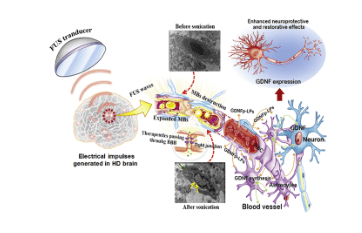
Jorge Pincay ‘20 Huntington’s disease (HD) is an autosomal dominant neurodegenerative disease that results in the degradation of nerve cells in the brain over time. This disease is the result of a DNA mutation — a cytosine-adenine-guanine (CAG) trinucleotide repeat expansion– that occurs in the gene that encodes for the huntingtin (Htt) protein. This repeat expansion causes a highly toxic form of the Htt protein … Continue reading The Use of Focused Ultrasound for Enhanced Delivery of Gene Therapy Across the Blood-Brain-Barrier