Clinical Applications of Artificial Intelligence in Neurocardiology

Author: Amal Bilal, Class of 2028 Neurocardiology is a new and emerging field that examines the heart-brain interaction in the context of health and disease. Conditions such as stroke and cardiac arrhythmia are connected by the heart-brain axis: a network of neural, vascular, and physiological signals. Early and accurate detection of abnormalities along this axis is essential for improving patient outcomes. Stony Brook Medicine researcher … Continue reading Clinical Applications of Artificial Intelligence in Neurocardiology

Celestial Maps: A Newly Discovered Method of Navigation in Bogong Moths

Author: Sean Krivitsky, Class of 2026 Figure 1. Clustering formation of bogong moths following migration Many different species of animals have been observed to perform migratory travels for a variety of reasons, including searching for food, being influenced by changes in climate, or finding a safe breeding ground. These animals do so using unique methods of navigation–some may learn from previous generations’ migration patterns. In … Continue reading Celestial Maps: A Newly Discovered Method of Navigation in Bogong Moths

Hippocampal interneuron activity drives functional hyperemia leading to neurovascular disfunction and Alzheimer’s Disease

Author: Kang Lai, Class of 2026 Functional hyperemia, or the dilation of blood vessels in response to increased metabolic activity, is critical for regulating the levels of oxygen and glucose in the brain. Moreover, it facilitates the clearance of metabolic byproducts such as amyloid-β peptide (Aβ), an accumulation of which underlies Alzheimer’s disease. In Alzheimer’s Disease (AD), disruptions in vascular dynamics are significant but poorly … Continue reading Hippocampal interneuron activity drives functional hyperemia leading to neurovascular disfunction and Alzheimer’s Disease

Adolescent Substance Use and Changes in Dopamine in The Brain

Laura Ladekarl, Class of 2025 Dopamine, central in the brain’s reward system, plays a key role in addiction and reward processing. Studies have shown that individuals with substance use disorders (SUDs) show reduced dopamine release and fewer receptors, even after prolonged periods of abstinence from their drug of choice. Neuromelanin-sensitivity magnetic resonance imaging (NM-MRI) visualizes and quantifies the concentration of Neuromelanin (NM) in brain tissues. … Continue reading Adolescent Substance Use and Changes in Dopamine in The Brain

Lipid Accumulation Found as a Mechanism of Cellular Senescence in Parkinson’s Disease

Author: Asher Agarwal, Class of 2027 Figure 1. A man assisting an old patient with taking their medication. Parkinson’s Disease (PD) is a neurodegenerative disorder associated with neuronal death, specifically of the dopaminergic (DA) neurons in the region of the brain responsible for motor coordination and control. The death of these neurons, most commonly due to aging, causes a classic triad of symptoms: bradykinesia (slow … Continue reading Lipid Accumulation Found as a Mechanism of Cellular Senescence in Parkinson’s Disease

Back Like They Never Left: How the Remnants of Ancient Viruses May Affect the Progression of Neurological Disease

Author: Luis Caseñas, Class of 2026 Figure 1: Amyotrophic Lateral Sclerosis (ALS) is a neurological disease that triggers the degeneration of one’s Central Nervous System. Specifically, ALS targets motor neurons (pictured above) essential to muscle control and coordination. Amyotrophic Lateral Sclerosis (ALS) is a neurodegenerative disease that targets motor neurons in the Central Nervous System. This degeneration inevitably leads to gradual loss of muscle control … Continue reading Back Like They Never Left: How the Remnants of Ancient Viruses May Affect the Progression of Neurological Disease

Virtual Reality as a Means of Neuroplasticity

Tiffany Ang, Class of 2025 Neuroplasticity is defined as the brain’s ability to create and reorganize neural connections in response to learning and or following injury. This reorganization can be structural or functional, resulting from learning or brain damage respectively. Virtual reality (VR) offers an integrative approach to enhance neuroplasticity by producing controlled yet engaging environments that imitate real-life experiences and promote realistic patterns of … Continue reading Virtual Reality as a Means of Neuroplasticity

Mature Oligodendrocytes Demonstrate Delayed Cell Death by Alternate Mechanism

By Vignesh Subramanian, Class of 2024 Figure 1: A myelinating oligodendrocyte in a murine brain.  Oligodendrocytes are specialized glial cells in the central nervous system primarily responsible for myelination, the process of ensheathing the axons of neurons in a lipid-rich membrane known as myelin, which insulates the nerve fibers and speeds up the transmission of the action potentials they conduct. Oligodendrocytes are the products of … Continue reading Mature Oligodendrocytes Demonstrate Delayed Cell Death by Alternate Mechanism

Uncovering a Key Mechanism of Rett Syndrome Pathology

Author: Sean Krivitsky, Class of 2026 Rett syndrome (RTT) is a severe neurological disorder found primarily in females that causes impairment in essential functions including breathing, eating, and walking abilities. The disorder is characterized by slowed brain growth, which can lead to various mental and physical disabilities. Key markers and causes of RTT are mutations on a gene called MECP2. MECP2 is an X-linked gene … Continue reading Uncovering a Key Mechanism of Rett Syndrome Pathology

Quantifying Affectionate Touch in Romantic Relationships

Julia Chivu ’23 Across cultures and continents, affection serves as a universal bond that unites romantic partners. Researchers from various institutions worldwide collaborated on two studies to better understand and quantify the dynamic between love and touch. The first study sought to investigate the global association between love and touch-related behaviors. The second study examined the correlation between frequencies of affectionate touch and love amongst … Continue reading Quantifying Affectionate Touch in Romantic Relationships

Where Do We Feel Love?

Julia Chivu ‘ 23 Figure 1  A person looking off to the side while clutching a neon red heart in a dimly lit environment.  Love has compelled psychologists, philosophers, neuroscientists, and other scholars to try and understand its complexities and implications. Researchers from Aalto University sought to understand how 27 different types of love, including parental, romantic, sexual, and religious love, are perceived and experienced … Continue reading Where Do We Feel Love?

PD-Modeling Midbrain Dopamine Loss Diminishes Thalamocortical Signaling

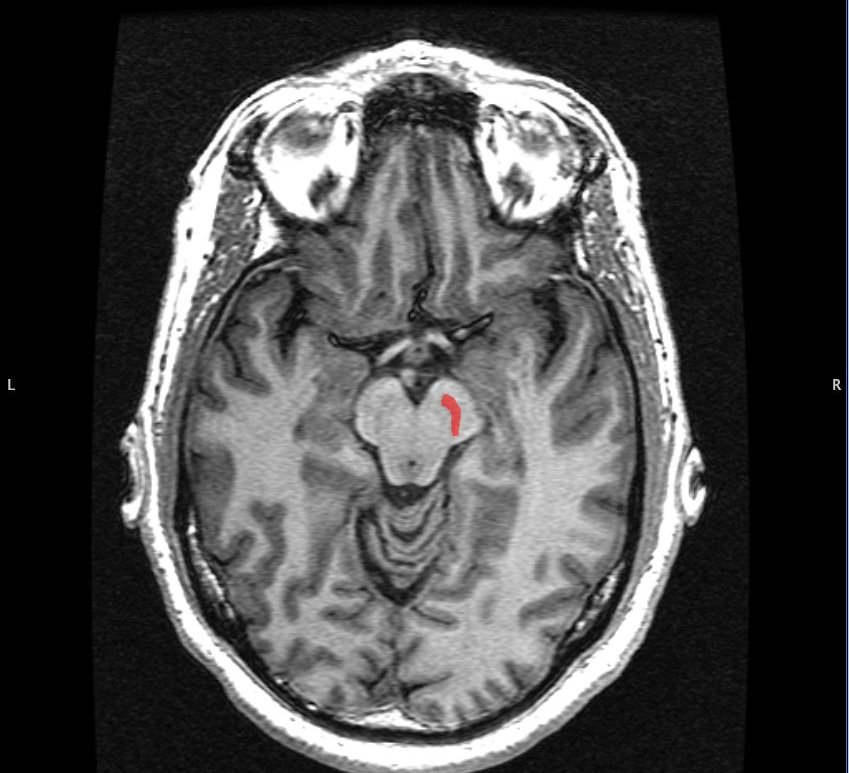
Vignesh Subramanian ’24 Figure 1: The substantia nigra (SN) nucleus in the midbrain. Parkinson’s disease (PD) is an age-related, neurodegenerative movement disorder that causes a progressive loss of motor control. The disease is characterized by a loss of dopaminergic (DA) neurons in the substantia nigra (SN), a midbrain nucleus that modulates movement and reward functions. The SN is one of five subcortical nuclei that make … Continue reading PD-Modeling Midbrain Dopamine Loss Diminishes Thalamocortical Signaling