Harnessing the Attention-Grabbing Power of Video Games for Scientific Progress

Author: Sean Krivitsky, Class of 2026 Figure 1. Oil painting visualization of a video game player. Citizen science is a common strategy employed by researchers across many specializations to harness the input of the public to further scientific research. The billions of video game players worldwide posed an opportunity for scientists using citizen science and, from there, emerged Citizen Science Games (CSGs). However, converting scientific … Continue reading Harnessing the Attention-Grabbing Power of Video Games for Scientific Progress

Skill Issue: The Effect of FPS Games on Cortical Activity

Author: Ishmam Khan, Class of 2025 Figure 1: The FPS genre of gaming has widespread connections around the world, demonstrating its popularity The FPS, or first-person shooter, genre of gaming has a controversial history. In the 1990s, there was a scare regarding the impact such games would have on children. Some worries included, but were not limited to: increased levels of aggression, poor emotional and … Continue reading Skill Issue: The Effect of FPS Games on Cortical Activity

What do Machines Know of Depression? Explaining Past Failures of Clinical Algorithms About MDD

Author: Ishmam Khan, Class of 2025 Figure 1: MDD is a devastating, extremely common, and fast-growing disease in terms of suffering, mortality, and cost to society. Since COVID-19, the rates of mental health disorders have increased significantly. One such disorder is Major Depressive Disorder (MDD), a serious disorder affecting more than 8% of the US population. As of 2024, the remission rates, or rate of … Continue reading What do Machines Know of Depression? Explaining Past Failures of Clinical Algorithms About MDD

Integrating 3D Models to Aid Volume Estimation of Marine Mammals

Zhifei Zeng ’23 The size of wild animals is closely related to body condition. For example, the size of whales usually reflects changes in their fat stores and thus their body condition. However, it is difficult for scientists to directly measure the body size of whales due to their large size and ocean environment. Therefore, a research group led by Dr. Lesley H. Thorne at … Continue reading Integrating 3D Models to Aid Volume Estimation of Marine Mammals

AI-Assisted Readings May Greatly Improve Fracture Diagnosis

Sooraj Shah ’24 The detection of fractures via radiography is one of the most highly used practices in clinical settings such as the emergency room, urgent care, orthopedic and rheumatology offices. The missed fracture diagnosis rate is between 1-3%, accounting for almost 1,200 of every 100,000 patients. A major cause of missed fractures is erroneous initial readings by residents or non-radiologists, which are only corrected … Continue reading AI-Assisted Readings May Greatly Improve Fracture Diagnosis

The Future of 3D Printing in Biotechnology

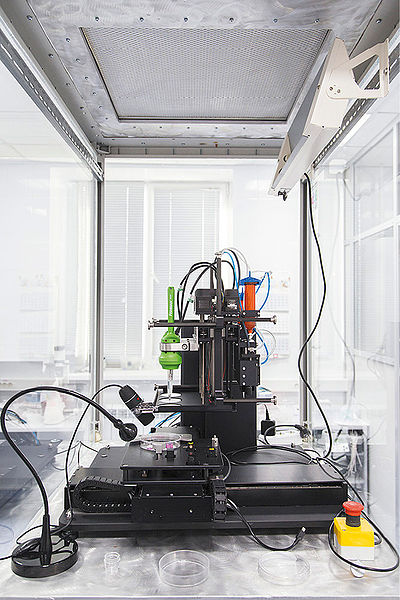
Aditi Kaveti ‘23 Health technology has advanced tremendously, especially in the field of tissue engineering. Two main products that have resulted from tissue engineering are scaffolds and hydrogels, both being distinct physical forms of polymers for tissue engineered skin. To  enhance cell interaction with polymers, cells need to be present as integrated parts of the bioengineered tissue or host cells need to be recruited for … Continue reading The Future of 3D Printing in Biotechnology

All Eyes and Ears: How Visual Deprivation Enhances Auditory Learning in Adult Mice

Mariam Malik ‘22 Past research and work has proven the interconnectedness of all senses and their corresponding cortices in the brain. For example, it has been scientifically proven that those lacking in one sense possess advanced abilities in others. Cross-modal learning, or the manipulation of one sense to cause alterations in another, is a key feature of further research. Researchers at the University of Maryland … Continue reading All Eyes and Ears: How Visual Deprivation Enhances Auditory Learning in Adult Mice

The Future of Prosthetics Technology

Aditi Kaveti ’23 People with hand amputations often rely on prosthetic hands and services and face difficult daily challenges in performing simple tasks. The conventional prosthetic hand restores mobility but does not provide realistic human hand-like features. The inability to perform daily activities affects the quality of life and can be damaging to the patient’s mental health and well-being. A new electronic glove boasts the … Continue reading The Future of Prosthetics Technology

The Usage of Electromagnetic Waves as Water Sanitizers as Opposed to Traditional Methods of Water Sanitation

Kavindra Sahabir ‘21 One of the biggest challenges for animal breeding on farms is assuring the highest quality of the drinking water afforded to said animals. The goal is to prevent contamination from pathogens in order to ensure optimal animal health, and lower the risk disease. Currently, the system that most farms use is a physical method of filtration along with different chemical treatments. However, … Continue reading The Usage of Electromagnetic Waves as Water Sanitizers as Opposed to Traditional Methods of Water Sanitation

Solar Cells Could Power Medical Implants

  By Rideeta Raquib ‘19 Electronic implants are usually powered by batteries. Rechargeable batteries, which are rare, require continuous charging and primary batteries require implant replacements if they are completely used up. Thus, lead researcher Dr. Lukas Bereuter, and his research team at the University of Bern in Switzerland investigated whether sunlight could serve as an alternative source of energy to power medical implants.   Models … Continue reading Solar Cells Could Power Medical Implants

Improved Batteries in the Human Body

by Michael D’Agati   The field of bioelectronics, which produces implantable devices for sensing and therapeutics, has recently become a popular field. There is high promise in the collaboration between biology and electronics, but in order for these new innovations to work, a power source, such as implantable batteries, must be present to supply the energy needed. Currently, implantable batteries require bulky metal cases to keep … Continue reading Improved Batteries in the Human Body

The Exploration of Stone Tools

by Lillian Pao (’18) Stone tools have been around for millions of years. It is a technology that has evolved with the hominin phenotype. About three million years ago, flake-making was mastered by the African hominins, followed by handaxes 1.75 million years ago, and custom complex stone reductions by 1.6 million years ago.  Professor Mark W. Moore from the University of New England and a … Continue reading The Exploration of Stone Tools