Understanding Antigen Replacement in Influenza A Viruses

by Caleb Sooknanan ’20   Influenza is a common viral infection that attacks the respiratory system. Major outbreaks occur due to antigenic changes in the influenza A virus, which is when virus strains from separate hosts combine to form different strains with a mixture of surface antigens. Unfortunately, the mechanism behind this replacement, or antigenic shift, remains misunderstood. Dr. Yuki Furuse and his team of researchers … Continue reading Understanding Antigen Replacement in Influenza A Viruses

Genetic Vulnerability in Alzheimer’s Disease

by Richard Liang ’18   Alzheimer’s disease is a major neurodegenerative condition, with individuals usually developing symptoms at ages above 65. Symptoms include impaired memory, speech, and other mental functions. Alzheimer’s has shown a correlation with increasing aggregates of Amyloid-β plaques and neurofibrillary tangles (NFTs). However, it is difficult to predict whether and at what time these plaques and tangles will be expressed in an individual. … Continue reading Genetic Vulnerability in Alzheimer’s Disease

New Study Reveals Effects of Timely Hepatitis B Vaccination

by Caleb Sooknanan ‘20   Hepatitis B is a viral infection that often attacks the liver. As infections have become increasingly common in Fujian, China, new measures have been created to control the virus’s impact. Such efforts have included vaccines for newborns and infants, as recommended in China’s national immunization program vaccine (NIPV) series. However, little is known about how the timely administration of the first … Continue reading New Study Reveals Effects of Timely Hepatitis B Vaccination

Self-Control Beyond the Prefrontal Cortex

by Richard Liang ’18   The human brain affects almost everything aspect of existence, from locomotion and speech to feeling. Decision making and self-control are also affected by parts of the brain, specifically the prefrontal cortex. However, a recent study led by Alexander Soutscheck in the Laboratory for Social and Neural Systems Research of the University of Zurich has shown that there could also be another … Continue reading Self-Control Beyond the Prefrontal Cortex

Effects of Chikungunya Fever on Pregnancies and Newborns

by Caleb Sooknanan ’20   Chikungunya is a mosquito-borne virus that incites severe joint pain and fever. The chikungunya fever (CHIKF) epidemic in Latin and South America in 2013 revealed that the virus posed a threat to maternal and child health. However, information surrounding the risks and effects of mother-to-child transmission of the virus is limited. Dr. Jaime R. Torres and his team of researchers at … Continue reading Effects of Chikungunya Fever on Pregnancies and Newborns

A New Transistor Supercapacitor Hybrid: The Transcap

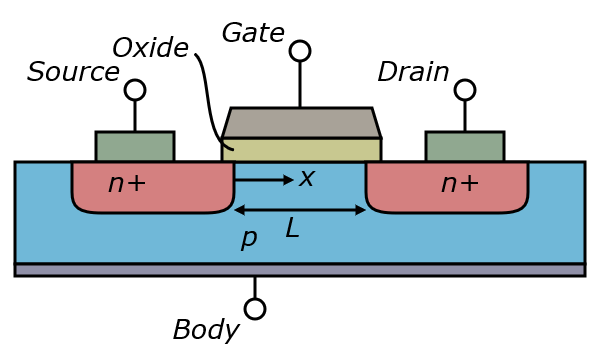
By Michael D’Agati   Finding new materials and geometries for the creation of transistors has become a focal point in the field of electronics within the past decade. This transition from silicon-based materials is important towards keeping up with a prediction made by Intel co-founder Gordon Moore, which states that the number of transistors in a dense integrated circuit doubles every two years. In other … Continue reading A New Transistor Supercapacitor Hybrid: The Transcap

November Feature: BMES Interview

This month, one of our Cabinet Members, Benjamin Kerner, sat down with the President of the Biomedical Engineering Society (BMES), Adiba Chowdhury, to showcase their work at Stony Brook. The Biomedical Engineering Society is dedicated to promoting Biomedical Engineering in the hopes it will become a more tangible and approachable field to undergraduates. B: What it your role in the organization and how did you … Continue reading November Feature: BMES Interview

Caffeine May Protect Against Cognitive Impairments and Dementia

by Patrick Yang   The United States has the highest caffeine consumption in the world. In the U.S. alone, 54% of adults consume caffeine every day. Although caffeine does a fine job in keeping consumers alert, caffeine’s curative powers may go beyond just remedying morning grumpiness. According to animal studies, there is an inverse correlation between caffeine consumption and cognitive impairment and dementia. Although literature … Continue reading Caffeine May Protect Against Cognitive Impairments and Dementia

Black Phosphorus Aids Development of Nanoscale Transistors

by Michael D’Agati   The development of classic silicon-based transistors at the nanoscale level has become more challenging, especially within the past decade. Scientists have thus turned towards producing transistors with new materials and geometries. Black phosphorus (BP), a material discovered a few years ago, could potentially provide a breakthrough towards making smaller transistors. It has grown in popularity in electronic device production because of its … Continue reading Black Phosphorus Aids Development of Nanoscale Transistors

Scientists Discover Postnatal Migratory Neurons

by Patrick Yang   The cerebral cortex is the outermost layer of the brain and is responsible for advanced processes, such as complex emotion, that distinguish humans from other animals. A key component in cortex development is prenatal neural migration, the movement of neurons before birth, which begins early on in the embryo. These migratory neurons, or Arc neurons, originate near areas of initial development … Continue reading Scientists Discover Postnatal Migratory Neurons

A New Generation of Transistors

by Michael D’Agati   The number of transistors in an integrated circuit doubles every other year, according to Moore’s Law. This means that transistors must either continue to shrink beyond the nanoscopic scale or utilize different materials and geometries. However, limitations of atomic interactions at such a small scale make it difficult for transistors to be shrunk past the nanoscopic scale. In order to combat this … Continue reading A New Generation of Transistors

Hormonal Birth Control May Lead to Depression

by Patrick Yang   Approximately 62% of women aged 14-44 in the U.S. are using a method of contraception, and 27% of those women are using hormonal contraception, according to a National Health Statistics report. The key to hormonal contraception’s mass appeal lies in its convenience and reversibility; it can be found in pill or patch form and does not have permanent effects. However, the estrogen … Continue reading Hormonal Birth Control May Lead to Depression