Creating Birds of Similar Feathers: Leveraging Similarity to Improve Teacher-Student Relationships and Academic Achievement

By Ericka Berman   Having thriving student-teacher relationships (TSR) is important in academic success. In studying the improvement of TSR, schooling, positive youth development, and social motivation are of great interest to researchers. Dr. Hunter Gehlbach and his team of researchers carried out this study using a sample of 315 ninth graders and 25 teachers from a high school in the southwestern United States. Students were … Continue reading Creating Birds of Similar Feathers: Leveraging Similarity to Improve Teacher-Student Relationships and Academic Achievement

Figure 1. Mammalian brains can be influenced by non-genetic and Allele-Specific expression

Mammalian Brain Affected by Non-Genetic and Allele-Specific Expression

By Rideeta Raquib ’19 The brain is a complex organ that is constantly being impacted by genetic and epigenetic factors. Mental illness patients are usually heterozygous in terms of inheriting one mutant allele. The random inactivation of the X-chromosome and genomic imprinting influences brain architecture and risk of disease. Studies on neuropsychiatric disorders uncovered a spectrum of data regarding the epigenetic dynamics of such dysfunction. … Continue reading Mammalian Brain Affected by Non-Genetic and Allele-Specific Expression

Figure 1. Consumers view all-natural products more positively despite no formal definition existing for the term.

The “All-Natural” Marketing Label and its Effect on Consumers

By Megan Tan ’19 The “All-Natural” label is extensively used to market consumer products. However, this label is not regulated or defined by the Food and Drug Administration (FDA) since it is deemed a marketing label to influence consumers’ purchases. As such, little research has been done to analyze the effect that that label has on consumers’ perceptions of “all natural” food quality, nutritional content, … Continue reading The “All-Natural” Marketing Label and its Effect on Consumers

Figure 1. Liraglutide 3·0 mg may reduce the risks of type 2 Diabetes.

Reduction of Type 2 Diabetes Via Weight Loss Drug

By Rideeta Raquib ’19 Prediabetes, also known as “borderline diabetes,” is a condition common among people with obesity who have increased blood sugar levels. Although it can eventually lead to type 2 diabetes, prediabetes can be cured through exercise and diet changes. In 2012, 86 million Americans of age 20 years or older had prediabetes. A drug, named Liraglutide 3·0 mg, can reduce body weight … Continue reading Reduction of Type 2 Diabetes Via Weight Loss Drug

Gender Role Congruence and Attractiveness in Online Dating

By Megan Tan ’19 Online dating platforms are becoming more commonly used to meet and start a romantic relationship. A previous study has indicated that more than one-third of marriages in America began online. However, little research has been done on the effect of gender roles and attractiveness in the online dating scenario. Kelsey C. Chappeta and Dr. Joan M. Barth from the Institute for … Continue reading Gender Role Congruence and Attractiveness in Online Dating

Using Positive Image Training to Regain Happiness

By Rideeta Raquib ’19 Emotion-related imagery training is a powerful tool for psychotherapy. Mental imagery can stimulate behavioral and physiological systems more effectively than verbal or informative stimulations. Imagery is less effective on patients diagnosed with generalized anxiety (GAD) because of the tendency to associate bright images with negative occurrences rather than generating positive images. Dr. Svetla Velikova and her team of researchers conducted a … Continue reading Using Positive Image Training to Regain Happiness

Figure 1. Warming in places like Mount Kenya is steeper than current climate models predict.

High-Elevation Warming is Steeper than Previously Expected

By Megan Tan ’19 The Earth is warming at about two degrees annually at sea level. Though it is estimated that high-elevation warming occurs more steeply, it is difficult to measure due to environmental factors such as radiation and humidity which have made it challenging to accurately quantify past temperature changes. Shannon E. Loomis, a postdoctoral fellow at the Department of Earth, Environmental, and Planetary … Continue reading High-Elevation Warming is Steeper than Previously Expected

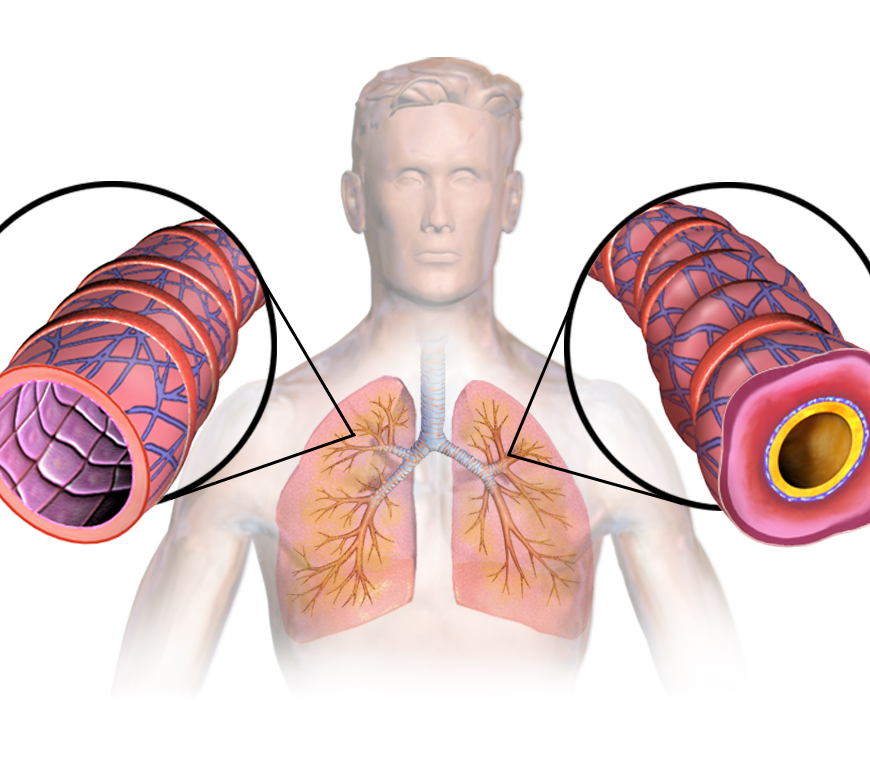
Figure 1. Asthma’s exaggerated contraction of airways is due to a lack of smooth muscle relaxant.

Airway Smooth Muscle Relaxant Finally Identified

By Patrick Yang ’20 Asthma, characterized by its iconic inhalers and abrupt episodes of coughing and wheezing, affects approximately 334 million people worldwide. The inflammatory disease is caused by the prolonged contraction of airway smooth muscles, which triggers difficulty with breathing. Despite our understanding of asthma’s symptoms, the mechanism behind asthma is still a mystery. Scientists speculate that normal airway epithelium, or cells composing the … Continue reading Airway Smooth Muscle Relaxant Finally Identified

Figure 1. Human skin cells can be converted into homing neural stem cells that deliver treatment directly to brain tumors.

Homing Neural Stem Cells Deliver Direct Cancer Treatment

By Patrick Yang ’20 With average survival for glioblastoma patients at approximately 12-15 months, speed is of essence for glioblastoma cancer treatment. Currently, promising stem cell research has found that neural stem cells naturally migrate towards the chemical signals released by glioblastoma cells. If these neural stem cells are engineered to contain cytotoxic agents, they can deliver cancer treatment directly to cancer cells. However, the … Continue reading Homing Neural Stem Cells Deliver Direct Cancer Treatment

Figure 1. Hospital patients who are connected to medical devices are at risk for bacterial sepsis.

Hospital Sepsis Is Dependent on Toxins for Survival

By Patrick Yang ’20 The hospital is considered a place of treatment, but hospitalization also runs the risk of bacterial sepsis – an often fatal immune response to bacterial infection. Bacterial sepsis frequents patients who are connected to medical devices like needles and catheters, which can easily launch the bacteria into the bloodstream. That infection, compounded with an already compromised immune system, can prove to … Continue reading Hospital Sepsis Is Dependent on Toxins for Survival

Blunted Neural Response to Rewards as a Prospective Predictor of the Development of Depression in Adolescent Girls

    By Ericka Berman Previous studies have shown that during adolescence, rates of depression increase markedly, and girls tend to have rates of depression twice as high as boys. Depressed adults were also shown to exhibit a decreased behavioral response to a reward and less brain activity in regions associated with reward processing in comparison to healthy adults. Dr. Brady Nelson and his team … Continue reading Blunted Neural Response to Rewards as a Prospective Predictor of the Development of Depression in Adolescent Girls

Efficacy of Quetiapine Monotherapy in Posttraumatic Stress Disorder: A Randomized, Placebo-Controlled Trial

          Ericka Berman Posttraumatic Stress Disorder (PTSD) is a debilitating illness affecting approximately 7.8% of people in the U.S. over the course of their lifetime. As of now, two medications are approved in the U.S. to treat PTSD, but both treatments have limited success. Characteristics of the antipsychotic medication quetiapine suggest it may be helpful in treating PTSD symptoms of re-experiencing … Continue reading Efficacy of Quetiapine Monotherapy in Posttraumatic Stress Disorder: A Randomized, Placebo-Controlled Trial