Scientists Discover Postnatal Migratory Neurons

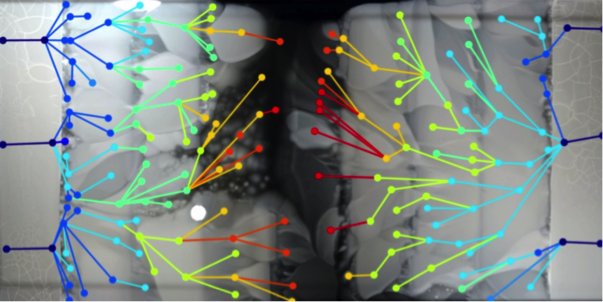
by Patrick Yang   The cerebral cortex is the outermost layer of the brain and is responsible for advanced processes, such as complex emotion, that distinguish humans from other animals. A key component in cortex development is prenatal neural migration, the movement of neurons before birth, which begins early on in the embryo. These migratory neurons, or Arc neurons, originate near areas of initial development … Continue reading Scientists Discover Postnatal Migratory Neurons

A New Generation of Transistors

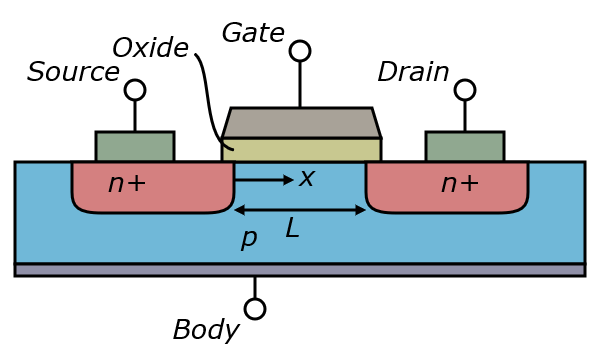
by Michael D’Agati   The number of transistors in an integrated circuit doubles every other year, according to Moore’s Law. This means that transistors must either continue to shrink beyond the nanoscopic scale or utilize different materials and geometries. However, limitations of atomic interactions at such a small scale make it difficult for transistors to be shrunk past the nanoscopic scale. In order to combat this … Continue reading A New Generation of Transistors

Hormonal Birth Control May Lead to Depression

by Patrick Yang   Approximately 62% of women aged 14-44 in the U.S. are using a method of contraception, and 27% of those women are using hormonal contraception, according to a National Health Statistics report. The key to hormonal contraception’s mass appeal lies in its convenience and reversibility; it can be found in pill or patch form and does not have permanent effects. However, the estrogen … Continue reading Hormonal Birth Control May Lead to Depression

Memory and the Stages of a Women’s Menstrual Cycle

    by Rideeta Raquib Previous psychological studies have suggested that women have a good memory, but a new study implies that this may be due to the impact of hormones. Other studies that tested rodents showed that there was a correlation between low estradiol (E2) levels and an increase in striatal mediated response strategies. The striatum is a region of the forebrain associated with … Continue reading Memory and the Stages of a Women’s Menstrual Cycle

Stem Cells Successfully Generate a Fully Functional Liver

    by Rideeta Raquib Approximately 30 million people are affected by liver disease globally, and the quest to find donors for liver transplants is difficult. There is a lack of functional livers available compared to the liver disease patient population. In some cases, a portion of the liver from a living donor is sufficient for regular function. Stem cells are unspecialized cells that can differentiate … Continue reading Stem Cells Successfully Generate a Fully Functional Liver

Visualizing Microbial Evolution on Antibiotic Landscape

By Jalwa Afroz Bacteria survive by evolving and reproducing in order to overcome environmental challenges. However, there is very little information available on how bacteria physically move in order to attain an environment that is suitable for their needs. Scientists from Harvard Medical School and Technion-Israel Institute of Technology have designed a simple way to show how bacteria move as they become resistant to drugs. … Continue reading Visualizing Microbial Evolution on Antibiotic Landscape

‘Super-agers’ Retain Youthful Memories

  By Jalwa Alfroz As humans age, it is normal for cognitive skills, such as memory, to decline. However, some people seem to escape this fate, and are subsequently categorized as super-agers. Investigators at the Harvard-affiliated Massachusetts General Hospital, led by Dr. Bradford Dickerson, revealed that certain areas of the brains of older adults with extraordinary memory performance looked similar to those of young adults. Previously, … Continue reading ‘Super-agers’ Retain Youthful Memories

Potential Means of Controlling Fevers

by Richard Liang   The human body is equipped with effective mechanisms that maintain thermal homeostasis. For example, fevers can be induced to provide an optimal environment to fight certain diseases. However, it is vital that fever temperatures are maintained within a particular threshold. They cannot be too low or the energy available for enzyme activity will be too low. They cannot be too high … Continue reading Potential Means of Controlling Fevers

New Enzyme Responsible for Cell Mediated Death Identified

by Richard Liang   The human body has developed mechanisms to deal with genetically damaged cells before they can become a threat. One such mechanism occurs when DNA is excessively damaged. Cells undergo cell death mediated by an enzyme known as poly ADP-ribose polymerase-1 (PARP-1). However, in certain instances like a stroke, the PARP-1 pathway is overly activated, causing mass cell death in the body. … Continue reading New Enzyme Responsible for Cell Mediated Death Identified

Effects of Second Hand Marijuana Smoke

by Richard Liang   Though it is known that second hand smoke from tobacco is extremely detrimental to one’s health, second hand marijuana smoke is often seen as less harmful. However, a recent study led by Dr. Xiaoyin Wang and his team of researchers from the Cardiology Division of The University of California supports the theory that second hand marijuana smoke might not be so harmless … Continue reading Effects of Second Hand Marijuana Smoke

New Study Evaluates Antibiotic Usage in Malaysian Health Clinics

by Caleb Sooknanan   In primary health care settings, antibiotics are among the most expensive and widely used therapeutic drugs. The usage of antibiotics is typically regulated so that it is of appropriate dosage and affordability for a patient. A recent study performed by Dr. Shafinaz Shamsuddin and his team of researchers from Universiti Teknologi in Malaysia evaluated the use of antibiotics for acute infections in … Continue reading New Study Evaluates Antibiotic Usage in Malaysian Health Clinics

The Relationship between Asplenia and Invasive Pneumococcal Disease

by Caleb Sooknanan   Pneumococcal disease is a bacterial infection caused by Streptococcus pneumoniae that occurs mainly among infants and young children. Invasive pneumococcal disease (IPD) is a more serious form of the infection that can cause meningitis, or bacterial infection in the blood, inflammation of the lungs, and other conditions. Bacterial infection, also known as sepsis, is especially common among patients who have undergone spleen … Continue reading The Relationship between Asplenia and Invasive Pneumococcal Disease