Figure 1. Cardiac imaging techniques, such as echocardiograms and cardiac MRI, allow us to view the structure of the heart in order to diagnose and monitor heart disease.

New Model Predicts How Genetics Affects Heart Structure

By Gene Yang ’19 Congenital heart disease is the most common birth defect in the world. This broad group of genetic conditions affect the heart’s structure and function in different ways, with symptoms ranging from harmless to fatal. However, very little is known about how a human’s genetic makeup affects cardiovascular development. A recent study, which constructed a model that predicts correlations between genetics and … Continue reading New Model Predicts How Genetics Affects Heart Structure

Figure 1. Enzyme that plays a role in memory loss can be inhibited to treat Alzheimer’s disease

Disrupting Enzyme To Tackle Alzheimer’s Disease

By Rideeta Raquib ’19 From histone modifications to DNA alterations, epigenetic processes play a major role in various physiological systems. Histones are proteins in eukaryotic cells that package DNA strands into nucleosomes. Gene regulation processes include histone acetylation, whereby an acetyl group is transferred from one molecule to another. This eventually removes the positive charge on the histones, giving nucleosomes a relaxed structure and allowing … Continue reading Disrupting Enzyme To Tackle Alzheimer’s Disease

Figure 1. Human gut microbe, P. histicola has therapeutic effects against Multiple Sclerosis (MS)

Gut microbe as Potential Treatment for Multiple Sclerosis

By Rideeta Raquib ’19 The human gut is colonized by many microorganisms and each of them plays a role in maintaining various physiological functions, such as regulating digestion and fat absorption. It has been found that a vast number of inflammatory diseases around the world are associated with an instability of the gut microbiome. Researchers at the Mayo Clinic and University of Iowa suggest that … Continue reading Gut microbe as Potential Treatment for Multiple Sclerosis

Figure 1. Zika vaccine developed from Nicotiana benthamiana plant extract

Improved Zika Vaccine Produced by Tobacco Plant extract

By Rideeta Raquib ’19 The Zika virus (ZIKV) is a deadly virus transmitted through mosquito bites that at its climax has infected more than 1.5 million people in Brazil in 2015. The virus continues to spread with approximately 200 ZIKV cases reported in the United States this year. In order to combat the epidemic, new ZIKV vaccines have been developed to inactivate the virus. However, … Continue reading Improved Zika Vaccine Produced by Tobacco Plant extract

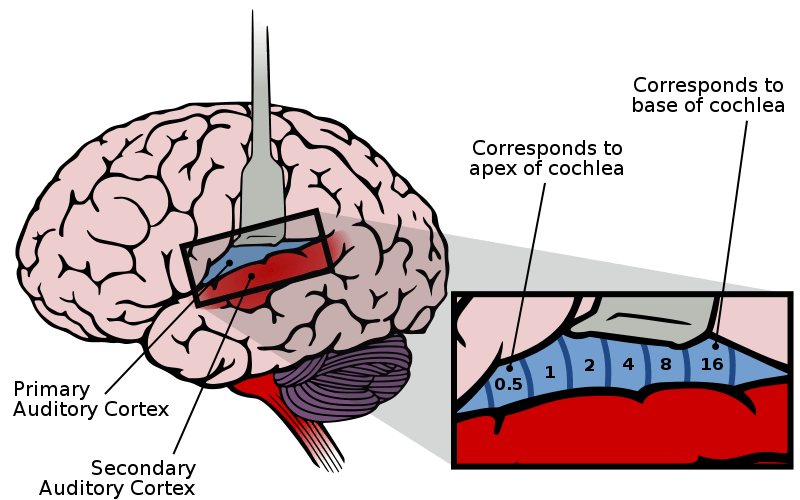
Figure 1: The auditory cortex of the brain highlighted with mapping of sound frequencies.

Restoring Auditory Cortex Plasticity in Adults

By Anna Tarasova ’19 Being able to form, maintain, and strengthen neural connections within the auditory cortex is an important part of language acquisition. Neural plasticity, or the ability of the brain to establish new connections, is especially high in childhood, but decreases with age. A discovery made by Dr. Jay Blundon and his colleagues at the St. Jude Children’s Research Hospital has the potential … Continue reading Restoring Auditory Cortex Plasticity in Adults

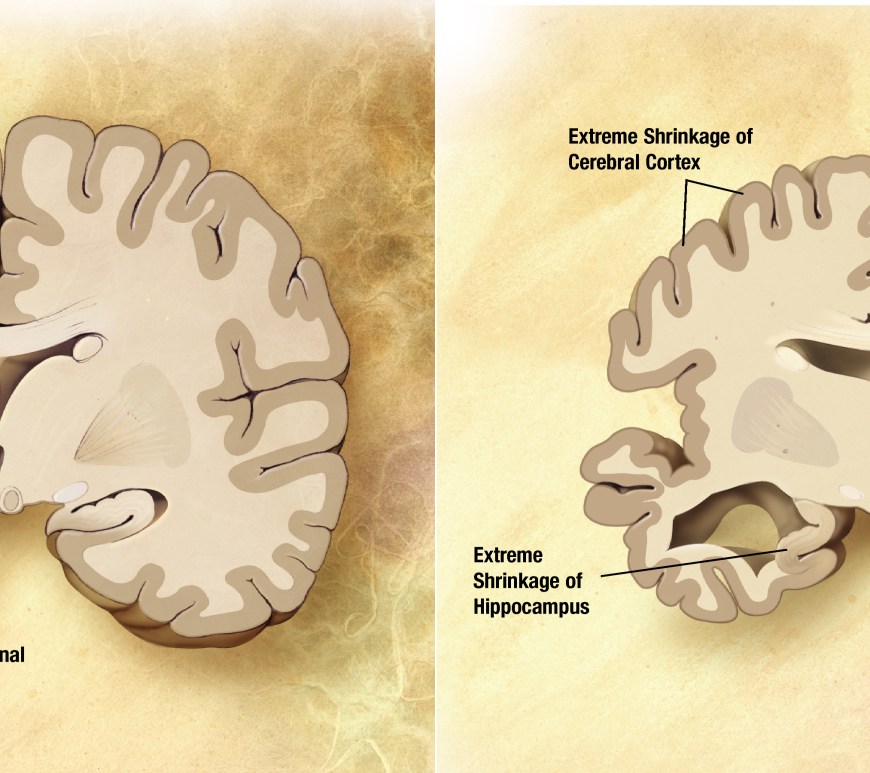
Figure 3. Slow wave activity and low quality sleep affect levels of amyloid beta and tau levels respectively which are linked to Alzheimer’s.

Sleep and Its Impact on Alzheimer’s Disease

By Meghan Bialt-DeCelie ’19 A good night’s rest is hard to come by these days, however a study led by Yo-El S. Ju MD from Washington University suggests that it is more important than one may realize. They found that inadequate sleep causes the Alzheimer’s related protein, amyloid beta, to increase. They tested the amyloid beta levels from the cerebral spinal fluid of 22 middle … Continue reading Sleep and Its Impact on Alzheimer’s Disease

Tardigrade and Its Impact on Survivability

By Meghan Bialt-DeCelie ’19 Whether the world ends in asteroids or radiation, the big question is what, if anything, will survive. Researchers lead by Dr. David Sloan from the University of Oxford assessed the resilience of species when against three astrophysical catastrophes (asteroids, supernovas, and gamma-ray bursts) that could sterilize the planet.  These events threaten the survival of species with radiation and by deterioration of … Continue reading Tardigrade and Its Impact on Survivability

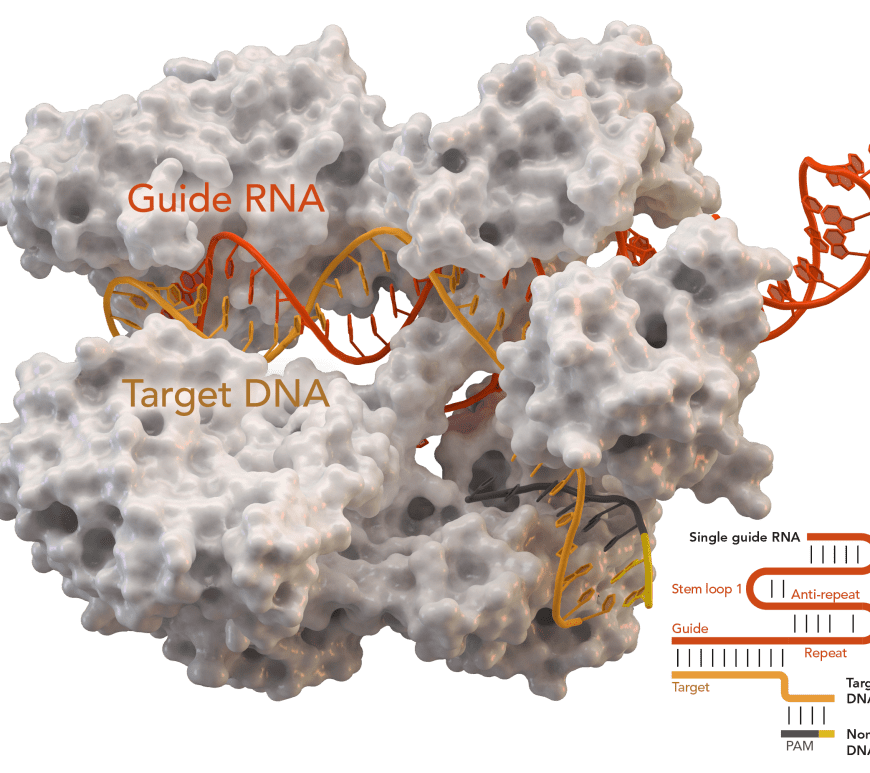
The Anti-CRISPR

By Meghan Bialt-DeCelie ’19   Since the explosion of CRISPR-Cas 9, a gene editing technology, researchers have been further exploring its mechanisms and ways of improving the system. AcrIIA4 is a known anti-CRISPR protein that inhibits the CRISPR-Cas 9 complex, but the mechanism and residues involved were not as explored. Researchers lead by Jiyung Shin, PhD from The University of California Berkley investigated AcrIIA4 to … Continue reading The Anti-CRISPR

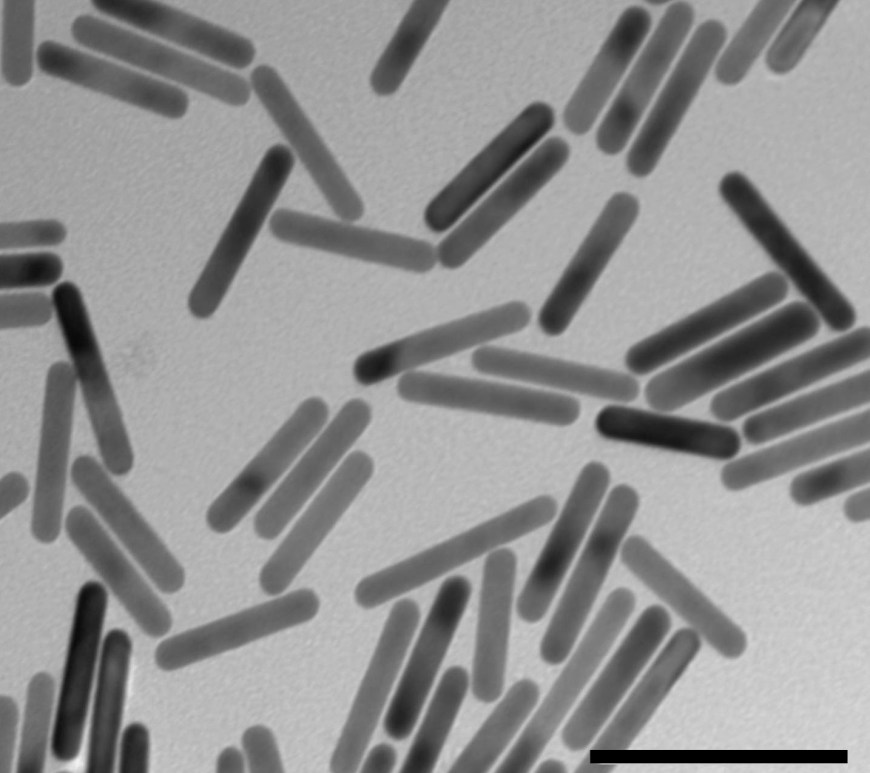
Figure 1 Lipid-coated gold nanorods used to study transfection efficacy of HSP promoters

Cancer Therapy Employing Lipid-coated Gold Nanorod

By Rideeta Raquib ’19 Gene regulation induced by light has potential for noninvasive control over the function of target cells. One such method involves the delivery of photothermal heaters and heat shock protein (HSP) promoter-driven protein expression vectors into the cells and then illuminating them to activate the cells. HSP promoters are controlled by heat shock factor, which is a transcription factor in the cytosol … Continue reading Cancer Therapy Employing Lipid-coated Gold Nanorod

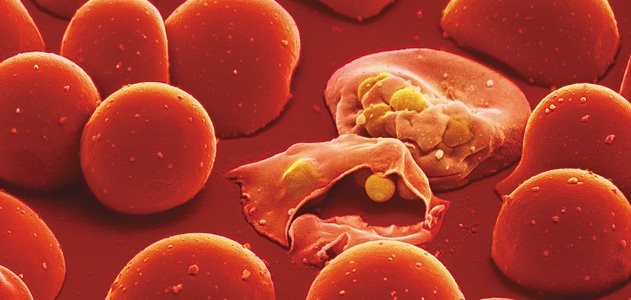
Figure 1 A protein involved in malaria development identified

Novel Findings to Tackle Malaria

By Rideeta Raquib ’19 Malaria is a deadly disease caused by single-celled parasites of the genus Plasmodium. Once the body is infected, sporozoites migrate to the liver and replicate to merozoites. A sporozoite in a motile, sporelike phase during a parasite’s asexual reproduction. A merozoite is the growth stage, which occurs in the bloodstream. The toxins released by merozoites destroy red blood cells and can … Continue reading Novel Findings to Tackle Malaria

Figure 1. Pleocytosis (shown here) is an increased cell count — particularly an increase in white blood cell (WBC) count — in a bodily fluid such as cerebrospinal fluid (CSF).

Neutrophilic Pleocytosis is Connected to Viral CNS Infections

By Caleb Sooknanan ’20 Viral central nervous system (CNS) infections are often associated with cerebrospinal fluid (CSF) lymphocytic pleocytosis, or an increase in the fluid’s white blood cell count. However, these infections are also connected to neutrophilic pleocytosis, an increase in the fluid’s neutrophil count. The clinical and prognostic significance of CSF neutrophilic pleocytosis remains unknown in patients. Doctor Siraya Jaijakul and researchers at the … Continue reading Neutrophilic Pleocytosis is Connected to Viral CNS Infections

Capsule Robots Can Be Used for Biosensor Implantation

By Caleb Sooknanan ’20 Biosensors have become increasingly practical within the medical field, as they can detect different biometrics such as heart rate and body temperature levels. However, current biosensors can wear out quickly and elicit health problems such as trauma. Many efforts — especially in the area of capsule robotics — have been made to develop biosensors that are noninvasive and effective at monitoring … Continue reading Capsule Robots Can Be Used for Biosensor Implantation