Avoiding The Snack Aisles in Supermarkets—A Battle Against Processed Food and Western Diet

Sajia Athai, Class of 2026 With social media and YouTube beginning an era of tutorials, DIY videos, and cooking shows, it has become increasingly accessible to try new foods. From hwachae to Dubai chocolate bars, people globally try new sweets and dishes that excite their sweet tooth. It’s often easy to forget to consume these sweets in moderation. In addition, changes in meat-processing and cooking … Continue reading Avoiding The Snack Aisles in Supermarkets—A Battle Against Processed Food and Western Diet


Linking Stress with Poor Cancer Prognosis

Sean Krivitsky, Class of 2026 Stress is a common response many experience amidst various physical, emotional, or psychological challenges. Beyond its significant short-term impacts, chronic stress has been demonstrated to impact cognitive function as well as the health of various systems within the body, including the immune system. Cancer patients in particular often fall victim to chronic stress, which, in turn, has been associated with … Continue reading Linking Stress with Poor Cancer Prognosis

Can Exercise Improve Chemotherapy Side-Effects?

Author: Amal Bilal, Class of 2028 Figure 1. Woman lifting two dumbbells at the gym Certain types of chemotherapy, a widely used treatment for cancers, can lead to chemotherapy-induced peripheral neuropathy (CIPN), a side-effect that causes pain, numbness, tingling, balance difficulties, and an increased risk of falls. Up to 68% of patients undergoing chemotherapy develop CIPN during or immediately after treatment, and 30-40% of patients … Continue reading Can Exercise Improve Chemotherapy Side-Effects?

Utilizing the Principle of Pro-Cancer Properties of Antioxidants to Treat Prostate Cancer

Author: Sean Krivitsky, Class of 2026 Figure 1. Depiction of various foods that are commonly associated with having antioxidant properties.Prostate cancer (PC) has become a growing concern for men as its rate of incidence has been steadily increasing by more than 3% per year for the past decade. As a result, many have been searching for various treatments and interventions during PC progression to help … Continue reading Utilizing the Principle of Pro-Cancer Properties of Antioxidants to Treat Prostate Cancer

Battlefront: The Nano DLC

By Farzad Hoque, Class of 2028 On the battlefield, the adjacent role of nanocarriers is logistical. They provide munitions support and focused attention to the battlefield. In the body, the focus is on how these nanocarriers can improve the fight against cancer–specificity, reduce toxicity, and sustain the efficacy of immunological agents–all by modulating the antitumor immune response. In prior wars with cancer, the body’s arsenal … Continue reading Battlefront: The Nano DLC

Understanding the Mechanisms of the Leading Cause of Death in Cancer Patients

Author: Sean Krivitsky, Class of 2026 Figure 1. Animated representation of the release of cytokines in the extracellular environment. Cancer is a disease that wreaks devastation on the bodies of the patients it afflicts. Cancerous tumor cells lead to the sickness observed in cancer patients in a variety of ways, but one of the primary causes of cancer-related sickness and death is referred to as … Continue reading Understanding the Mechanisms of the Leading Cause of Death in Cancer Patients

Mysterious Long Non-Coding RNAs Revealed as Playing a Role in Gastric Cancer

Author: Sean Krivitsky, Class of 2026 To the astonishment of many, nearly 99% of the human genome consists of non-coding regions that are not transcribed into mRNAs for protein synthesis. However, some of those non-coding regions of DNA can be transcribed into various types of non-coding (nc) RNAs, including long ncRNAs. Until recently, the scientific community believed these ncRNA products to be functionally irrelevant, playing … Continue reading Mysterious Long Non-Coding RNAs Revealed as Playing a Role in Gastric Cancer

Linking Key Immune System Components to Cancer Progression

Author: Sean Krivitsky, Class of 2026 Breast cancer is the most frequently diagnosed form of cancer in the world and is one of the leading causes of cancer-related deaths. Triple-negative breast cancer (TNBC), a common type of breast cancer, is fast-growing and is associated with consistent poor prognosis. Unlike several other types of breast cancer, TNBC possesses a unique pathogenic mechanism, which means that it … Continue reading Linking Key Immune System Components to Cancer Progression

Implications of the role sphingosine kinase 1 plays in the formation of tumors in p53 knockout mice

Author: Marie Collison ‘25 Cancer is a universally known disease that can be caused by a variety of defects in the genetic code of cells. A very important molecule in the regulation of cellular proliferation is the tumor suppressor protein 53, more commonly known as p53. Mutations or deletions in the p53 gene sequence are detected in the majority of cancers, including several subtypes of … Continue reading Implications of the role sphingosine kinase 1 plays in the formation of tumors in p53 knockout mice

Novel Therapeutic Insights to Barth Syndrome

Author: Sean Krivitsky ‘26 Barth syndrome is a rare, severe genetic disorder that primarily affects muscle development and the heart’s ability to efficiently pump blood. It is most common in males given that it is an X-linked disorder and it is known to significantly reduce life expectancy. Despite the severity of Barth syndrome, there are limited therapies available to treat this disease. This condition is … Continue reading Novel Therapeutic Insights to Barth Syndrome

EN1 Protein Has Been Recognized as Playing a Key Role in Pancreatic Cancer

Author: Sean Krivitsky ‘26 Pancreatic cancer stands out as one of the most severe forms of cancer, accounting for the third most cancer-related deaths. Pancreatic ductal adenocarcinoma (PDA) is a form of pancreatic cancer that involves a high degree of metastasis, which refers to the ability of the cancer to spread. This cancer develops as a result of mutations that result in the activation of … Continue reading EN1 Protein Has Been Recognized as Playing a Key Role in Pancreatic Cancer

Breast Cancer Insights and Potential Treatments

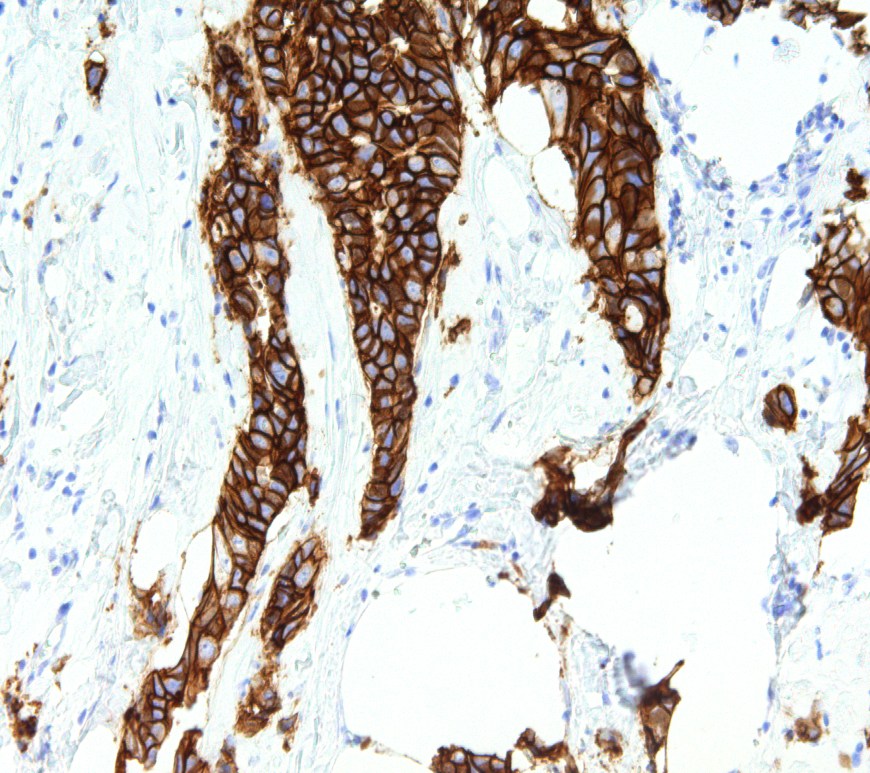
Sean Krivitsky ‘27 Figure 1. HER2 is a protein that has been strongly implicated in many human cancers, particularly breast cancer, and has been demonstrated to induce carcinogenesis through a variety of different mechanisms. This breast cancer tissue has been stained for HER2. Some of the latest research by Stephen J. Collins of the Miller lab, a part of Stony Brook University’s Department of Physiology … Continue reading Breast Cancer Insights and Potential Treatments