






Justice Redefined
Wendy Wu ’22 On January 18, 2015, Stanford University freshman Brock Turner was caught sexually assaulting an unconscious woman behind a dumpster. On July 6, 2016, Philando Castile was shot seven times by a police officer for, supposedly, reaching for his wallet. Both cases garnered extensive media coverage and incited public outrage towards the criminal justice system. Nicholas Chagnon and Nickie D. Phillips, Sociology and … Continue reading Justice Redefined


Perception of Emotion in Psychotic Disorders
Wendy Wu ’22 Schizophrenia, a severe mental disorder that alters perception of reality, is marked by deficits in emotional face perception (EFP). While previous research has shown how abnormal activity in certain brain regions correlates with EFP deficits, the significance of the connections between these regions has been understudied. Amri Sabharwal, a postdoctoral fellow in psychology at Stony Brook University, focused on the amygdala, a … Continue reading Perception of Emotion in Psychotic Disorders
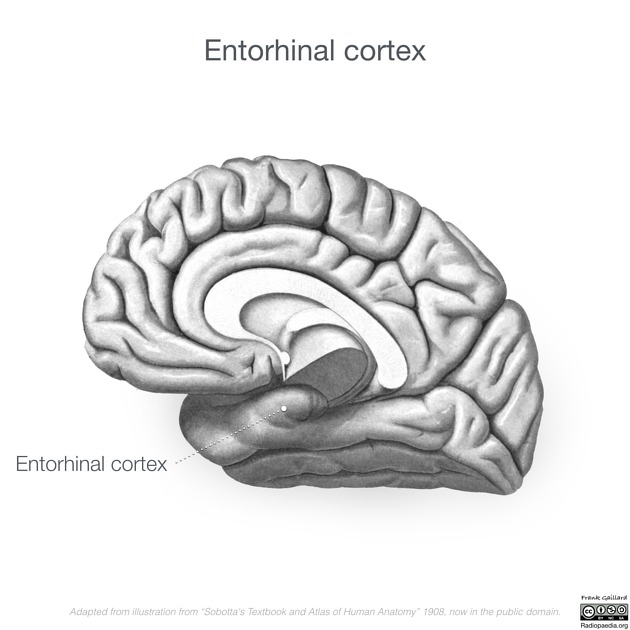
D-Serine Infusion Mitigates Neuronal Losses Preceding Temporal Lobe Epileptic Attacks
Vignesh Subramanian ’24 Temporal lobe epilepsy (TLE) is the most common form of both focal epilepsy – the recurrence of seizures in one hemisphere of the brain – and drug resistant epilepsy. The disease is characterized by neuronal cell death in Layer 3 (L3) of the medial entorhinal area (MEA), the internal region of the temporal lobe constituting memory and higher-order cognitive functioning. Recent studies … Continue reading D-Serine Infusion Mitigates Neuronal Losses Preceding Temporal Lobe Epileptic Attacks

Presynaptic Inhibition of GABAA Receptors Possible in Thalamocortical Circuits
Vignesh Subramanian ’24 A number of neurodegenerative disease processes, including those of temporal lobe epilepsy, GABA-transaminase deficiency, and traumatic brain injury, involve disruptions to the signalling pathway of gamma-aminobutyric acid (GABA), the chief inhibitory neurotransmitter of the central nervous system. Conventional understanding divides the ability of GABA to block neural signaling into ‘presynaptic inhibition’ – involving suppression of glutamate release, an excitatory counterpart neurotransmitter – … Continue reading Presynaptic Inhibition of GABAA Receptors Possible in Thalamocortical Circuits

Evolution of avian brain sizes: The uncovered connection with body size
Sooraj Shah ’24 It is a common belief that the cumulative size of an individual’s fists taken together results in an approximate size of that individual’s brain. By this interpretation, individuals with larger hand sizes should thus have bigger brains. On the contrary, towards the end of the Cretaceous era, the relative brain size of both small avians (birds) and massive non-avians (dinosaurs) were the … Continue reading Evolution of avian brain sizes: The uncovered connection with body size

The Origins of Ancient Pterosaurs
Sabah Bari ’24 Pterosaurs were the first flying reptiles with over 150 million years of evolution. The specific anatomy of pterosaurs is what distinguishes them from other Mesozoic reptiles. They are known as Pan Aves, which means dinosaurs. With new fossil discoveries, researchers are now having a better understanding of a dinosaur’s body structure. The origin of pterosaurs is unknown. However, the structure allows archaeologists … Continue reading The Origins of Ancient Pterosaurs

A Once Thought Extinct Species of Mice Repopulates after an Explosion
Sabah Bari ’24 Mount Pinatubo was known for being a quiet volcano located on the most populated Island of Luzon in the Philippines. However, the calmness of Mount Pinatubo came to a halt on June 15, 1991 when the volcano erupted. The destruction of the explosive volcano negatively affected the wildlife on Luzon, except two main species of the Philippine forest mice. Upon the eruption, … Continue reading A Once Thought Extinct Species of Mice Repopulates after an Explosion

Priming of long-term memory from initial experience alters future learning
Joyce Chen ’23 One of the most fascinating things about the brain is its malleability. When humans learn, whether it be in the classroom or from an experience, the brain produces new neurons so that the information can be recalled in the future. This is a process known as neuronal plasticity. Although there is plenty of research surrounding this area, there is still much more … Continue reading Priming of long-term memory from initial experience alters future learning

Biodiversity loss, emerging pathogens and human health risks
Thumyat Noe ’21 Research suggests that the number of zoonoses, diseases transmitted from humans to animals, has been increasing across the planet. This implies that the frequency of epidemics and pandemics may rise in the future. Zoonotic pathogens have an animal origin and have always existed, but their prevalence and geographic spread are increasing at an alarming rate. Wildlife pathogen epidemics are also on the … Continue reading Biodiversity loss, emerging pathogens and human health risks

The Earliest Human Appearances in the Americas
Yukta Kulkarni ’22 Humans have been populating Earth for hundreds of thousands of years, mainly inhabiting areas in East and South Africa. It was thought that humans had first arrived in the Americas around 15,000 years ago. However, new findings from excavations at Chiquihuite Cave in central-northern Mexico provide evidence that humans could have been present thousands of years earlier than originally predicted, an estimation … Continue reading The Earliest Human Appearances in the Americas

Ethnic Diversity and Recall: Is there a connection?
Yukta Kulkarni ’22 People spend thirteen years of their lives, from around five to eighteen years old, in school, where they learn both academic content and social etiquette. They may then go on to university and reinforce these skills and knowledge. Thus, students require not only a good memory, but also the ability to collaborate with others. However, not all students benefit equally from working … Continue reading Ethnic Diversity and Recall: Is there a connection?

X-ray diffraction provides new gateway to analyze mummies
Sooraj Shah ’24 Since the 20th century discovery of the tomb of King Tutankamun, the excitement around discovering mummies has been a topic of controversy, particularly regarding how the mummies are handled once they are discovered. Unwrapping and disrupting the mummies’ final resting place is considered to be invasive. A study by Dr. Stuart Stock, a professor within the cell and molecular biology department at … Continue reading X-ray diffraction provides new gateway to analyze mummies
 Young Investigators Review