


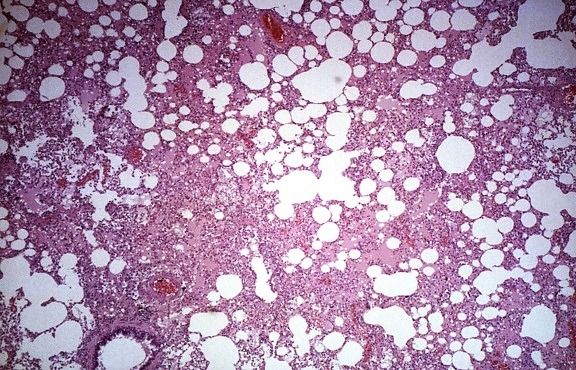




Inducing Leukemia Cell Death Through the Inhibition of Amino Acids
By Riya Gandhi ‘22 Thanks to chemotherapy, acute myeloid leukemia (AML) is not the most fatal kind of cancer. However, the same chemotherapy that treats the disease may also revitalize leukemia stem cell populations, thereby increasing the probability of relapse. As such, scientists are still actively researching alternative treatments and cures. Most recently, researchers looked into the importance of amino acids for preventing the growth … Continue reading Inducing Leukemia Cell Death Through the Inhibition of Amino Acids


Expression of Transcription Factor TP63 Reprograms Squamous Pancreatic Ductal Adenocarcinoma Cells
By Riya Gandhi ‘22 Although pancreatic cancer is not the most common type of cancer, the prognosis for those diagnosed with the disease is very poor. Much like any other cancer, pancreatic cancer develops when cells in the organ multiply at an uncontrollable rate. Pancreatic ductal adenocarcinoma (PDA), the most common type of pancreatic cancer, garnered the attention of researchers at Cold Spring Harbor Laboratory … Continue reading Expression of Transcription Factor TP63 Reprograms Squamous Pancreatic Ductal Adenocarcinoma Cells

Inducing Tumor Cell Death by RIG-I: The Future of Breast Cancer?
By Riya Gandhi ‘22 In recent years cancer therapy – especially cancer immunotherapy – has gained momentum and scientists’ interest has turned to immune checkpoint inhibitors (ICIs). ICIs aid in the suppression of checkpoint receptors to produce powerful immune responses against tumors. Although such a procedure is gaining momentum in clinical settings, much research must be done to legitimize this treatment for breast cancer. Under … Continue reading Inducing Tumor Cell Death by RIG-I: The Future of Breast Cancer?

A Novel Approach to Treating Psychopathy Associated with Huntington’s Disease.
By Snigdha Kanadibhotla ‘21 Characterized by uncontrollable and spastic movements, Huntington’s Disease (HD) is a fatal neurodegenerative disorder that is estimated to affect about 1 in 10,000 people in the United States (1). HD has pervasive effects that damage neurons in brain regions associated with mobility, emotion, and intellectual capacity leading to symptoms such as depression, anxiety, and difficulty learning. Despite its complex and varied … Continue reading A Novel Approach to Treating Psychopathy Associated with Huntington’s Disease.
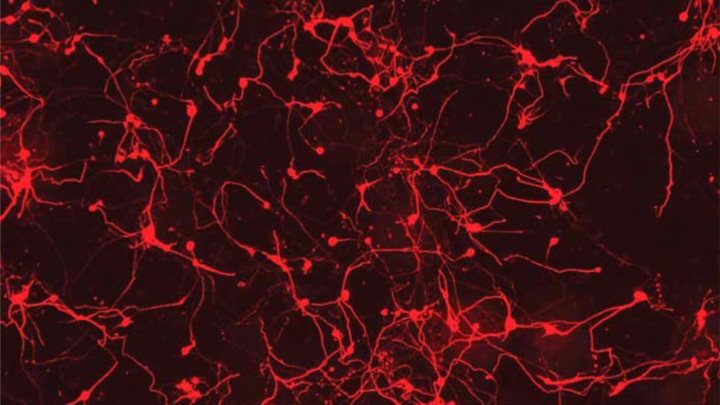
Neurogenesis and its Implications on Brain Development
By Snigdha Kanadibhotla ‘21 Conventionally, humans were thought to be born with a fixed number of nerve cells or neurons that steadily deteriorated over their lifetime; as a result, degenerative brain diseases were thought to be untreatable. However, studies involving animal models have challenged this idea by demonstrating that during adulthood, neurogenesis or the creation of new neurons can occur in the hippocampus which isa … Continue reading Neurogenesis and its Implications on Brain Development

Investigating the Link Between Cancer Cells and Embryonic Cells to Treat Cancer
By Snigdha Kanadibhotla ‘21 Fundamentally rooted in a lack of cell cycle control, cancer is predicted to affect 38.4% of Americans within their lifetimes (1). While most healthy cells are regulated by three cell cycle checkpoints, cancerous cells can bypass these regulatory systems, which leads to uncontrolled division and metastasis (the spread of cancer through the body). Considered to be a unique characteristic of cancer, … Continue reading Investigating the Link Between Cancer Cells and Embryonic Cells to Treat Cancer

Eradicating Subpopulations of Melanoma-Initiating Cells Using Nifuroxazide
By Riya Gandhi ‘22 In an age in which cancer is the second leading cause of death worldwide, scientists are seeking to discover and develop novel treatments for the disease. Sometimes, although rarely, the answer is just at their fingertips. In a recent study, a team of researchers from the University of Edinburgh sought to understand the mechanism by which 5-nitrofuran antibiotics, also known as … Continue reading Eradicating Subpopulations of Melanoma-Initiating Cells Using Nifuroxazide
From Colon Cancer Cells to Cancer Stem Cells: The Value of Reprogramming Cells
By Riya Gandhi ‘22 The location of cancer stem cells in tumors has opened the door to the development of a variety of therapeutic applications. These cells are the future of oncology, and scientists still have much to uncover regarding their various uses in medical treatment. While cancer stem cells are treasure chests of opportunity and have wide scientific application, they are difficult to obtain. … Continue reading From Colon Cancer Cells to Cancer Stem Cells: The Value of Reprogramming Cells

In Situ Administration of Cytokine Combinations Could Be the Future of Immunotherapy
By Riya Gandhi ‘22 Rather than look outwards for new cancer treatments, scientists are beginning to look inwards – that is, inside the human body – for advanced therapeutic treatments. Although the use of cytokines, biomolecules that direct an immune response,in cancer therapy has been attempted for decades, there is still room for much improvement. In a recent study on cytokines, researchers under the guidance … Continue reading In Situ Administration of Cytokine Combinations Could Be the Future of Immunotherapy

Elimination of Pathogens by Signaling Interference
By Allan Mai ‘20 Ever see that probiotic label on the side of a container of yogurt or another dairy product and wonder what it means? Probiotic nutrition helps reduce pathogenic colonization of the intestines; however, until recently, researchers’ knowledge of the mechanism behind this process was ambiguous. Pipat Piewngam of Mahidol University in Thailand and his colleagues have discovered that the probiotic Bacillus works … Continue reading Elimination of Pathogens by Signaling Interference

The Preservation of Respiratory Function After a Traumatic Spinal Cord Injury
By Allan Mai ‘20 After a traumatic spinal cord injury, a primary cause for concern is the threat of a dysfunctional respiratory system; a means by which to preserve respiratory functions is needed to decrease mortality rates in patients with spinal cord injuries. In a recent study, Dr. Kajana Satkunendrarajah of the Kembril Research Institute in Toronto discovered a potential solution to this problem which … Continue reading The Preservation of Respiratory Function After a Traumatic Spinal Cord Injury

Using the Genome to Forecast Health
By Allan Mai ‘20 Wouldn’t it be convenient if researchers could tell how likely an individual is to have a certain disease just by looking at his or her genome? Researchers are doing exactly that by looking at over 6.6 million points of the human genome; according to Sekar Kathiresan, a geneticist at Massachusetts General Hospital (Mass General), scientists now have the ability to calculate … Continue reading Using the Genome to Forecast Health
 Young Investigators Review