





Mudrocks and Plants: A Shared History
Gene Yang ‘19 Billions of years ago, during the Precambrian, mudrocks were considered a rare sedimentary deposit in rivers. Then, the colonization of land by plants coincided with an increase in mudrocks, resulting in a significant change in the composition of river sedimentary deposits. While this relationship between mudrocks and plants has been well-established, less is known quantitatively, and even less about why these two … Continue reading Mudrocks and Plants: A Shared History

Predicting Heart Transplant Rejection Before It Happens
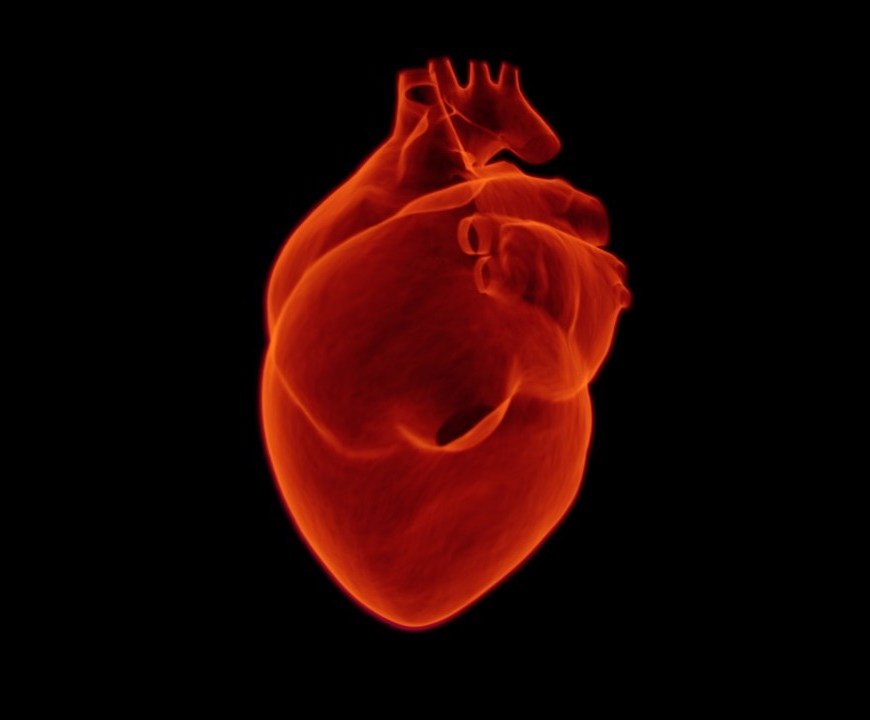
Gene Yang ‘19 After a heart transplant surgery, heart tissue biopsies must be done multiple times to survey for signs of transplant rejection. Although this heart biopsy is currently the gold standard for the detection of acute rejection, this procedure is both risky and invasive. Scientists from Huazhang University of Science and Technology, China, through their research with T lymphocyte-targeted nanobubbles, suggest a potentially non-invasive … Continue reading Predicting Heart Transplant Rejection Before It Happens
The Search for Blood-Based Cancer Detection
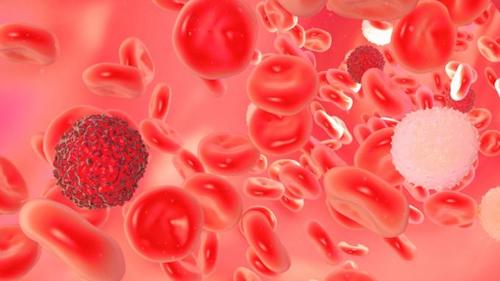
Gene Yang ‘19 A large number of cancer diagnoses are made when the cancer has metastasized and is no longer curable. In order to aid in preventing this from occuring, researchers are currently working on methods of early cancer detection. One such method, CancerSEEK, was created by scientists at John Hopkins University and other institutions. CancerSEEK is a liquid biopsy—a test done on a sample … Continue reading The Search for Blood-Based Cancer Detection

Innovative Sensors Track the Link Between Diet and Health
By Meenu Johnkutty ‘21 Researchers from the Tufts University School of Engineering are leading the way with a new sensor that collects real time data on diet straight from the mouth itself. The research team, led by Dr. Peter Tseng, is set to publish their research in the journal Advanced Materials. The sensor looks almost too futuristic to be a part of our time. Approximately … Continue reading Innovative Sensors Track the Link Between Diet and Health

The State of the Great Pacific Garbage Patch
By Meenu Johnkutty ‘21 Almost two trillion pieces of plastic are currently floating in the Pacific Ocean. Nestled between Hawaii and California, the Great Pacific Garbage Patch is unrivaled in size — three times the size of continental France, to be exact. New findings published by the Ocean Cleanup Foundation reveal the latest updates on the state of this plastic monstrosity, and the findings are … Continue reading The State of the Great Pacific Garbage Patch

Social Jet Lag Tied to Poor Academic Performance
By Meenu Johnkutty ‘21 Placing a night owl in an 8 A.M. lecture may explain tiredness and result in a lack of attentiveness during class, but can it justify poor grades? The University of California-Berkeley recently published research that provides compelling evidence pointing to the consequences of scheduling classes out of sync with biological rhythms. The researchers, led by Dr. Benjamin Smarr and Dr. Aaron … Continue reading Social Jet Lag Tied to Poor Academic Performance

Using Hunger to Suppress Pain
By Marcia-Ruth Ndege ‘21 Much is known about how the brain communicates needs such as thirst, hunger, pain, and fear. However, little is known about how the brain prioritizes such needs. In the context of pain, researchers must examine both acute and inflammatory pain. Acute pain is a reflexive response, while inflammatory pain is mediated by central mechanisms. In research funded by the University of … Continue reading Using Hunger to Suppress Pain

New Findings in Telomerase Activity and the Potential for Immortality
By Marcia-Ruth Ndege ‘21 The telomerase enzyme catalytic cycle limits the telomerase enzymes’ ability to synthesize specific DNA segments of six nucleotides called repeats. These repeats, known as telomeres, are protective caps that prevent the destabilization of the genome by lengthening the ends of chromosomes. However, these protective caps shorten every time a cell divides. A cell’s telomere length, therefore, determines when a cell will … Continue reading New Findings in Telomerase Activity and the Potential for Immortality

Anti-Cancer Drug Mitigates Autism’s Social Deficits
By Marcia-Ruth Ndege ‘21 Autism Spectrum Disorder (ASD), better known as autism, is a developmental disorder characterized by a tendency to engage in repetitive behaviors and to have trouble communicating both verbally and nonverbally. While there is no known cure for autism, current treatments include a variety of therapies as well as antipsychotic drugs such as quetiapine and risperidone, which reduce psychiatric effects such as … Continue reading Anti-Cancer Drug Mitigates Autism’s Social Deficits

Intelligence in the HTT Gene
By Daniel Walocha ‘19 Huntington’s Disease is caused by a trinucleotide repeat of the HTT gene. The wild type has a repeat ranging from 10 to 35, but beyond 39 repeats causes the disease characterized by significant impairments in the basal ganglia and neurodegeneration. The CAG repeats in the HTT gene cause the production of an abnormally long Huntington protein, which impairs the function of … Continue reading Intelligence in the HTT Gene
Long Non-Coding RNA NEAT1 Analysis
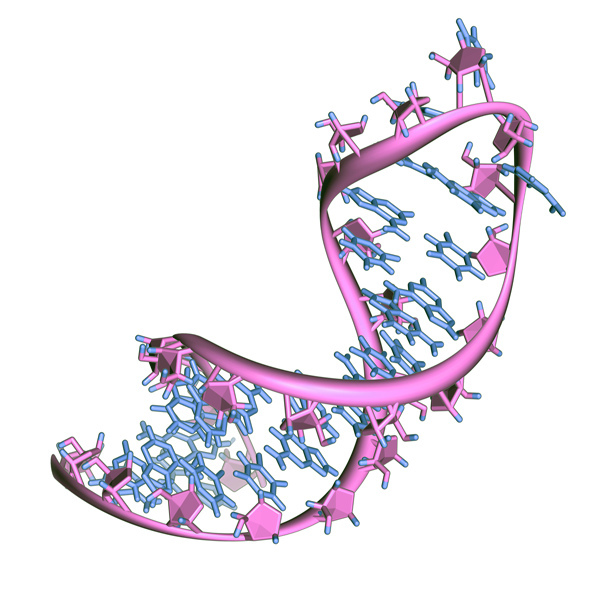
By Daniel Walocha ‘19 Long non-coding RNAs (lncRNAs) serve normal cell functions in growth, differentiation, and controlled cell death. The lncRNA’s are modulated in cancer cells to provide a pro-survival, oncogenic role in many different types of cancer. However, lncRNA’s have also been seen, when unchanged, to provide tumor suppressive activities in normal cells. Nuclear paraspeckle assembly transcript 1 (NEAT 1) is a lncRNA that … Continue reading Long Non-Coding RNA NEAT1 Analysis
CD133’s Role in Esophageal Cancer Cells
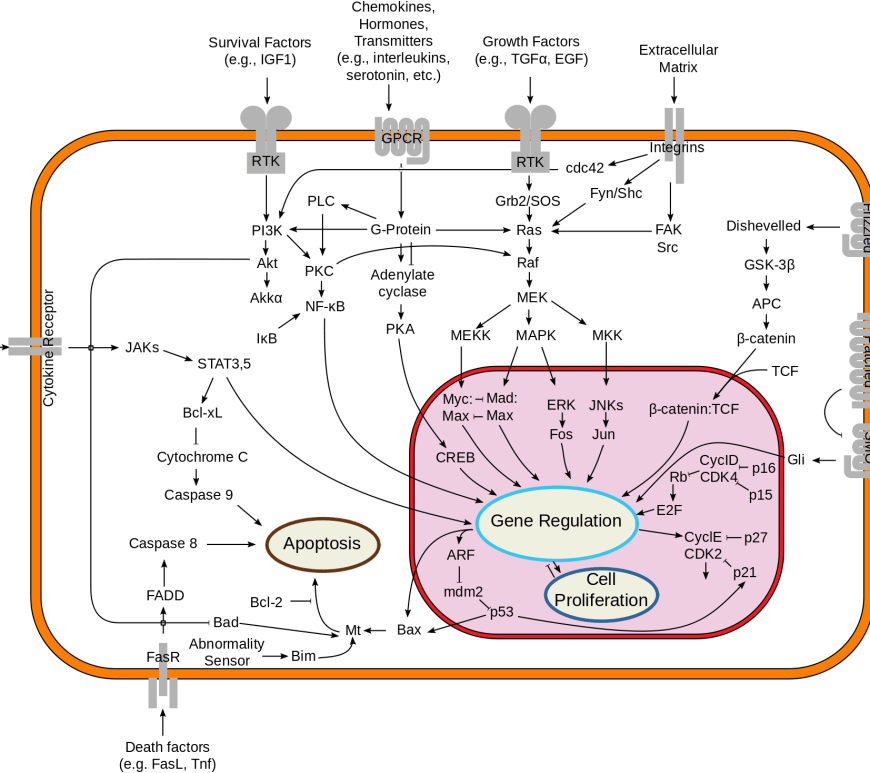
By Daniel Walocha ‘19 CD133 is a biomarker for cancer stem cells (CSC) in esophageal squamous cell carcinomas (ESCC). Cancer cells have remarkable resistance to drugs and therapies, so discovering a potential therapeutic target to make the CSCs in ESCC more susceptible to treatment is of particular interest. Dr. Wen Xu et al. from Columbia University looked to elucidate the pathway for CD133 and associated … Continue reading CD133’s Role in Esophageal Cancer Cells
 Young Investigators Review