Predicting Your Child’s Likelihood to Succeed

by Julia Newman (’19) The Journal of Molecular Psychiatry recently published research that suggests a factor of predictability in children’s educational achievement. Previous studies have assumed that variances among children’s school performances may be explained by one large difference in their genetic makeup, but Dr. Selzam and his team of researchers from the Institute of Psychiatry, Psychology, and Neuroscience in London found that it is … Continue reading Predicting Your Child’s Likelihood to Succeed

New Structure in Brain Maturation Discovered

by Aaron Gochman (’18) Structural biology is a division within biological research that aims to discover the atomic structures of molecules and understand their functions. In a recent paper, an international team of scientists discovered the crystal structure of doublecortin-C, a protein important for neurogenesis. Doublecortin-C plays a role in maintaining the structure of neurons in the brain; mutations in this protein have been known … Continue reading New Structure in Brain Maturation Discovered

Mustard Oil and Menthol: More Than Just Food Products

by Aaron Gochman (’18) Ligand-gated ion channels are typically associated with receptors that are activated or deactivated upon the binding of a chemical messenger known as either an agonist or antagonist, depending on whether they activate (agonists) or deactivate (antagonists). One class of ion channels, the TRP family, has been known to be activated by thermal stimuli. Thermal stimulation of TRP ion channels certainly represents … Continue reading Mustard Oil and Menthol: More Than Just Food Products

A New Treatment for Blood Clots

by Sahil Rawal (’19) Blood clots, which prevent oxygen from reaching tissues, are the primary cause of heart attacks and strokes, and consequently lead to an enormous number of deaths each year. However, quick removal of blood clots can help prevent this. Currently, enzymatic formulations are the most efficient ways to treat blood clots, but they have many side effects that could be harmful to … Continue reading A New Treatment for Blood Clots

Biotechnology Breakthrough Targets Flaviviruses

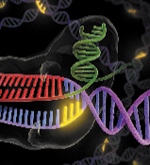
by Aaron Gochman (’18) CRISPR-Cas9, the most recent breakthrough in biotechnology research, allows for specific and precise gene editing. With countless applications, scientists all over the world seek to optimize it for use in treating myriad diseases. This week, a team of American and Chinese researchers used CRISPR-Cas9 to target flaviviruses, a group that includes West Nile, Zika, and Dengue. There are no current effective … Continue reading Biotechnology Breakthrough Targets Flaviviruses

Predictors of Tuberculosis Found in HIV/AIDS Patients

by Jenna Mallon (’18) Although the dangers of tuberculosis (TB) are widely known, many people do not know that a large percent of tuberculosis patients are also HIV positive. This issue is especially prevalent in Africa, Ethiopia specifically, where TB has been a large public health issue for over fifty years. This large health epidemic prompted Mulugeta Dalbo of the Arba Minch Health Science College … Continue reading Predictors of Tuberculosis Found in HIV/AIDS Patients

The Role of Social Stress in Cocaine Addiction

by Aaron Gochman (’18) This week, scientists from the University of Texas at Austin contributed a novel idea to addiction research. Focusing on glutamatergic synaptic transmission, the primary mode of excitatory signaling in the central nervous system, the group hypothesized that social stress would lead to increased vulnerability to cocaine addiction. Specifically, the ventral tegmental area (VTA) of the brain, a prime location for dopamine … Continue reading The Role of Social Stress in Cocaine Addiction

A Step Toward Synthetic Cognition and Artificial Organs

by Aaron Gochman (’18) A team of researchers from Harvard, Stanford, and Sogang University in South Korea made headlines this week with a discovery that captures the future of bioengineering. Living cardiac muscle cells were taken from rats and printed onto a robot shaped like a sting ray. The cells were engineered to express proteins that activate in response to light; when activated, the cells … Continue reading A Step Toward Synthetic Cognition and Artificial Organs

The Relationship Between Thigh Muscle Volume and Functional Performance in Older Women

by Lillian Pao (’18) Sarcopenia, a stage in a person’s life during which they begin to lose muscle mass and function, commonly affects men and women above the age of 60. Muscles are often associated with strength, function, and power. However, the association amongst all of these characteristics is understudied.  Dr. Ulrich Lindemann of Germany decided to investigate the association between thigh muscle volume and … Continue reading The Relationship Between Thigh Muscle Volume and Functional Performance in Older Women

Predestination and the Influence of Religion on Science

by Lillian Pao (’18) Despite the contradictions science and religion have with one another, Jewish, Christian, and Muslim beliefs have recently been able influence current interpretations in biology. One of these interpretations concern the evolution of cave fauna.  Several people believe that “biochemical predestination”, a higher power or strict law that governs the phenomena in nature on our earth, and possibly beyond, exists. Professor Aldemaro … Continue reading Predestination and the Influence of Religion on Science

Restoring Function after Traumatic Brain Injuries

by Julia Newman (’19) Although there is currently no successful treatment for traumatic brain injuries, researchers at the University of California recently tested a new and promising method using human neural stem cells (hNSC), which have been found to be multipotent. Experiments in the past were performed solely on rats using immunosuppressant drugs in order to prevent transplant rejection, but this study found it more … Continue reading Restoring Function after Traumatic Brain Injuries

Mitochondria: Selective protein degradation ensures cellular longevity

by Aaron Gochman (’18) Mitochondria are known as the “powerhouse of the cell.” They provide energy and regulate important biological processes to ensure healthy metabolism and proper cellular function. Hence when mitochondrial dysfunction occurs, the cell is at great risk. A pair of researchers from University of Gothenburg in Sweden have characterized a pathway in which harmful mitochondrial proteins can be degraded without affecting normal … Continue reading Mitochondria: Selective protein degradation ensures cellular longevity