Tackling Contraction of Infections from Healthcare Facilities

by Rideeta Raquib   Healthcare-acquired infections or HAI are illnesses acquired from healthcare environments, such as hospitals or rehabilitation clinics. It is a serious issue which affects thousands of people every year and multiplies healthcare costs significantly. Klebsiella Pneumoniae, a harmful HAI agent has been attributed to causing illnesses through colonizing and transmitting infection. One of the strains of Klebsiella Pneumoniae, known as ST258, is … Continue reading Tackling Contraction of Infections from Healthcare Facilities

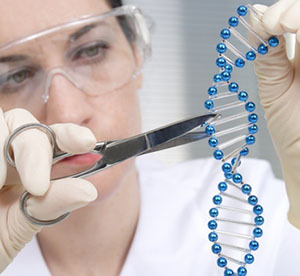
A New Genome-Editing Technique

by Jalwa Afroz Developmental biology explores how cells differentiate from a fertilized egg into a complex multicellular organism. Although the idea of marking cells to track their development is not new, scientists at Harvard University and the University of Washington developed a CRISPR genome-editing system that offers far more specificity and versatility by tracing cells with fluorescent proteins. In order for a technology to trace … Continue reading A New Genome-Editing Technique

The Origin of Dogs Traces Back to Two Separate Locations

by Jenna Mallon (’18) Although it is a common fact that domestic dogs originated from wolves, there are still speculations concerning the geographical and temporal origins of man’s best friend. There are disagreements over when and where dogs were domesticated. Despite evidence that points to the Paleolithic Era, some archeologists argue that dogs could have been independently domesticated in two separate regions: Eastern and Western … Continue reading The Origin of Dogs Traces Back to Two Separate Locations

More Than a Structural Component: The Vast Biological Functions of Sphingolipids

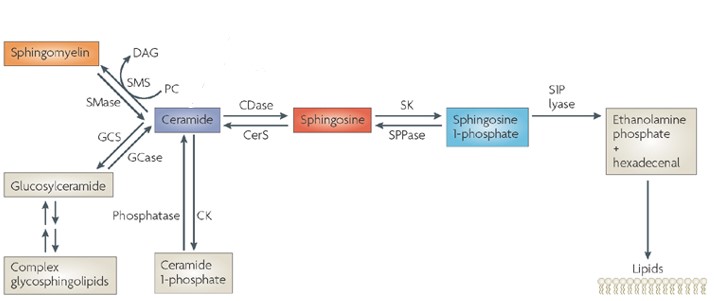
By Ashwin Kelkar Introduction What constitutes a cell?  In a very general sense, the first successful cell-like structures necessitated a biological barrier that would mediate the flow of molecules into and out of their “bodies.”  What developed was the phospholipid bilayer, a semi-permeable membrane intermeshed with various proteins to regulate the passage of important bioactive molecules – ones that regulate cellular responses – in order … Continue reading More Than a Structural Component: The Vast Biological Functions of Sphingolipids

The Intracellular Mechanics of Marijuana

By Eman Kazi At the Stony Brook Institute of Chemical Biology and Drug Discovery, Professor Dale Deutsch and his research team recently identified a group of Fatty Acid binding proteins (FABPs), which serve as intracellular transporters for two of the main active substances in marijuana, Tetrahydrocannabinol (THC) and cannabidiol (CBD). This project also asserted that CBD may help reduce seizures and serve as a treatment … Continue reading The Intracellular Mechanics of Marijuana

A Pill that Mimics the Immune System

By Anirudh Chandrashekar The role of Y-shaped antibodies to fight viruses, bacteria and different forms of cancers is a heavily researched field.  For many years, researchers have sought to develop and optimize antibodies and other protein-based therapies to supplement and  revitalize the host’s defense system. At the same time, these antibodies have multiple drawbacks; antibodies are generally extremely bulky and need to be administered intravenously. To … Continue reading A Pill that Mimics the Immune System

Engineering Escherichia coli cells to express Melittin in response to the detection of Pseudomonas aeruginosa

By Gurkamal Kaur, Janki Patel, Tenging Lama, Helen Liu, Gregory Poterewicz

Abstract

The growth of antibiotic resistance is quickly becoming a global public health concern. Infections caused by pathogenic bacteria are becoming increasingly difficult to treat due to the misuse, overuse and abuse of antibiotics. In addition, infections caused by some harmful strains of bacteria, particularly gram-negative bacteria, cannot easily be treated with antibiotics or other common forms of treatment. To combat this issue, E. coli were engineered to recognize the pathogenic bacteria Pseudomonas aeruginosa and produce the antimicrobial peptide melittin in response.  In order to do so, nonpathogenic E. coli were transformed with plasmids that control the production of melittin and the reception of communication signals from cells of Pseudomonas aeruginosa.

Continue reading “Engineering Escherichia coli cells to express Melittin in response to the detection of Pseudomonas aeruginosa”

Understanding the Fear Circuits in The Brain

By: Ashwin Kelkar Fear and fear memory have long been a subject of study by both scientists and philosophers. Our understanding of fear and how it may exert control to the point of phobia is imperative to eventually finding the underlying cause of fear itself. Researchers around the world have tapped into the brain to try to elucidate this enigma. In a groundbreaking study conducted … Continue reading Understanding the Fear Circuits in The Brain