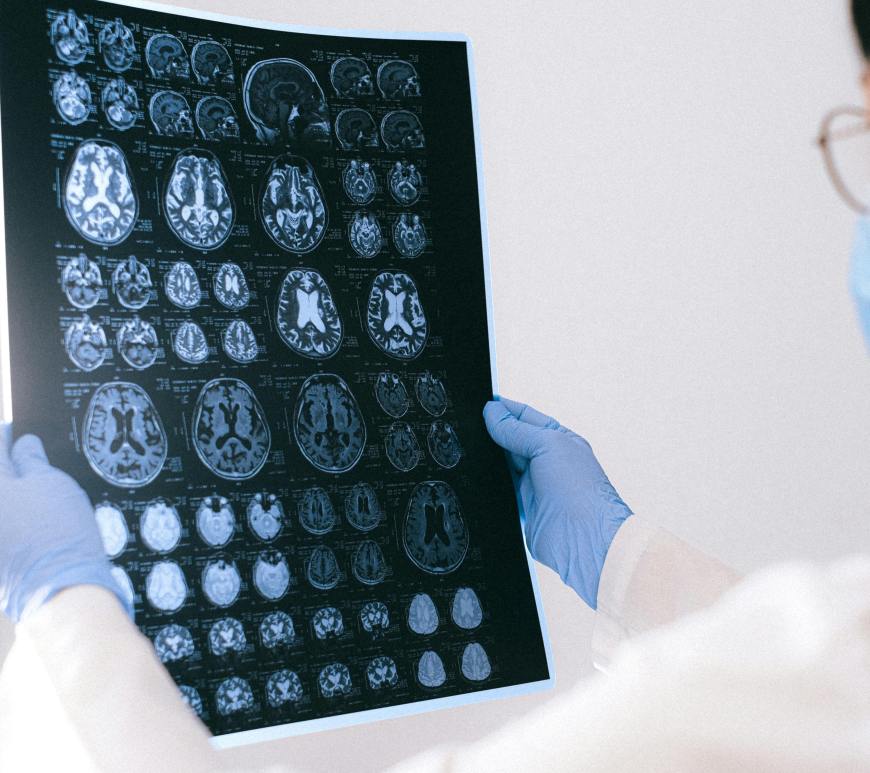
Amyloid-beta Deposition: A Cause or Byproduct of Alzheimer’s?

Author: Farzad Hoque, Class of 2028 The relationship between neurovascular coupling and Alzheimer’s disease (AD) progression has been a focal point of neurological research. While vascular dysfunction in AD is well-documented, questions remain about whether these abnormalities emerge before amyloid-beta (Aβ) deposition or arise as a consequence. Recent research has shed light on the early neurovascular changes in mouse models of AD, suggesting new mechanisms … Continue reading Amyloid-beta Deposition: A Cause or Byproduct of Alzheimer’s?

An Interesting Twist to the Long Video Game Debate

Author: Farzad Hoque, Class of 2028 The relationship between video games and behavior has long sparked debate within psychology and education. Investigations on how different game genres may influence levels of aggression and social intelligence among regular gamers have been conducted for decades, and recent research shines a new light on the matter. Similar to what has been commonly believed, researchers hypothesized that distinct game … Continue reading An Interesting Twist to the Long Video Game Debate

The Effects of Video Game Addiction on Children’s Cognitive and Learning Skills

Author: Amal Bilal, Class of 2028 Figure 1: A couple of young kids playing video games. Video games have become an increasingly popular source of entertainment among children, with over 90% of children between 2 and 17 years old actively playing video games. Although video games allow children to socialize and have leisure time, they can also lead to addiction. Excessive gaming can negatively impact … Continue reading The Effects of Video Game Addiction on Children’s Cognitive and Learning Skills

Disease Rarity Doesn’t Cause Increased Loneliness

Author: Farzad Hoque, Class of 2028 Loneliness is something all have experienced, but it is especially present for people living with chronic illnesses. One might think that individuals with rare chronic conditions would feel lonelier than those with more common diseases, but when looked into it, the reality was surprising.  Dr. Lobel and Dr. Nicoloro-SantaBarbara at Stony Brook University gathered data via an anonymous online … Continue reading Disease Rarity Doesn’t Cause Increased Loneliness

EEG Wave Value Differentiation Explaining Different Stages of Parkinson’s Disease

Author: Ishmam Khan, Class of 2025 Figure: Parkinson’s is a detrimental neurodegenerative disease that affects patients at varying degrees of severity As neurodegenerative diseases like Parkinson’s disease (PD) progress, insights into brain changes become crucial for early diagnoses and effective interventions. In a recent study, Pappalettera et al. at Stony Brook University utilized Approximate Entropy (ApEn) analysis to compare the complex brain signals that occur … Continue reading EEG Wave Value Differentiation Explaining Different Stages of Parkinson’s Disease

Algae Consumption: An Unexpected Boost to Video Game Performance

Author: Sean Krivitsky, Class of 2026 Figure 1. Image depicting various marine algae species, namely Chorda filum and Cladophora glomerata. Video games have always been considered by many as just a trivial hobby. Yet, in recent years, there has been a rise in the popularity of video game streaming, especially in competitive settings. Consequently, in such competitions, players need to prioritize factors like attentiveness and … Continue reading Algae Consumption: An Unexpected Boost to Video Game Performance

Duty Calls: Video Games as an Outlet for Reflection and Fulfilling Desires

Author: Ishmam Khan, Class of 2025 Figure 1: Social media is a common outsource for video game discussion; Reddit is the most popular source for these discussion topicsCall of Duty is an iconic first-person shooter video game published by Activision Studios. The game is known for its dynamic gunplay, innovative realistic graphics, and its gritty portrayal of war. However, Call of Duty has a contentious … Continue reading Duty Calls: Video Games as an Outlet for Reflection and Fulfilling Desires

Innovations in our Understanding of Glaucoma

Author: Ishmam Khan, Class of 2025 Figure 1: Research into glaucoma yields promising insights into the future of optics and disease at Stony Brook University Glaucoma, a condition characterized by optic nerve degeneration and the cell death of retinal ganglion neurons, is a leading cause of irreversible blindness worldwide. The retina’s health is critical for vision, and understanding the blood flow (BF) of many regions … Continue reading Innovations in our Understanding of Glaucoma

Prolonged Functional Hyperemia Found in Early Stage AD in mouse models

By Asher Agarwal, Class of 2027 When a region of our brain is active, blood vessels dilate to increase blood flow and meet the increased metabolic demand of the area. This is known as functional hyperemia, or neurovascular coupling, and it is critical for maintaining metabolic homeostasis in the brain. Previous research has shown that, in response to novel environments, hippocampal inhibitory interneurons are stimulated … Continue reading Prolonged Functional Hyperemia Found in Early Stage AD in mouse models

Taking A Glimpse into A VR Headset: The Connection Between the Mind and Vision

By Sajia Athai, Class of 2026 For the past decade, homes have transformed into vibrant arenas of gaming with sounds of clicking controllers and the colors of OLED screens. Parents often feel concerned about the spike in new video games as companies release new accessories and skins for players to customize. Worried about the possibility of addiction, many forget the positive outcomes that games offer, … Continue reading Taking A Glimpse into A VR Headset: The Connection Between the Mind and Vision

Virtual Reality as a Means of Neuroplasticity

Tiffany Ang, Class of 2025 Neuroplasticity is defined as the brain’s ability to create and reorganize neural connections in response to learning and or following injury. This reorganization can be structural or functional, resulting from learning or brain damage respectively. Virtual reality (VR) offers an integrative approach to enhance neuroplasticity by producing controlled yet engaging environments that imitate real-life experiences and promote realistic patterns of … Continue reading Virtual Reality as a Means of Neuroplasticity

The Neural Network Memory Update

By Farzad Hoque, Class of 2028 Understanding how the brain balances learning and memory is one of neuroscience’s biggest challenges. New research uncovers how synaptic plasticity and metastable dynamics in cortical circuits work together in neural networks, shedding light on the brain’s remarkable ability to adapt and reorganize. Dr.Yang and Dr.La Camera at Stony Brook University discovered synaptic weights stabilize near a critical threshold, enabling … Continue reading The Neural Network Memory Update