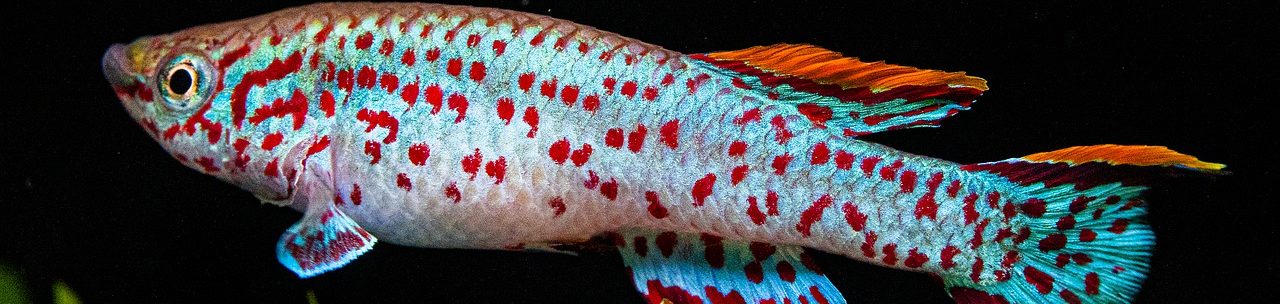
Watching Muscles Heal: A Zebrafish Model for Regeneration

Author: Diego Javier, Class of 2026 Muscle regeneration is a nuanced and important area of study in understanding how muscles recover from injury. Researchers have been trying to develop therapies for muscle-related diseases, and some have used zebrafish as a model organism given their ability to regenerate their heart and skeletal muscles. In order to study muscle regeneration. Eric Paulissen, in the lab of SBU … Continue reading Watching Muscles Heal: A Zebrafish Model for Regeneration

Specific protein, TlyC in bacteria Rickettsia plays a determining factor in the pathogenesis of Spotted Fever disease

Author: Kang Lai, Class of 2026 Ticks are commonly known vectors that transmit pathogens from one host to another. The genus of bacteria known as Rickettsia contains a hemolysin factor that causes disease progression through lysis of red blood cells. Several strains of Rickettsia are analyzed to deduce the key virulence factor behind its epidemiology of the Spotted Fever pathogenesis.  Bacterial hemolysins are toxins that … Continue reading Specific protein, TlyC in bacteria Rickettsia plays a determining factor in the pathogenesis of Spotted Fever disease

Climate Change and Zoonotic Diseases

Author:  Antonia Truta, Class of 2028 The World Health Organization’s definition of zoonosis is any disease or infection naturally transmissible from animals to humans, or vice versa. Animals are important to understanding disease transmission, with over 60% of emerging infectious diseases having zoonotic origins. Yet, to fully understand the context of zoonotic disease outbreaks, we must look at our interactions with nature in a larger … Continue reading Climate Change and Zoonotic Diseases

The Heart’s Shear Stress

Author: Sajia Athai Class of 2026 Cardiovascular disease is one of the leading causes of death globally. With new surgical techniques promoting less invasiveness in the human body, doctors and scientists have realized that there is much more to delve into regarding the heart. Scientists are now exploring models allowing for insights of how fluidity functions in the arteries. One study in particular delineates the … Continue reading The Heart’s Shear Stress

Mild Gut Inflammation Can Impact the Developing Brain

Author: Diego Javier, Class of 2026 Figure 1. X-Ray of a newborn with highlight regions displaying areas affected by NEC Necrotizing enterocolitis (NEC) is an intestinal disease that affects around 10% of premature infants in the United States, resulting in either infant mortality or long-term developmental problems such as learning disabilities and behavioral problems in babies that do survive. While it is known that severe … Continue reading Mild Gut Inflammation Can Impact the Developing Brain

Green Tea: Fighting Dementia One Cup at a Time

Sean Krivitsky, Class of 2026 Dementia is a progressive neurological disease most prevalent in older adults that is associated with aging and significant declines in cognitive function and memory. It has been strongly correlated with general brain atrophy, including of the hippocampus, and the increased presence of lesions (areas of damage within brain tissue) in cerebral white matter. This corresponds to the symptoms observed in … Continue reading Green Tea: Fighting Dementia One Cup at a Time

How Do You Like Your Eggs? Poached, Sunny Side Up, or Contaminated?

Sajia Athai, Class of 2026 Eggs can be made in many distinct ways–poached, sunny side up, scrambled, fried, or boiled. With a recent frenzy of fighting for cartons of eggs in supermarkets, there have been concerns raised about the food safety of eggs amid the bird flu epidemic. From Costco recalling eggs on its shelves to increasing prices for cartons of a dozen, research about … Continue reading How Do You Like Your Eggs? Poached, Sunny Side Up, or Contaminated?

Can a Change in Diet Improve Non-Motor Symptoms in Parkinson’s Patients?

Asher Agarwal, Class of 2027 Parkinson’s disease (PD), the second most prevalent neurodegenerative disease, is caused by the loss of dopaminergic neurons in the substantia nigra, a region important for the modulation of motor control. The classic triad of Parkinson’s symptoms is tremors, rigidity, and bradykinesia (slowness of movement). Recent research has been investigating the gastrointestinal (GI) symptoms associated with Parkinson’s. Evidence suggests the existence … Continue reading Can a Change in Diet Improve Non-Motor Symptoms in Parkinson’s Patients?

Linking Stress with Poor Cancer Prognosis

Sean Krivitsky, Class of 2026 Stress is a common response many experience amidst various physical, emotional, or psychological challenges. Beyond its significant short-term impacts, chronic stress has been demonstrated to impact cognitive function as well as the health of various systems within the body, including the immune system. Cancer patients in particular often fall victim to chronic stress, which, in turn, has been associated with … Continue reading Linking Stress with Poor Cancer Prognosis

Pixels to Prognosis: Using AI for Neuroradiologic Analysis

Kaylie Huang, Class of 2027 The role of artificial intelligence (AI) in healthcare is one of curiosity and contention, as studies have shown its potential in early detection and prevention through near-perfect analysis of medical images. Researchers from the Department of Radiology at Stony Brook University Hospital (SBUH) investigated the accuracy of AI interpretations of CT head angiograms, or imaging of the brain’s blood vessels, … Continue reading Pixels to Prognosis: Using AI for Neuroradiologic Analysis

Unlocking Gut-Boosting Benefits of Fermented Foods

Tiffany Ang, Class of 2026 Gut microbes, often referred to as psychobiotics, play a key role in regulating the microbiota-gut-brain axis. This bidirectional pathway facilitates a constant relay of information between the gut and the brain. Fermented foods, such as yogurt, kimchi, and natto, are rich in beneficial gut microbes and microbial metabolites that can be leveraged to target this axis. Their affordability and widespread … Continue reading Unlocking Gut-Boosting Benefits of Fermented Foods

Lipid Accumulation Found as a Mechanism of Cellular Senescence in Parkinson’s Disease

Author: Asher Agarwal, Class of 2027 Figure 1. A man assisting an old patient with taking their medication. Parkinson’s Disease (PD) is a neurodegenerative disorder associated with neuronal death, specifically of the dopaminergic (DA) neurons in the region of the brain responsible for motor coordination and control. The death of these neurons, most commonly due to aging, causes a classic triad of symptoms: bradykinesia (slow … Continue reading Lipid Accumulation Found as a Mechanism of Cellular Senescence in Parkinson’s Disease