Accidental EEG Recording of Dying Patient Offers Tentative Glimpse into Our Final Moments

Jessica George ’24 In our relentless pursuit for knowledge, perhaps one of the most perplexing questions to humankind is what happens when we die. Several individuals who have undergone near-death experiences (NDE) describe their “life flashing before their eyes.” There is also the classical theory of a hypoactive brain during the end stages of life, where the brain ceases all electrical activity. Contrary to this … Continue reading Accidental EEG Recording of Dying Patient Offers Tentative Glimpse into Our Final Moments

Working Memory Capacity Is Directly Linked To Processing and Storage

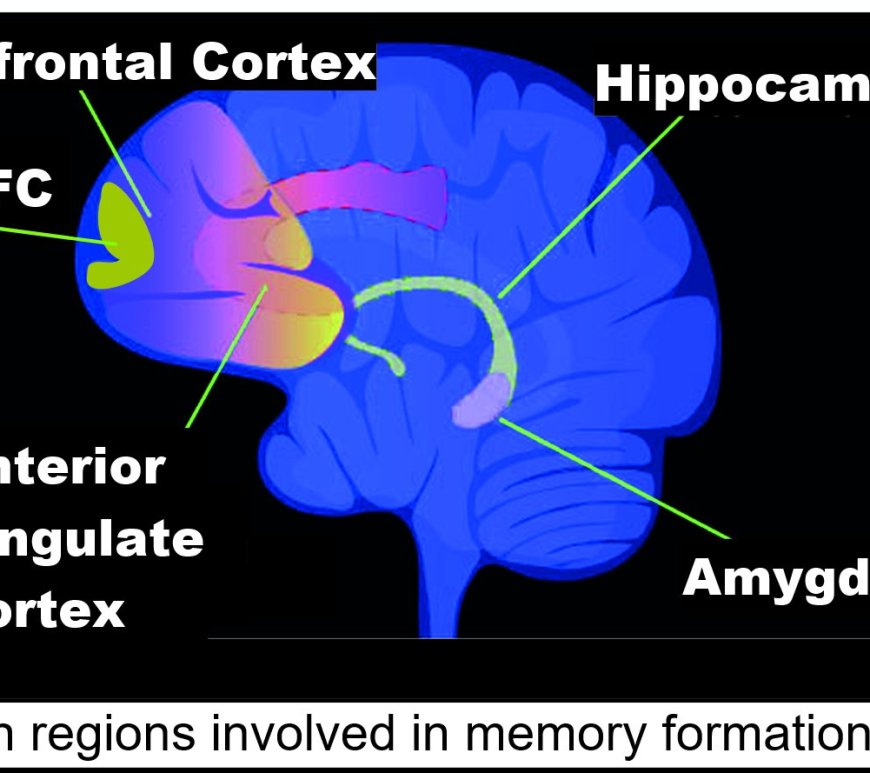
Melanie Karniewich ’25 Memory plays an important role in our brain function, allowing us to register events and remember them for later use. Certain key factors play a strong role in the quality of our working memory capacity, such as processing and storage, problem-solving, and conscious control of what we find fit to remember. Dr. Lauren Richmond, an assistant professor at Stony Brook University, and … Continue reading Working Memory Capacity Is Directly Linked To Processing and Storage

Poor Mother-Child Relationships Play an Influential Role In The Intergenerational Transmission of Depression

Jessica George ’24 Depression is a multifactorial condition, shaped by a variety of social factors such as relationships with others. Early childhood is a pivotal time of an individual’s life in shaping future interactions and behaviors. During this stage in life, parents play a vital role in a child’s social development, which poses the question of how a parent-child relationship could affect a child’s vulnerability … Continue reading Poor Mother-Child Relationships Play an Influential Role In The Intergenerational Transmission of Depression

When Twins Collide: The Role of Genetics in the Risk of Osteopathic Injuries

Peter Gillespie ’25 Why do some people experience one broken bone after another, while others could go their whole lives without a single fracture? Is the likelihood of an osteopathic injury just a coincidence, or is one’s genetic makeup rolling the dice for them? To answer this question, Hyo Geun Choi and his colleagues at Hallym University compared the histories of osteopathic injuries and bone … Continue reading When Twins Collide: The Role of Genetics in the Risk of Osteopathic Injuries

Friends and Food: The Influence of Perceived Social Isolation on Malnutrition

Peter Gillespie ’25 The risks of malnutrition are extensive,  especially within the elderly population. Social factors such as poverty, race, illiteracy, and poor access to healthcare have been shown to increase risk of malnutrition among older adults. However, a recent publication from Dr. Mark J. Sedler, founder of the Stony Brook University Office of Global Medical Education, and his colleagues proposes an additional social determinant … Continue reading Friends and Food: The Influence of Perceived Social Isolation on Malnutrition

A Mother’s Influence on their Youngs’ Microbial Colonization

Julia Chivu ’22 A mother’s influence on her offspring’s health is present even in the microbes found in her child’s gut. A recent study by associate professor Amy Lu at Stony Brook University and a research team from the Arizona State University hypothesized that bacteria present in the gut of infant geladas are highly influenced by their mothers. The study investigated wild geladas–non-human primates found … Continue reading A Mother’s Influence on their Youngs’ Microbial Colonization

Developmental Dyslexia is an Evolutionary Advantage

Julia Chivu ’24 Modern approaches tend to view learning disabilities as impairments. Current research, however, may prove otherwise. Developmental dyslexia is a neurocognitive disorder in which individuals have difficulty learning how to read. Dyslexia creates a variety of educational challenges, including inaccurate word recognition, frequent misspelling, and the inability to obtain advanced reading or writing skills. While this disorder may be considered a deficit in … Continue reading Developmental Dyslexia is an Evolutionary Advantage

Why Do Some Young People Develop Severe COVID-19?

Zhifei Zeng ’23 COVID-19, which has ravaged the world, is still a public health concern and there are multiple theories about the cause of severe COVID-19 infection in young people. Previous research on genetic factors associated with severe COVID-19 has been limited to the gene pool of European populations. Coincidentally, while comparing the gene pools of Japanese and European patients, a large Japanese genetic research … Continue reading Why Do Some Young People Develop Severe COVID-19?

Long Distance Ski Racing Correlated with Low Depression Development

Sooraj Shah ’24 Figure 1: Long term exercise such as skiing may reduce chances of developing depression Depression affects 5-10% of people in the United States. Combined with other disorders, depression can consume about 20-30% of a person’s lifetime. The most common therapeutic strategy to treat depression includes serotonin reuptake inhibitors, which increase serotonin levels in the brain. A major drawback to this treatment, however, … Continue reading Long Distance Ski Racing Correlated with Low Depression Development

Autism Spectrum Disorder May Not Be Linked to Impairment of Self-Awareness

Sooraj Shah ’24 Autism Spectrum Disorder (ASD) affects nearly 1 in every 44 children in the United States, and can cause a variety of symptoms such as delayed movement skills, nonverablity, and intellectual disabilities. A major impairment associated with  autism has been thought to be in theory of mind (ToM). ToM refers to the ability of an individual to understand that another individual’s mental state … Continue reading Autism Spectrum Disorder May Not Be Linked to Impairment of Self-Awareness

Lack of CLOCK Regulator Protein May Predict Focal Seizure Susceptibility

By Vignesh Subramanian ’24 Focal seizure activity originates at particular foci﹣those being lobes, regions or hemispheres – of abnormal brain tissue and may emanate outward.  Epilepsy is a chronic central nervous system disorder characterized by uncontrolled electrical activity in the brain that triggers recurrent, spontaneous seizures. The majority of new epilepsy cases involve focal epilepsy, in which seizure activity originates in a particular “focus” or … Continue reading Lack of CLOCK Regulator Protein May Predict Focal Seizure Susceptibility

Are Doppelgängers Really Just a Coincidence?

Lydia Wang ’26 Human faces and the ability to recognize different facial identities have played a key role in evolution. It has been observed that human faces have evolved to uniquely distinguish themselves from others. However, many people know someone they resemble; some comparisons are so similar that they are labeled as a doppelgänger, or a living double. Doppelgängers have been an ongoing phenomenon that … Continue reading Are Doppelgängers Really Just a Coincidence?