







Terahertz Spectroscopy to Improve Burn Injury Assessment
Aditi Kaveti ‘23 Burn injuries are painful, potentially life-threatening, and can often require long and complex treatment. Early and accurate assessment of burn injuries is important to determining the correct path of treatment. However, the severity of burns can be difficult to visually diagnose accurately, and clinical evaluations of burns only have about a 50 to 70 percent accuracy. This complexity allows for a significant … Continue reading Terahertz Spectroscopy to Improve Burn Injury Assessment


Going to College Can Delay Alzheimer’s Disease Onset
Ayesha Azeem ‘23 Alzheimer’s disease is an irreversible brain disorder that progresses to destroy memory and thinking skills until one fails to complete basic tasks. Alzheimer’s most commonly begins to affect people in their mid-60s, and is currently the third leading cause of death for the elderly in the United States (NIH). A recent study conducted by Stony Brook University researchers revealed that attending college … Continue reading Going to College Can Delay Alzheimer’s Disease Onset

Psychological Effects
Ayesha Azeem ‘23 While COVID-19 has definitely affected our physical health, primarily targeting the very young, the elderly, and those with long-term illnesses, the virus has also taken a severe toll on people’s psychological health. Because of the high risk to human health and the heavy economic burden resulting from national lockdowns and unemployment across the world, the public has been severely impacted mentally by … Continue reading Psychological Effects

Evaluating Subgroups of Patients with Spinal Epidural Abscess
Panayiota Siskos ’23 Spinal epidural abscess (pus that has built up in tissue, organs, or spaces in the body) is a rare infection that has rising incidence, as well as high morbidity and mortality due to delayed diagnosis. These abscesses are in the epidural region (located between the outermost layer of tissue and the inside surface of bone containing the spine that runs down its … Continue reading Evaluating Subgroups of Patients with Spinal Epidural Abscess

Creation of Images by Detecting brain activity via Neuroadaptive Generative Modeling
Sooraj Shah ’24 The relationship between humans and technology is one which advanced the world to where it is today. By physically pressing a few buttons, we are able to express our thoughts and ideas onto a digital screen. However, this might not always be the case. Researchers at the University of Helsinki have developed neuroadaptive generative modeling, in which a computer creates a visual … Continue reading Creation of Images by Detecting brain activity via Neuroadaptive Generative Modeling

Neuroanatomical Variation in Dogs
Panayiota Siskos ’23 The selective breeding of dogs by humans has led to variation in the brain across different breeds. Selectively breeding dogs for traits and abilities has been a recent occurrence in evolution, and genetic research shows behavioral variation is heritable. Behavioral specializations depend on neural specializations, and strong selection pressure exhibits that brain differences between dog breeds correlate with differences in behavior. Selection … Continue reading Neuroanatomical Variation in Dogs

Effect of Mutation in NMDA Receptor Proteins resulting in Neurological Disorders
Sooraj Shah ’24 Neurological disorders affect 25 million people in the United States, which makes the study of NMDA receptors increasingly important. NMDA receptors are key contributors to regulation of memory and behavior in the human brain. NMDA (N-methyl-D-aspartate) receptor proteins are transmembrane proteins, and are in a subset of Ionotropic glutamate receptors (iGluRs), which contain 4 helices, the most significant of which is the … Continue reading Effect of Mutation in NMDA Receptor Proteins resulting in Neurological Disorders
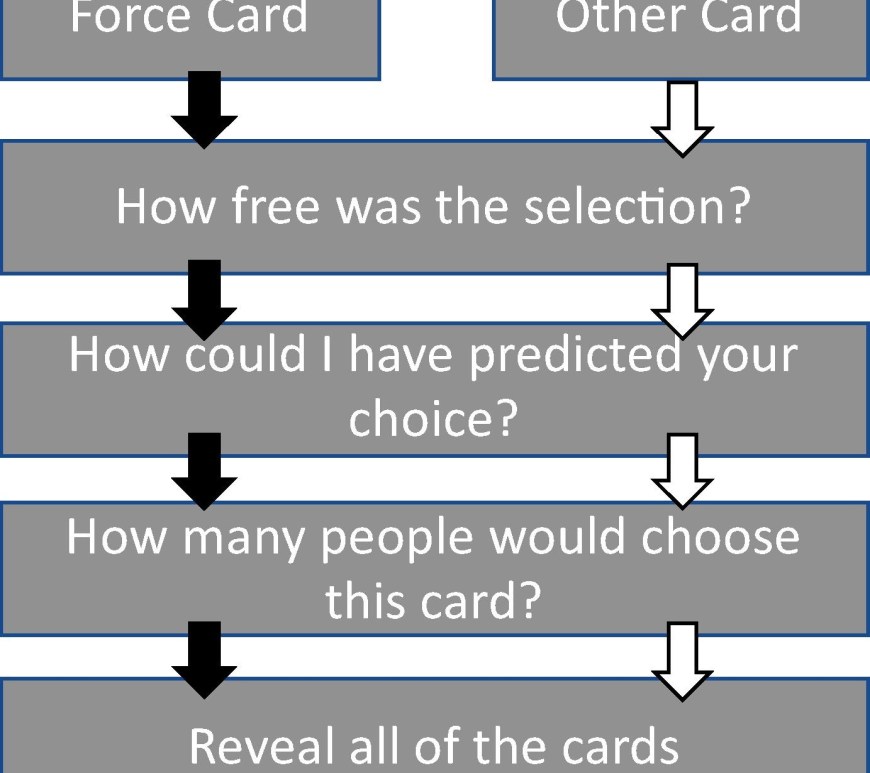
Pick a Card, Any Card
Wendy Wu ’22 Magicians around the world have fascinated their audiences by performing the impossible. One of their signature acts is being able to predict a card randomly chosen. Rather than magical intuition, the magician’s predictive prowess is more likely due to an understanding of human nature. Gustav Kuhn, a Reader in Psychology at Goldsmiths, University of London, sought to apply this understanding to the … Continue reading Pick a Card, Any Card
Antibody Conditioning Enables Tolerance of Glial Grafting
Vignesh Subramanian ’24 In the central nervous system (CNS) and peripheral nervous system (PNS), glia are supportive cells that form myelin sheaths, or coatings, that insulate and protect neurons. Activated glial cells are also capable of producing growth factors such as BDNF and bFGF that trigger neuroinflammation, inducing a prolonged state of pain which alerts an organism to potential nerve injury. As such, various subtypes … Continue reading Antibody Conditioning Enables Tolerance of Glial Grafting

Developmental History Skews Alzheimer’s Diagnosis
Vignesh Subramanian ’24 Alzheimer’s disease (AD) is a neurodegenerative disease that, alongside related dementias, afflicts nearly 50 million people worldwide with incidence rates increasing with age. Alzheimer’s is particularly debilitating in areas of language and memory, contributing to progressive cognitive decline that is frequently diagnosed using neuropsychological tests evaluating recall, visual processing and executive function. Yet while such assessments are meant to ascertain whether patients … Continue reading Developmental History Skews Alzheimer’s Diagnosis
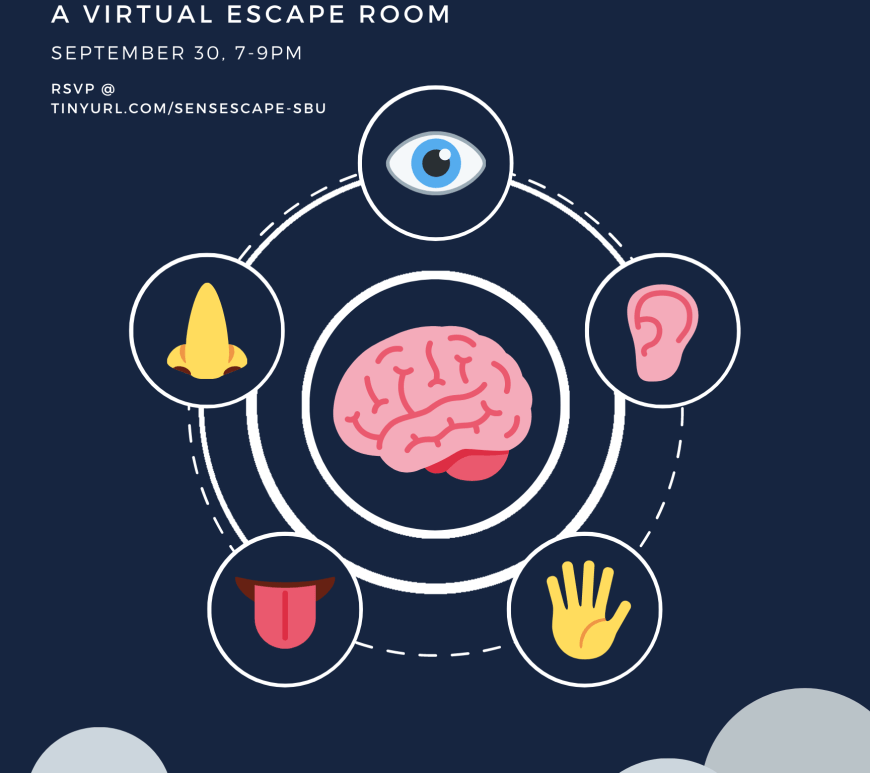
Announcing Sensescape!
Become a neuron and piece together memory fragments like a detective! The Stony Brook Young Investigators Review and the Neuroscience Axis will be hosting a virtual escape room on September 30th from 7-9 pm. Join in on the fun and bring your friends to solve our sensory themed escape room! All students are welcome. To RSVP for the event, you can go on tinyurl.com/sensescape-sbu! Continue reading Announcing Sensescape!

Majority Rule and Minority Rights
Wendy Wu ’22 Humans are social animals; it is in our nature to communicate and to cooperate. We live with the understanding that we not only act in our individual interests, but also in the interests of the community. The problem is that not all members of the group will benefit from community decisions all the time. How, then, should we make collective decisions? Many … Continue reading Majority Rule and Minority Rights
 Young Investigators Review