






Potassium’s Role in Stem Cell Proliferation
By Riya Gandhi ‘22 Human cells multiply at high speeds to maintain proper functioning of the human body. Even when occur and cancerous growths appear, the cell cycle does not cease; as a result, the number of malignant cells rapidly increases. One aspect in the chemistry of cell proliferation is clear: monovalent ions contribute to the cell cycle. The specifics of their role, however, are … Continue reading Potassium’s Role in Stem Cell Proliferation


Mind the Gap! Nanoparticles Increase Endothelial Leakiness
By Riya Gandhi ‘22 Although recent advancements in the field of nanomedicine are elucidating potential novel therapies for cancer, researchers have uncovered one major drawback called gap growth. Under the leadership of principal investigator Fei Peng, a recent study at the National University of Singapore discovered that the introduction of nanomaterial into animal bodies may result in micro-sized gaps in the endothelial lining, which can … Continue reading Mind the Gap! Nanoparticles Increase Endothelial Leakiness
Fibrinogen Plays a Neurodegenerative Role in Alzheimer’s Disease
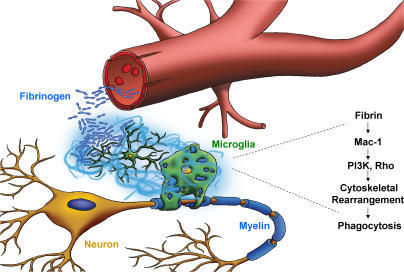
By Natalie Lo ‘21 Alzheimer’s Disease (AD) is characterized by the formation of β-amyloid plaques Aβ, microglial activation, and inflammation in the brain. Microglia are immune cells found in the central nervous system (CNS). In AD, the blood-brain barrier is disrupted, which leads to bleeding, vascular damage, and an increase in blood proteins. Currently, there is an unknown relationship between vascular dysfunction, proteins like fibrinogen … Continue reading Fibrinogen Plays a Neurodegenerative Role in Alzheimer’s Disease

Different Gut Microbiota for Patients with Hepatocellular Carcinoma
By Natalie Lo ‘21 Hepatocellular Carcinoma (HCC) is a common form of liver cancer and is possibly related to an infection of hepatitis B virus (HBV) since it can result in cancer formation through activation of oncogenic proteins, inflammation, and cirrhosis. Through a symbiotic relationship, microorganisms in the gut interact with organs in humans, such as the liver, and play an important role in nutrition … Continue reading Different Gut Microbiota for Patients with Hepatocellular Carcinoma
Coenzyme Q10 Has Protective Effects in Alzheimer’s Disease
By Natalie Lo ‘21 Alzheimer’s Disease (AD) is the most prevalent type of dementia with links to memory impairment and behavioral issues in those diagnosed. Although the cause of AD is unknown, molecular characteristics of the disease include the growth of β-amyloid oligomers, which form plaques that result in brain atrophy. Previous studies have shown that oxidative stress plays a role in the pathogenesis of … Continue reading Coenzyme Q10 Has Protective Effects in Alzheimer’s Disease

Metabolic Reactions Activated During 58-hour Fasting
By Ellie Teng ‘21 Fasting is an ancient component in numerous religions and cultures. Individuals seeking weight loss often practice fasting, making it a prominent topic in the nutrition field. A team of scientists from the Okinawa Institute of Science and Technology Graduate University and Kyoto University recently found that fasting comes with innumerable health benefits. Blood samples from four healthy individuals who fasted for … Continue reading Metabolic Reactions Activated During 58-hour Fasting

Fruit and Vegetable Consumption and Well-being
By Ellie Teng ‘21 Fruits and vegetables have always been linked to good physical health, but results from the UK Household Longitudinal Survey demonstrate a positive association between fruits and vegetables, and psychological well being. Controlling for diet, health, and lifestyle, researchers found a clear relationship between the amount of fruits and vegetables consumed and mental state. In conducting the survey, researchers identified the three … Continue reading Fruit and Vegetable Consumption and Well-being

Protein WTp53: Fights Tumors or Boosts Cancer?
By Ellie Teng ‘21 A prominent protein in cancer research, p53, is known for its cancer fighting abilities. p53 suppresses the initiation of tumor growth by inhibiting the cancer metabolic switch from oxidative phosphorylation to glycolysis. Glycolysis is attributed to cancer metabolism and is required for tumorigenesis, or the formation of tumors. Essentially, p53 protects the genome against mutations and prevents the mutations from being … Continue reading Protein WTp53: Fights Tumors or Boosts Cancer?

Student Researcher Interview with Nicole Hershkowitz
Interviewer: Akshani Patel Interviewed: Nicole Hershkowitz A: Hi! Can you please tell me your name, major, and department of research? N: Hey Akshani, my name is Nicole Hershkowitz. I am a biomedical engineering and applied math and statistics double major, and my department of research is biomedical engineering. A: Follow up question what specific lab are you a part of? N: I am part of … Continue reading Student Researcher Interview with Nicole Hershkowitz

Targeted Neurotechnology Can Restore Walking in Humans With Spinal Cord Injuries
By Allan Mai ‘20 Spinal cord injury continues to be a leading cause of paralysis in humans. Depending on the location of the injury, complete or partial paralysis can occur. Fortunately, we live in an age in which advanced neurotechnology such as epidural stimulation is being developed to reverse this condition. In this study, the University of Lausanne’s Dr. Fabien B. Wagner and his team … Continue reading Targeted Neurotechnology Can Restore Walking in Humans With Spinal Cord Injuries

Formation of amino acids by abiotic means in the oceanic lithosphere
By Allan Mai ‘20 Experimental studies and thermodynamic calculations have shown that abiotic synthesis of amino acids and hydrocarbons – specifically during the hydrothermal alteration of mantle rocks – is theoretically possible. However, this phenomenon has only recently been demonstrated in a terrestrial setting. Benedicte Menez and his team at the Institut de Physique du Globe de Paris used high resolution imaging techniques to obtain … Continue reading Formation of amino acids by abiotic means in the oceanic lithosphere

BH4’s Role in T- Cell Proliferation in Autoimmunity and Cancer
By Allan Mai ‘20 BH4 is an important regulator of many bodily functions. Among its most important functions are its involvement in the production of monoamine neurotransmitters, its generation of nitric oxide, and its role in pain. However, Shane Cronin and his team recently uncovered another important function of this cofactor: proliferation of T cells, which are an integral part of the immune response. Inhibitions … Continue reading BH4’s Role in T- Cell Proliferation in Autoimmunity and Cancer
 Young Investigators Review