Diminished Glymphatic Transport and Lymphatic Drainage Tied to Cerebral Amyloid Angiopathy

Author: Vignesh Subramanian, Class of 2024 Cerebral amyloid angiopathy (CAA) is a cerebrovascular disorder characterized by the accumulation of amyloid protein deposits along cortical capillaries, cerebral vessel walls, and the brain’s leptomeninges. These plaques weaken fragile blood vessels, often resulting in intracerebral hemorrhaging. CAA is linked to vascular cognitive impairment and dysfunction and is a major contributor to the pathogenesis of Alzheimer’s disease (AD) and … Continue reading Diminished Glymphatic Transport and Lymphatic Drainage Tied to Cerebral Amyloid Angiopathy


Epigenetic Age Acceleration More Accurately Predicts Memory Decline Than Chronological Age

Author: Vignesh Subramanian, Class of 2024 Figure 1: Increasing evidence suggests biological aging, measured by examining the extent of methylation of cells’ DNA, is a stronger predictor of diminishing cognitive abilities than chronological age.  Title: Epigenetic Age Acceleration More Accurately Predicts Memory Decline Than Chronological Age Age acceleration is the term used to describe the difference between an individual’s chronological age, the length of time … Continue reading Epigenetic Age Acceleration More Accurately Predicts Memory Decline Than Chronological Age

Novel Therapeutic Insights to Barth Syndrome

Author: Sean Krivitsky ‘26 Barth syndrome is a rare, severe genetic disorder that primarily affects muscle development and the heart’s ability to efficiently pump blood. It is most common in males given that it is an X-linked disorder and it is known to significantly reduce life expectancy. Despite the severity of Barth syndrome, there are limited therapies available to treat this disease. This condition is … Continue reading Novel Therapeutic Insights to Barth Syndrome

Youths Making School Threats Have Significant Psychiatric and Experiential Similarities

Vignesh Subramanian ’24 Amid spikes in school threats, school shootings, and the proportion of K-12 students requiring emergency psychiatric interventions and referrals at schools in the United States, attention is increasingly being focused on the characteristics and needs of youths predisposed to violence or mental health crisis. Decades of research have repeatedly found that students who threaten or engage in attacks against people and campuses … Continue reading Youths Making School Threats Have Significant Psychiatric and Experiential Similarities

Early Taste Experiences Drive Neural Responsiveness and Plasticity in Gustatory Cortex Circuits

Vignesh Subramanian ’24 An individual’s taste preference strongly influences their food choice, impacting their diet and, in turn, their health. Taste preference is defined as an individual’s partiality towards a particular food based on their sensory perception of its taste modalities (sweet, sour, salty, bitter, etc.), flavor, texture, and a host of other factors, and is in part guided by early experiences that identify foods … Continue reading Early Taste Experiences Drive Neural Responsiveness and Plasticity in Gustatory Cortex Circuits

Integrating 3D Models to Aid Volume Estimation of Marine Mammals

Zhifei Zeng ’23 The size of wild animals is closely related to body condition. For example, the size of whales usually reflects changes in their fat stores and thus their body condition. However, it is difficult for scientists to directly measure the body size of whales due to their large size and ocean environment. Therefore, a research group led by Dr. Lesley H. Thorne at … Continue reading Integrating 3D Models to Aid Volume Estimation of Marine Mammals

Symptom Manifestation Indicates Severity of Fracture-Derived Ocular Injury

Vignesh Subramanian ’24 Orbital fractures are breakages in one or more of the bones surrounding the eyeball (collectively known as the orbit or eye socket) that are typically caused by blunt force trauma to the face. While not common, such fractures may cause serious ocular injury, which in turn may result in blurred or double vision, prolonged ocular or facial pain, poorer visual acuity, afferent … Continue reading Symptom Manifestation Indicates Severity of Fracture-Derived Ocular Injury

Brief Digital Interventions Can Alleviate Adolescent Depressive Symptoms

Vignesh Subramanian ’24 Depression is a mood disorder involving persistent feelings of dejection or hopelessness, difficulty with control of emotions, and loss of interest or pleasure in regular activities. As depressive disorders are increasingly recognized as a legitimate medical issue and treatment is destigmatized, younger generations in the United States have consistently reported higher rates of experiencing such conditions. However, less than half of afflicted … Continue reading Brief Digital Interventions Can Alleviate Adolescent Depressive Symptoms

Psychological Applications of Machine Learning: Quantifying the Risk of Prenatal Depression

Zhifei Zeng ’23 Current research suggests that factors such as socioeconomic deprivation, inadequate prenatal care, unplanned pregnancy, and psychosocial vulnerability such as stress may contribute to prenatal depression. PROMOTE is a newly developed screening tool that identifies psychosocial vulnerability in prenatal populations by assessing social determinants of health, social resources, stress and health behaviors. A research group led by Heidi Preis of Stony Brook University … Continue reading Psychological Applications of Machine Learning: Quantifying the Risk of Prenatal Depression

Neuronal Firing in Thalamus is Key to Restoring Post-TBI Consciousness

Vignesh Subramanian ’24 Traumatic brain injury (TBI) is a form of acquired brain disability caused by an external force exerted against the head. The causative trauma is typically severe enough to result in loss of consciousness and the conditions under which consciousness returns remain unclear. Clinical practice uses complex electroencephalography (EEG) activity to predict its return and level, predicated on the assumption that neuronal firing … Continue reading Neuronal Firing in Thalamus is Key to Restoring Post-TBI Consciousness

COVID-19 Causes Increased Anxiety In Lung Cancer Patients

Figure 1: Stony Brook University research team finds significant increase in psychological stress among lung cancer patients during pandemic. Zhifei Zeng ’23 COVID-19, which has ravaged the world, is still a public health concern and there are multiple theories about the cause of severe COVID-19 infection in young people. Previous research on genetic factors associated with severe COVID-19 has been limited to the gene pool … Continue reading COVID-19 Causes Increased Anxiety In Lung Cancer Patients

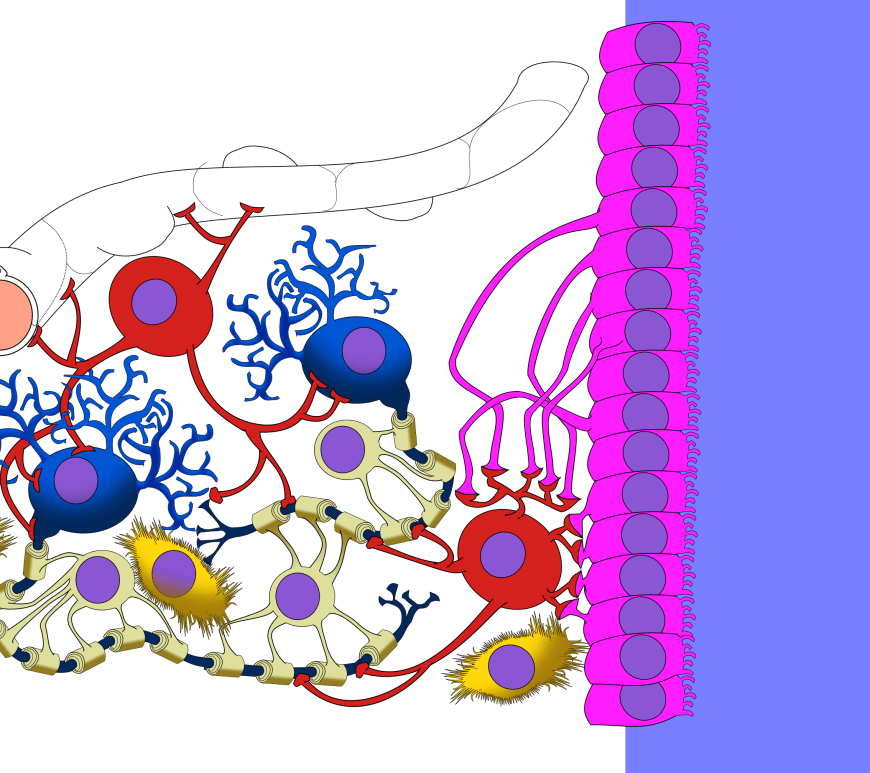
Loss of NG2 Glia Implicated in Emergence of Depression Symptoms

Vignesh Subramanian ’24 Glia are non-neuronal cells that host and provide a number of homeostatic ancillary functions in both the central (CNS) and peripheral (PNS) nervous systems. Though only recently discovered and characterized, glial cells vastly outnumber neurons and provide them with structural support and insular protection, driving their myelination (the process of forming coverings known as myelin sheaths that coat neurons’ signaling axons), facilitating … Continue reading Loss of NG2 Glia Implicated in Emergence of Depression Symptoms