Predicting the Future: The Prognostic Value of Tumor Budding and Microenvironment in Colon Cancer

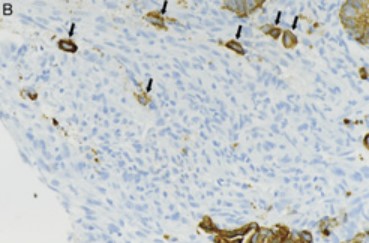
Peter Gillespie ’25 Can the success of cancer treatment be predicted before treatment begins? Findings from Dr. Wen and his colleagues at Stony Brook Medicine suggest that certain characteristics of the tumor and the microenvironment can predict the success of treatment in colon cancer patients. Dr. Wen and colleagues investigated the prognostic ability of intratumoral budding, which is the presence of one or a few … Continue reading Predicting the Future: The Prognostic Value of Tumor Budding and Microenvironment in Colon Cancer


What’s better: negative-pressure wound therapy or standard surgical dressings?

By Shahzadi Adeena, Class of 2025 Figure 1: Health professional holding rolled out gauze Doctors seek to improve post-operative care, as it is a critical aspect of surgery that determines success or infection. Following a surgical procedure, it is routine to apply standard surgical dressings (SSDs) on patients to promote healing and prevent infection. Modern surgical dressings are usually gauze dressings made of cotton, rayon, … Continue reading What’s better: negative-pressure wound therapy or standard surgical dressings?

Black Patients More Likely Than White Patients to Suffer Negative Outcomes After Spine Surgery

By: Jessica George, Class of 2024 Figure 1: Disparities in healthcare outcomes may be due to systemic biases in healthcare delivery Racial disparities in healthcare outcomes have been well-documented in numerous studies, including those focused on surgical procedures. Despite advances in surgical techniques and technologies, disparities in surgical outcomes persist, with some racial and ethnic groups experiencing worse outcomes than others. Understanding the factors that … Continue reading Black Patients More Likely Than White Patients to Suffer Negative Outcomes After Spine Surgery

Potential for Macrophage Cell Cultures to Produce New Medications

Julia Chivu ’23 Macrophages typically dominate the immune system with broad responsibilities related to cell repair, immune response, and homeostasis. However, macrophages also have organ-specific functions embedded into their epigenetic makeup. These powerful and specialized cells may be used in various macrophage therapies that can impact both humans and animals. In spite of this astounding potential, these treatment options are not available yet since scientists … Continue reading Potential for Macrophage Cell Cultures to Produce New Medications

Mental Health and COVID-19 Pandemic Stressors Among Latina/o/x College Students with Varying Self and Parental Immigration Status

Sydney Giron ’26 The COVID-19 pandemic produced significant levels of reported psychological distress for individuals worldwide. Relative to a baseline, a higher prevalence of depression (33.7%), anxiety (31.9%), and stress (29.6%) were evident in the general population. However, college students experienced an exacerbated array of stressors. Stressors such as academic/job performance, sociability, and health concerns for themselves and their loved ones contributed to psychological decline, … Continue reading Mental Health and COVID-19 Pandemic Stressors Among Latina/o/x College Students with Varying Self and Parental Immigration Status

Increased Movement of Cancer Cells in Fluids of High Viscosity Hints at Possible Control Mechanism

Sooraj Shah ’24 With more than 1.9 million individuals in the US being diagnosed with cancer each year, research revolving around the behavior of cancer cells is an important aspect of the search for better treatments. The study of cancer cells in biological assays within a lab has led to great research regarding the structure, motion, and activity of cancer cells in-vitro. A specific part … Continue reading Increased Movement of Cancer Cells in Fluids of High Viscosity Hints at Possible Control Mechanism

As the Covid Pandemic Grew, Concern for Climate Change Shriveled

Sooraj Shah ’24 The COVID-19 pandemic has been featured on every television and newspaper since early 2020. Social media platforms were also covered with news about the virus including deaths, cases, and variants. As COVID grew, the coverage revolving around other public concerns seemingly took a back seat, one of these being climate change. A study led by Dr. Oleg Smirnov, a professor within the … Continue reading As the Covid Pandemic Grew, Concern for Climate Change Shriveled

Investigating the Metabolism of Cancer

Julia Chivu ’24 A new drug has been developed to target the metabolism of cancer. Associate Professor Paul M. Bingham and Research Assistant Professor Zuzana Zachar from Stony Brook University developed a unique class of anticancer drugs–including the first-in-class and FDA-approved drug CPI-613. A first-in-class drug produces new treatment options or outcomes by exploring an unprecedented mechanism of action. CPI-613, also referred to as devimistat, … Continue reading Investigating the Metabolism of Cancer

Finger Lengths and Their Ratios May Be Indicative of Covid-19 Risk

Lydia Wang ’26 SARS-CoV-2 is a virus that attacks the respiratory system, causing the disease COVID-19. The disease’s severity and risk factors have been shown to vary across certain populations. In particular, COVID-19 mortality rates were observed to be significantly higher in males than in females. One possible explanation for this cites testosterone levels, which have been seen to correlate with the ratio of digit … Continue reading Finger Lengths and Their Ratios May Be Indicative of Covid-19 Risk

Diving Deeper into the Symptoms of PTSD

Lydia Wang ’26 Post-traumatic stress disorder (PTSD) is a mental health condition that arises after experiencing a traumatic event. Various cognitive models have highlighted attentional biases (selectively paying attention to certain stimuli while ignoring others) and memory biases (the enhancement or impairment of memory recall) based on negative stimuli in individuals with PTSD. It has also been seen that individuals remember emotional information better than … Continue reading Diving Deeper into the Symptoms of PTSD

Past Pandemics May Play a Role in Susceptibility to Disease

Melanie Karniewich ’25 When the human body reacts to something foreign, the immune response will likely ensure that the human body is unharmed. For example, when receiving a vaccine, the body remembers the virus being injected and will know how to fight it off the next time. A recent study identified traces of immune genes associated with the Black Death from the 1300s in current … Continue reading Past Pandemics May Play a Role in Susceptibility to Disease

Depression as a Risk Factor for Severe COVID-19 Infection

Peter Gillespie ’25 Covid-19 has been at the forefront of concern for many since the pandemic struck, especially for patients with risk factors for severe diseases if infected by Covid-19. Respiratory and cardiovascular disease, old age, hypertension, and diabetes have already been established as high risk factors for severe Covid-19 infection. However, recent research from Dr. Sean Clouston and his colleagues has identified a new … Continue reading Depression as a Risk Factor for Severe COVID-19 Infection