






Who is to Blame for Earth’s Death?
Natalia Pszeniczny, Grade 10 Introduction Environmental deterioration has been a huge topic of discussion between scientists and politicians. When dealing with such a delicate topic, it is important to consider all angles: democratic, environmental, personal, and economic. The issues presented with climate change vary in complexity. Many people are concerned that the increasingly rigid environmental restrictions will prevent their companies from expanding to their full … Continue reading Who is to Blame for Earth’s Death?


2020 Young Investigators Writing Competition Winners
<p value="<amp-fit-text layout="fixed-height" min-font-size="6" max-font-size="72" height="80">The Stony Brook Young Investigators Review (SBYIR) is pleased to announce the results of the <strong>2020 Young Investigators Writing Competition</strong>! Our competition invited high school students from Long Island to write brief articles in newspaper or literature review format to describe and engage the public in scientific societal controversies. Specifically, students entering grades 10-12 explored dilemmas regarding experimental therapy, neutral … Continue reading 2020 Young Investigators Writing Competition Winners

Student Researcher Interview with Jessica Vilas-Boas
Interviewer: Hannah PhiliposeInterviewed: Jessica Vilas-BoasInterview Conducted Fall 2019 H: Hi! Can you please tell me your name, major, and department of research? J: Hello! I’m Jessica Vilas-Boas. My major is biochemistry, and I work in PharmacologicalSciences. H: Follow up question what specific lab are you a part of, and how long have you beenworking there? J: I am in Dr. Markus Seeliger’s lab, and I’ve … Continue reading Student Researcher Interview with Jessica Vilas-Boas

Low-Level Mechanical Signaling to Stimulate Bone Growth
Aditi Kaveti ’23 Osteoporosis is a disease characterized by the reduction of bone quality and low bone mineral density (BMD). Bone resorption is the process by which osteoclasts break down bone tissue and release minerals, resulting in a transfer of calcium from bone tissue to blood. When excessive resorption occurs, bones weaken and become brittle, which may eventually develop into osteoporosis. Bone health can be … Continue reading Low-Level Mechanical Signaling to Stimulate Bone Growth
Silent Voices of the Hungry
Gwenyth Mercep ’22 About one in five US households with children experience food insecurity [1]. Food-insecure families may employ protective strategies to deflect collective hardships on children and national data suggests that in general, adults believe they are very successful in doing so [1]. Only 1% of these parents reported their children to experience a reduction in nutritional quality or quantity [1]. Contrarily, data shows … Continue reading Silent Voices of the Hungry

Unseen Intimate Partner Violence in the Emergency Department
Gwenyth Mercep ’22 Domestic abuse incidence is pervasive and tightly correlated with a large scope of disproportionate health disparities yet is largely underrepresented in data collection. Individuals who experience intimate partner violence (IPV) access the emergency department (ED) more often compared to their counterparts and most notably for chronic and long withstanding health conditions [1]. Despite guidance urging emergency medicine (EM) physicians to screen patients … Continue reading Unseen Intimate Partner Violence in the Emergency Department
Developing Genetic Tools for Eukaryotic Marine Microbes
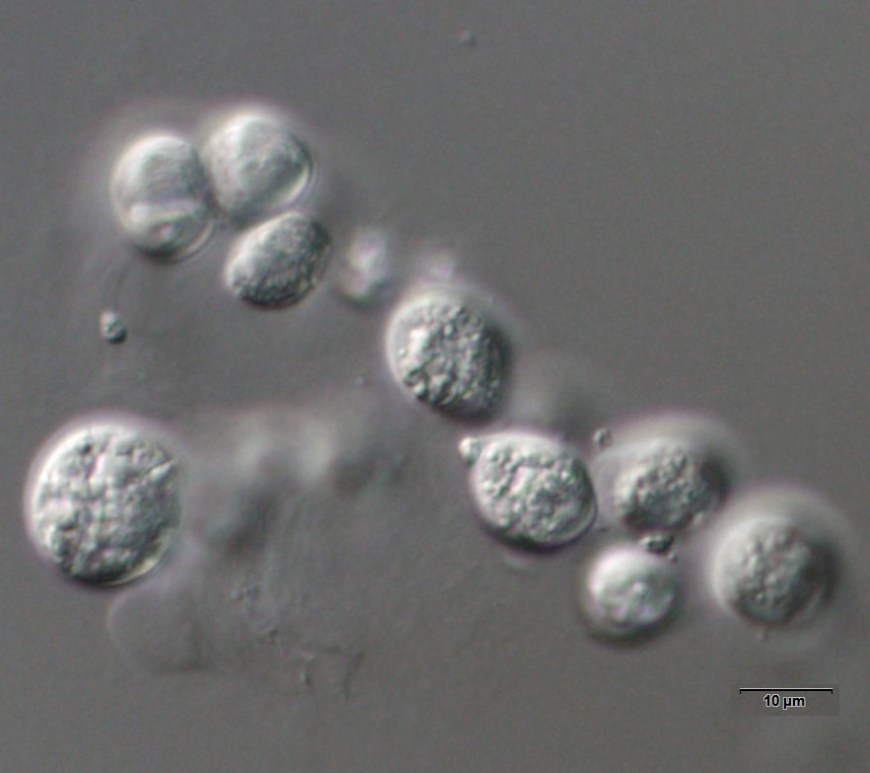
Gaurav Sharma ’22 Sea life may hold one of the most diverse microbial ecosystems since we have not yet uncovered all of the mysteries and organisms teeming among the depths. Among the microbes that have been studied are eukaryotic microbes which range in diversity. When it comes to studying these organisms, researchers are presented with a challenge and can only genetically study some of these … Continue reading Developing Genetic Tools for Eukaryotic Marine Microbes

Novel Method Helps Reveal Prognosis of Non-Small Cell Lung Cancer
Gaurav Sharma ’22 For the past couple of years, lung cancer has been responsible for the most cancer-related deaths in the general population. One variation of lung cancer is non-small cell lung cancer (NSCLC) which constitutes more than 80% of tumor growths originating in the lungs. NSCLC can be treated but 40% of patients have a recurrence of NSCLC highlighting the critical need for a … Continue reading Novel Method Helps Reveal Prognosis of Non-Small Cell Lung Cancer

The EMS Project
Wendy Wu ’22 Microbial life is usually associated with bacteria and archaea, often overlooking the existence of protists, eukaryotic microbes. Recent research has shown protists to play vital roles in their environment, especially in driving marine biogeochemical cycles and food webs. The ocean, which spans 70% of Earth’s surface, is home to a variety of microbial life. Despite this fact, there is a lack of … Continue reading The EMS Project

The Future of COVID-19 Testing
Wendy Wu ’22 COVID-19 is a disease caused by a newly discovered coronavirus: SARS-CoV-2. First identified in Wuhan, China in late 2019, the coronavirus disease has become a pandemic within a matter of months, causing worldwide panic and hysteria. In this short time, nations and the World Health Organization struggled to contain the outbreak. In addition to treatment and vaccines, developing a test for COVID-19 … Continue reading The Future of COVID-19 Testing

Implications of Solar Geoengineering
Ashley Goland ’23 Solar geoengineering is a technology that aims to reflect incoming sunlight away from the Earth to reduce the rise of global temperatures, and one proposed approach is to send aerosols into the atmosphere. Although this method may seem like a quick, relatively cheap way to delay further climate change, the effects it could have upon marine and terrestrial organisms are not yet … Continue reading Implications of Solar Geoengineering

Trispecific Antibodies in Anticancer Immunotherapy
Ashley Goland ’23 Immunotherapy is a form of cancer treatment that utilizes the body’s own immune system to destroy cancerous tumors and has shown promise in past animal and clinical human trials. For all of its dazzling successes to date, however, immunotherapy is not completely effective for treating the full range of cancer types and patients— yet. Scientists working in Sanofi Research and Development believe … Continue reading Trispecific Antibodies in Anticancer Immunotherapy
 Young Investigators Review