






The Role of Gene Expression Variation in the Development of Mammalian Drug Resistance
Simran Kaur ‘20 Designing drugs is often challenging because identical cells within a specific network will exhibit varying genetic expression (noise), resulting in drug resistance. The source of this variation is most often stochastic, accumulations of random fluctuations occurring during transcription, translation, and post-translational regulation. Gene expression noise currently poses as the greatest barrier in finding a cure for cancer and Human Immunodeficiency Virus (HIV). … Continue reading The Role of Gene Expression Variation in the Development of Mammalian Drug Resistance


Chloroquine as a Promising Anti-Viral Drug in Immunocompromised Patients Amidst the COVID-19 Pandemic
Simran Kaur ‘20 SARS-CoV-2, a new type of coronavirus, is responsible for a global pandemic that currently has infected hundreds of thousands of individuals worldwide. The virus belongs to the same family of viruses responsible for certain cases of the common cold, Middle East Respiratory Syndrome, and Sudden Acute Respiratory Syndrome (SARS). The virus is incredibly contagious, spreading through respiratory droplets and exploiting commonly-found human … Continue reading Chloroquine as a Promising Anti-Viral Drug in Immunocompromised Patients Amidst the COVID-19 Pandemic

Association Between Gluten Uptake in Pregnant Mothers and Children
Priyanshi Patel ‘22 Type 1 diabetes is a very common disease often occurring in childhood, with highest rates in the Nordic countries. Type 1 diabetes occurs after a destruction of pancreatic beta cells which leads to lifelong dependence on insulin treatment. There are both genetic and nongenetic factors for playing a role in the aetiology of the disease. Gluten has been hypothesized to be an … Continue reading Association Between Gluten Uptake in Pregnant Mothers and Children
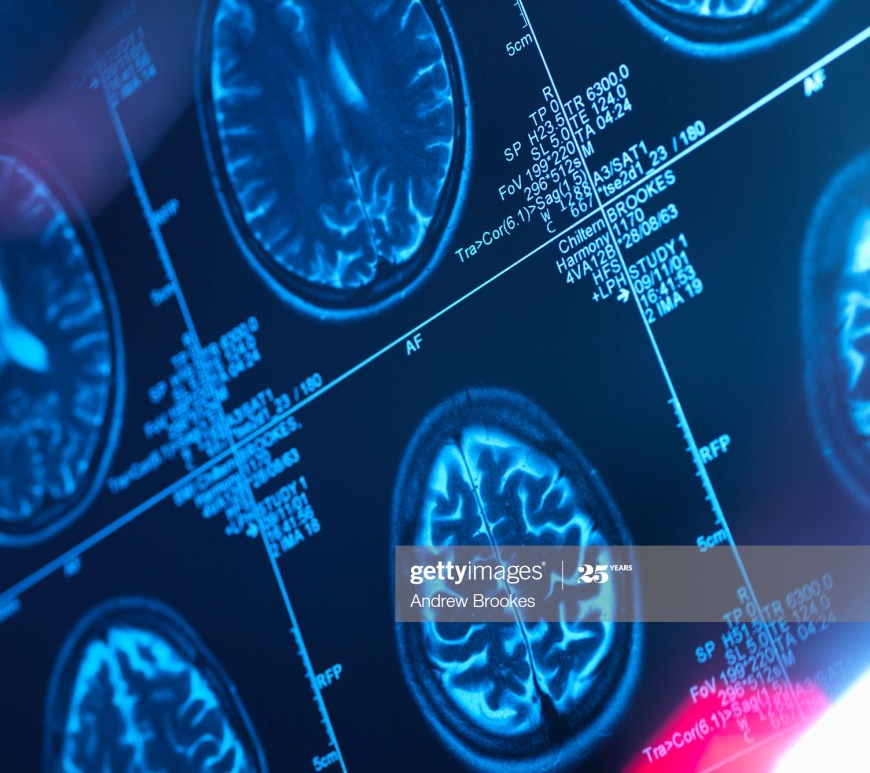
A Low-Carb Diet Can Increase Brain Stability in Individuals.
Priyanshi Patel ‘22 A study on neuroimaging led by Stony Brook professor Lilianne R. Mujica-Parodi reveals that neurobiological changes that are associated with aging can also be seen at a much younger age than expected. The study suggests that the effects of the changes can be prevented or reversed based on changes in diet that involve minimizing the consumption of carbohydrates. The research team at … Continue reading A Low-Carb Diet Can Increase Brain Stability in Individuals.

Get Your Head Out of the Game
Gwenyth Mercep ’22 Chronic traumatic encephalopathy (CTE) is a brain disease associated with exposure to repetitive head impacts, such as those from tackle American football [1]. CTE can cause numerous and debilitating early-life symptoms like behavioral and mood disturbances, most notable, impulse control and depression [1]. Episodic memory loss and dementia, forms of cognitive dysfunction, are reported by patients with CTE later in life [1]. … Continue reading Get Your Head Out of the Game

Medical Needles in the Social Media Haystack
Gwenyth Mercep ’22 In today’s digital age, there’s a lot of potentially useful information in circulation. With many of us compelled to share monologues on social media platforms, like Facebook, the landscape of data research is being revolutionized. Researchers from the University of Pennsylvania studied this change by using Facebook data to test the confluence of social media noise as indicating factors of the well-being … Continue reading Medical Needles in the Social Media Haystack

Anchor-Cell Invasion Regulation Network Discovered
Gaurav Sharma ’22 Invasion through the basement membrane is essential to many cellular and biological processes such as embryonic development, immune response, tissue development, and metastasis. The components and mechanism of basement membrane invasion is known. There are four transcription factors that regulate anchor-cell invasion; fos-1, hlh-2, nhr-67, and egl-43. The Matus Lab at Stony Brook University sought to answer the question of how all … Continue reading Anchor-Cell Invasion Regulation Network Discovered

Inactivated Gene Linked to Kidney Cancer and Tumor Development in Mice
Gaurav Sharma ’22 The epigenetic components pertaining to the onset of cancer have been of interest for many years due to the hope of developing approaches to delay the onset of cancer in the future for an individual. Recently, a tumor suppressor family has been discovered, called Ras-Association Domain Family (RASSF) which epigenetically inactivated breast, lung, skin, and thyroid cancers. Neither RASSF10’s in-vivo function nor … Continue reading Inactivated Gene Linked to Kidney Cancer and Tumor Development in Mice

After the Fall: Link Between PTSD and Prostate Cancer
Wendy Wu ’22 On the morning of September 11, 2001, the Twin Towers of the World Trade Center (WTC) collapsed. Within minutes, first responders arrived on the scene. Amidst the debris and smothering dust, they got to work, evacuating citizens and heading into the towers to rescue whoever they could. It was truly a display of heroic bravery and compassion, but unfortunately, many of the … Continue reading After the Fall: Link Between PTSD and Prostate Cancer

The Disappearance of the Y Chromosome (And Other Chromosomes)
Wendy Wu ’22 The Y-chromosome is quite unlike its homologue, the X-chromosome. With a relatively lacking number of genes, the Y-chromosome is the only chromosome inessential for life; its major function is to determine the sex of offspring. How did this come to be the case? A part of the reason is that the Y-chromosome does not occur as a pair; it does not have … Continue reading The Disappearance of the Y Chromosome (And Other Chromosomes)

Psychosis from schizophrenia can lead to social isolation
Joyce Chen ‘23 As humans, we are able to distinguish between what is real and what is not. But sometimes, the lines between reality and fantasy can get blurred. Psychosis is a mental condition where an individual loses his or her sense of perception due to an impairment in thought, resulting in a loss of connection with reality. Untreated psychosis has been theorized to be … Continue reading Psychosis from schizophrenia can lead to social isolation

The importance of first impressions
Joyce Chen ’23 When it comes to meeting someone new, a first impression is especially significant. Naturally, humans want to create an everlasting effect or influence on others from their very first impression; However, there are several drawbacks, one of which being dominance. A study conducted by Laura Clark at the University of Lincoln aims to investigate the judgments of people based on the facial … Continue reading The importance of first impressions
 Young Investigators Review