






Why Do Some Young People Develop Severe COVID-19?
Zhifei Zeng ’23 COVID-19, which has ravaged the world, is still a public health concern and there are multiple theories about the cause of severe COVID-19 infection in young people. Previous research on genetic factors associated with severe COVID-19 has been limited to the gene pool of European populations. Coincidentally, while comparing the gene pools of Japanese and European patients, a large Japanese genetic research … Continue reading Why Do Some Young People Develop Severe COVID-19?


Long Distance Ski Racing Correlated with Low Depression Development
Sooraj Shah ’24 Figure 1: Long term exercise such as skiing may reduce chances of developing depression Depression affects 5-10% of people in the United States. Combined with other disorders, depression can consume about 20-30% of a person’s lifetime. The most common therapeutic strategy to treat depression includes serotonin reuptake inhibitors, which increase serotonin levels in the brain. A major drawback to this treatment, however, … Continue reading Long Distance Ski Racing Correlated with Low Depression Development

Autism Spectrum Disorder May Not Be Linked to Impairment of Self-Awareness
Sooraj Shah ’24 Autism Spectrum Disorder (ASD) affects nearly 1 in every 44 children in the United States, and can cause a variety of symptoms such as delayed movement skills, nonverablity, and intellectual disabilities. A major impairment associated with autism has been thought to be in theory of mind (ToM). ToM refers to the ability of an individual to understand that another individual’s mental state … Continue reading Autism Spectrum Disorder May Not Be Linked to Impairment of Self-Awareness
Lack of CLOCK Regulator Protein May Predict Focal Seizure Susceptibility
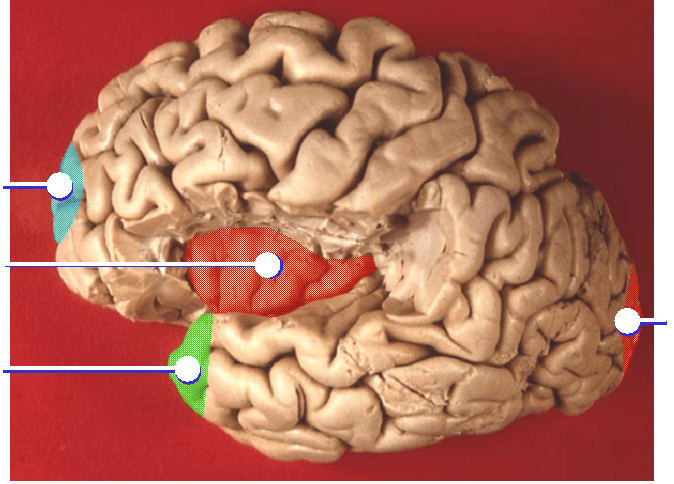
By Vignesh Subramanian ’24 Focal seizure activity originates at particular foci﹣those being lobes, regions or hemispheres – of abnormal brain tissue and may emanate outward. Epilepsy is a chronic central nervous system disorder characterized by uncontrolled electrical activity in the brain that triggers recurrent, spontaneous seizures. The majority of new epilepsy cases involve focal epilepsy, in which seizure activity originates in a particular “focus” or … Continue reading Lack of CLOCK Regulator Protein May Predict Focal Seizure Susceptibility

Women in Medical Academia are Less Likely than Men to Publish in Top Journals
Zhifei Zeng ’23 Figure 1: Stony Brook University research team investigates gender differences in first authorship in top medical journals Even with all the calls for gender equality today, it still happens that women may have to work harder to achieve the same success or reputation as men. Studies show that women are less likely to attain the rank of Associate or Full Professor, and … Continue reading Women in Medical Academia are Less Likely than Men to Publish in Top Journals

Are Doppelgängers Really Just a Coincidence?
Lydia Wang ’26 Human faces and the ability to recognize different facial identities have played a key role in evolution. It has been observed that human faces have evolved to uniquely distinguish themselves from others. However, many people know someone they resemble; some comparisons are so similar that they are labeled as a doppelgänger, or a living double. Doppelgängers have been an ongoing phenomenon that … Continue reading Are Doppelgängers Really Just a Coincidence?
Type 2 Diabetes Accelerates Brain Aging-Related Neurocognitive Decline
Vignesh Subramanian ’24 Type 2 diabetes mellitus (T2DM) is a chronic metabolic disease characterized by dysfunctions relating to hyperglycemia, the state of high glucose levels in the bloodstream. Such excessive blood sugar is typically the combinatory result of inadequate secretion of insulin (a hormone that directs cells and the liver to take up glucose for energy and long-term storage, respectively), uncontrolled secretion of glucagon (an … Continue reading Type 2 Diabetes Accelerates Brain Aging-Related Neurocognitive Decline

Anxiety Can Alter the Way We Perceive Negative Emotions
Lydia Wang ’26 As individuals, we constantly make decisions, many of which depend on our perception of social contexts. For example, when answering a question during class, one may gauge a friend’s expressions and observe whether they are grimacing or smiling, which (respectively) suggest an incorrect or correct response. This is an example of perceptual decision-making, where through observation and sensory input, one chooses an … Continue reading Anxiety Can Alter the Way We Perceive Negative Emotions
Application Deadline Extended!
Hello everybody! We hope you’re enjoying the last few days of your summer before the Fall 2022 semester starts. If you’re still looking for something to do or people to meet in the new semester, our staff and writer application deadlines have been extended to September 4th, 2022. SBYIR publishes an official journal every semester, provides training, and looks great on your résumé! Currently, we … Continue reading Application Deadline Extended!
SBYIR Staff and Writer Applications for Fall 2022 Now Open!
Do any of the following apply to you?Are you…? Then look no further and apply today to be part of the SBYIR team to join us in our goal of making science more accessible! Enjoy food and games at our events, new friendships and snark at our meetings, and a professional journal at the end of every semester! No research experience is needed and training … Continue reading SBYIR Staff and Writer Applications for Fall 2022 Now Open!
What We Owe to Ourselves and the Future Generation
Sophia Augier, Grade 11 There is an entire universe of endless possibilities just waiting for humankind to uncover. However, as a nation we struggle to recognize the benefits space research has on human life. Neither the broadening of earthbound scientific research, or the advancement of space research and exploration are mutually exclusive investments. Each is achievable and vital to sustaining human life, and should be … Continue reading What We Owe to Ourselves and the Future Generation
Synthetic Biology in the Medical Field: Should It Be Used in the Development of Vaccines and Future Medical Research?
Sara Maltempi, Grade 10 Synthetic biology is a scientific field in which the genomes of organisms are redesigned to give them new useful abilities by combining the principles of engineering and biology (1). Synthetic biology has only been around for a couple of decades but it has already created a new industry making “chemicals, drugs, proteins, probiotics, sensors, fertilisers, textiles, food and many other things … Continue reading Synthetic Biology in the Medical Field: Should It Be Used in the Development of Vaccines and Future Medical Research?
 Young Investigators Review