The Genetic Role of Left-Handedness

Ellie Teng ’21 90% of the population are right- handed, so what is different about individuals who are left- handed? Handedness was previously known to be partially affected by the genome; twin studies showed that genes account for about 25% of the variation in handedness. Researchers at the University of Oxford sought to connect the genetic difference to areas of the brain that control language. … Continue reading The Genetic Role of Left-Handedness


Early Initiation of Breastfeeding Proves to be Highly Beneficial to Newborns

Priyanshi Patel ’22 Sepsis is the common pathway that leads to neonatal death due to severe illnesses and various infections. Neonatal sepsis is the main cause of neonatal deaths in most developing countries and causes 13% of deaths during the neonatal period and 42% of deaths just after 7 days. The World Health Organization (WHO) recommends early initiation of breastfeeding within 1 hour of giving … Continue reading Early Initiation of Breastfeeding Proves to be Highly Beneficial to Newborns

New Role for Bardet-Biedl Syndrome Proteins in Neuronal Function Loss

Priyanshi Patel ’22 Bardet-Biedl Syndrome (BBS) is a rare genetic condition that causes retinal degeneration, kidney failure, obesity, and cognitive impairment. BBS is a genetically heterogeneous, autosomal recessive disorder that is characterized by early-onset retinal degeneration, obesity, and cognitive impairment. In a recent investigation, scientists from the University College London and the University of Vienna were able to investigate the molecular and cellular mechanisms that … Continue reading New Role for Bardet-Biedl Syndrome Proteins in Neuronal Function Loss

The Association Between Coffee Products and Breast Cancer Risk in Hong Kong

Ayesha Azeem ‘23 In women, breast cancer is universally seen as the most common cancer, with diet being one of the most important factors in causing the condition. Coffee is one of the most popular drinks available in the world and, in Hong Kong, a recent fan-favorite. From 2010 to 2018, coffee revenue skyrocketed from 119 million USD to 279 million USD. With the obvious … Continue reading The Association Between Coffee Products and Breast Cancer Risk in Hong Kong

Martial Arts and Love

Ayesha Azeem ‘23 Oxytocin (OT), familiarly known as the “love drug,” is a hormone that promotes feelings of social bonding, sexual reproduction and cooperation. Because of its apparent positive effects, researchers are currently investigating how to increase levels of oxytocin internally and without artificial interference. In a recent study conducted by the Bar-Ilan University Department of Psychology in Israel, Yuri Rassovsky and team considered the … Continue reading Martial Arts and Love

The Use of Focused Ultrasound for Enhanced Delivery of Gene Therapy Across the Blood-Brain-Barrier

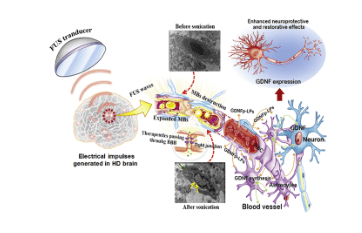
Jorge Pincay ‘20 Huntington’s disease (HD) is an autosomal dominant neurodegenerative disease that results in the degradation of nerve cells in the brain over time. This disease is the result of a DNA mutation — a cytosine-adenine-guanine (CAG) trinucleotide repeat expansion– that occurs in the gene that encodes for the huntingtin (Htt) protein. This repeat expansion causes a highly toxic form of the Htt protein … Continue reading The Use of Focused Ultrasound for Enhanced Delivery of Gene Therapy Across the Blood-Brain-Barrier

Enhanced mRNA Gene Therapy for Critical Limb Ischemia

Jorge Pincay ‘20 Critical limb ischemia (CLI) is a cardiovascular condition characterized by severely narrowed arteries resulting from the buildup of plaque. This narrowing of the arteries  significantly reduces blood flow to the hands, feet, and legs and may lead to amputation of the affected limbs. Most patients suffering from CLI need to undergo some form of a revascularization procedure in order to combat this … Continue reading Enhanced mRNA Gene Therapy for Critical Limb Ischemia

Glutamate Receptor GLR-3 Encodes for Evolutionary Cold-Sensing Receptor

Simran Kaur ’20 The capacity to detect cold temperatures is essential for many living organisms because cold temperatures can cause detrimental effects like severe soft-tissue damage and hypothermia. Some organisms have evolved the presence of thermoreceptors, which are specific nerve endings that are sensitive to changes in temperature and exist in the skin, skeletal muscle, and the hypothalamus. Thermoreceptors relay electrical signals to the central … Continue reading Glutamate Receptor GLR-3 Encodes for Evolutionary Cold-Sensing Receptor

Role of Mitochondrial Gene TFAM in The Progression of Renal Disease

Simran Kaur ‘20 Kidney fibrosis, the accumulation of excess tissue, is the last pathway in end-stage renal failure. Examination of kidneys afflicted with renal disease in both animal and human models has shown a defect in the function of mitochondria. Mitochondria are responsible for the production of energy (ATP) in the cell, funding the processes of toxic waste removal from the blood and the regulation … Continue reading Role of Mitochondrial Gene TFAM in The Progression of Renal Disease

Bat-Plant Mutualism in Brazil’s Cerrado and Efficiency in Conservation Efforts

Fatin Chowdhury ‘20 A group of researchers based in Europe and Brazil have detailed their literature-based simulation study of mutualistic bat and plant relationships in an area of Brazil called the Cerrado, with an emphasis on efficient conservation. This environment is a neotropical savanna biome characterized by high fauna diversity and distinct habitats, ranging from grasslands to dense gallery forests. These savannas are noted for … Continue reading Bat-Plant Mutualism in Brazil’s Cerrado and Efficiency in Conservation Efforts

Environment Dependent Dietary Adjustment by Invasive Aquatic Species

Fatin Chowdhury ‘20 Recently, researchers at three Brazilian universities examined patterns of feeding behavior displayed by the Knodus moenkhausii fish invasive to Brazil. The researchers described a two-fold hypothesis. Firstly, the species is expected to be non-specialist and opportunistic, feeding on whatever food source is most readily accessible. Secondly, resource abundance affects the nature of the trophic niche it resides in. Accordingly, flexibility in diet … Continue reading Environment Dependent Dietary Adjustment by Invasive Aquatic Species